

Published on 11 Jun 2026
Who Has to Pay the Medicare Levy? Updating Employee Tax Settings In Payroll When Circumstances Change matters because Australian residents for tax purposes are generally subject to the Medicare levy through the tax system unless they qualify for a Medicare levy reduction, Medicare levy exemption, or partial exemption. For employers, the practical risk is using old payroll information when an employee’s personal circumstances, income level, family situation, or appropriate level of private patient hospital cover changes.
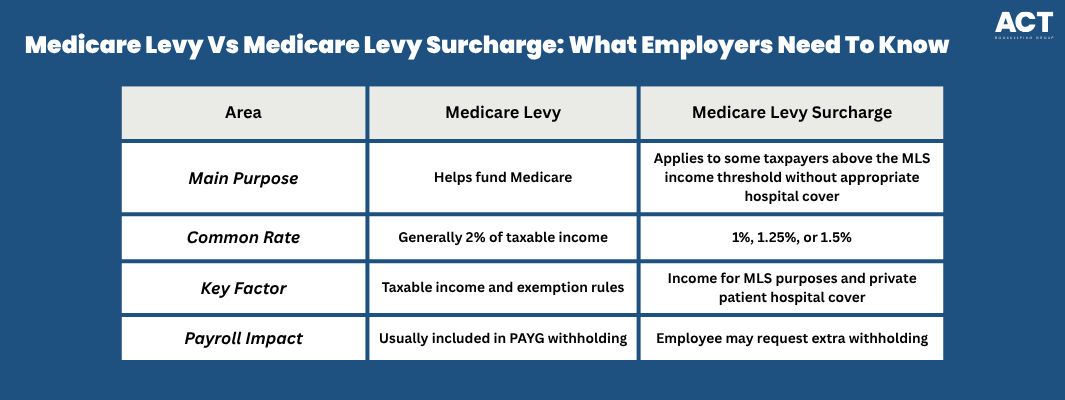
The Australian Taxation Office (ATO) generally applies the Medicare levy at 2% of taxable income, although the final amount an employee must pay depends on their tax return. Payroll does not decide an employee’s final income tax result, but accurate employee declarations help reduce over-withholding, under-withholding, and tax time surprises.
Medicare Levy Applies to Most Australian Residents for Tax Purposes
Most Australian residents for tax purposes who earn above the relevant income thresholds pay the Medicare levy as part of their income tax return unless they qualify for a reduction or exemption. The levy helps fund Medicare, which supports Medicare benefits and access to free or subsidised treatment through Australia’s public system.
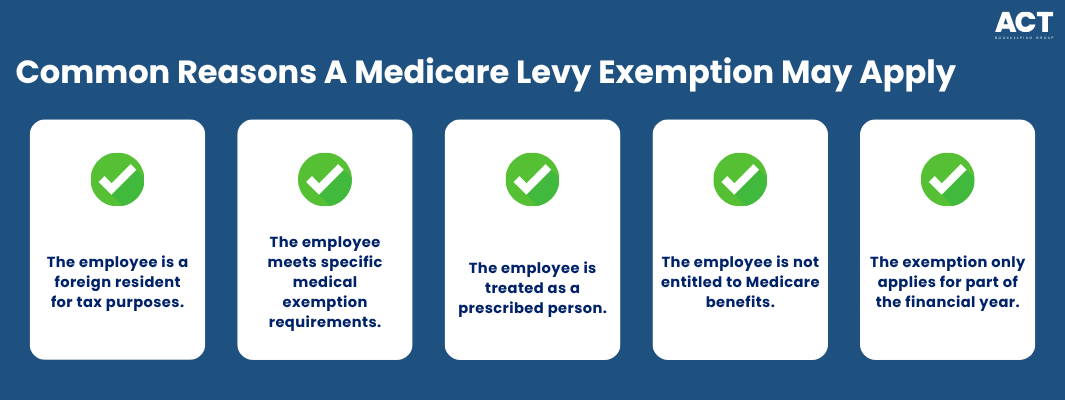
Whether an employee has to pay the Medicare levy depends on their taxable income, annual taxable income, family income, combined taxable income, number of dependent children, residency status, and exemption category. A foreign resident, prescribed person, or person who is not entitled to Medicare benefits and has obtained a Medicare entitlement statement from Services Australia may be treated differently for Medicare levy purposes.
Incorrect Medicare levy in payroll?
Schedule a complimentary consultation with us today to review and correct PAYG withholding settings.
Payroll Settings Need Accurate Employee Information
Payroll settings should match the employee’s current declaration, not assumptions about their income, health insurance, private health insurance, or family circumstances. Employees may need to update their details when their income, spouse or dependant details, dependent child status, Medicare levy reduction or exemption eligibility, or appropriate level of private patient hospital cover changes. A clear payroll process helps employers manage tax settings without giving personal tax advice. Employers should not try to work out whether an employee can avoid paying the Medicare levy or pay the MLS without the correct employee declaration or professional advice from a tax agent where needed. Common payroll updates may involve:
Tax File Number (TFN) declaration details
Medicare levy variation declaration
Medicare levy variation declaration to increase withholding for Medicare levy surcharge (MLS)
Higher Education Loan Program (HELP) or study loan status
Residency or foreign resident status
Dependent child or family income details
Changes to private hospital cover or private hospital insurance

Medicare Levy Surcharge Depends on Income and Hospital Cover
The Medicare levy surcharge, also known as Medicare levy surcharge MLS, is an extra tax that may apply when a person’s income for MLS purposes is above the relevant MLS income threshold and they, their spouse, or their dependants do not have an appropriate level of private patient hospital cover. It is separate from the standard Medicare levy and is based on income for MLS purposes, family tiers, family status, and whether the person held approved hospital cover for the relevant period.
The MLS is designed by the federal government to encourage individuals with higher incomes to take out private patient hospital cover where appropriate. For the 2025 to 2026 financial year, MLS rates can be 1%, 1.25%, or 1.5%, depending on the person’s income for surcharge purposes and whether they, their spouse, and their dependants had an appropriate level of private patient hospital cover.
Medicare Levy Reduction Applies in Limited Circumstances
A Medicare levy reduction may apply when a person’s taxable income is between the relevant lower and upper Medicare levy thresholds, or when they qualify for a reduction based on family taxable income. The family income threshold can also affect the outcome, and the family income threshold increases for each dependent child. Other rules may also matter. For example, entitlement to the Seniors and Pensioners Tax Offset (SAPTO) can give a person a higher Medicare levy low-income threshold, and entitlement to an invalid or invalid carer tax offset in respect of a child may be relevant when working out family taxable income reduction rules.
Medicare Levy Exemption Applies to Specific Employee Circumstances
A Medicare levy exemption may apply if a person meets specific medical requirements, is a foreign resident for tax purposes, or is not entitled to Medicare benefits. For example, a taxpayer who claims a Medicare levy exemption because they were not entitled to Medicare benefits generally needs a Medicare entitlement statement from Services Australia before lodging their tax return, and they need a statement for each year they claim the exemption.
An exemption means the person may avoid paying all or part of the Medicare levy for the relevant period, depending on their personal circumstances. Employers should only adjust payroll withholding when the employee provides the correct declaration or written instruction allowed by ATO processes.
Employers Need a Clear Process for Payroll Changes
Employers should ask employees to provide updated declarations before changing tax settings in payroll. This keeps payroll records clean, supports Single Touch Payroll (STP) reporting, and helps avoid over-withholding or under-withholding. The ATO’s PAYG withholding system relies on current employee information and accurate payroll tax management for businesses. With many Australian taxpayers affected by Medicare levy, MLS, private health insurance, and income tax settings, practical payroll controls are essential for businesses that need accurate records without unnecessary complexity. A simple process can help:
Ask the employee to complete the correct ATO form, such as a Medicare levy variation declaration where they want to vary withholding for Medicare levy, MLS, or an eligible exemption.
Check that the declaration is complete and that the employee has provided, or previously provided, a completed Tax File Number (TFN) declaration where required.
Update the employee profile in payroll software.
Apply changes to future pay runs only.
Keep the declaration with payroll records.
Review the next pay run for accuracy.
Confirm STP reporting details remain consistent.
We’re more than bookkeeping experts
As part of ACT Tax Group, we offer complete accounting and business advisory services tailored to your needs.
How ACT Bookkeeping Can Help with Payroll Tax Settings and Medicare Levy Updates
ACT Bookkeeping helps Australian small to medium-sized businesses keep payroll records organised, accurate, and ready for ATO reporting. We can help review employee declaration processes, update payroll software settings, check PAYG withholding setup, and maintain practical records for BAS, Goods and Services Tax (GST), payroll, and STP reporting as part of a broader tax guide for businesses in Australia.
If your team has employees whose Medicare levy, MLS, appropriate level of private patient hospital cover, TFN, HELP, income, or withholding details have changed, we can help you arrange a payroll review or schedule a consultation. We support bookkeeping and payroll administration in a clear, practical way, and we work alongside your tax agent where personal tax advice, income tax return treatment, or setting up and managing ATO payment plans is needed.

Keeping Medicare Levy Payroll Settings Accurate
The Medicare levy is usually finalised through the employee’s tax return, but payroll settings still matter because they influence how much tax is withheld during the year. Employees may pay the Medicare levy, pay the MLS, qualify for a reduced Medicare levy, or claim an exemption depending on their personal circumstances. A reliable payroll process helps employers respond properly when circumstances change. Review employee declarations, keep records organised, and make sure payroll software reflects the latest information before each pay cycle.
