

Published on 04 Jun 2026
When New Employees Start Paying HECS: Onboarding Questions Bookkeepers Should Always Ask is about collecting the right payroll details before the first pay run. A new employee may need extra amounts withheld if they have a Higher Education Loan Program (HELP) debt, Higher Education Contribution Scheme (HECS) debt, Student Start-up Loan, or other study and training support loan, and their annual income is expected to be over the minimum repayment threshold.
What Should Bookkeepers Ask New Employees About HECS?
Bookkeepers should ask whether the employee has a study or training support loan that affects payroll withholding. This question should be answered through the employee’s Tax File Number (TFN) declaration or withholding declaration, not through a casual conversation. The question is not about how much HECS the employee owes, their tuition fees, or their student contribution amount. For payroll, the key point is whether the employee has declared a HELP loan, HECS loan, Student Start-up Loan, or other support loans.
Are you capturing HECS details correctly at onboarding?
Schedule a complimentary consultation with us today to review your TFN declaration process.
When Do You Start Paying HECS?
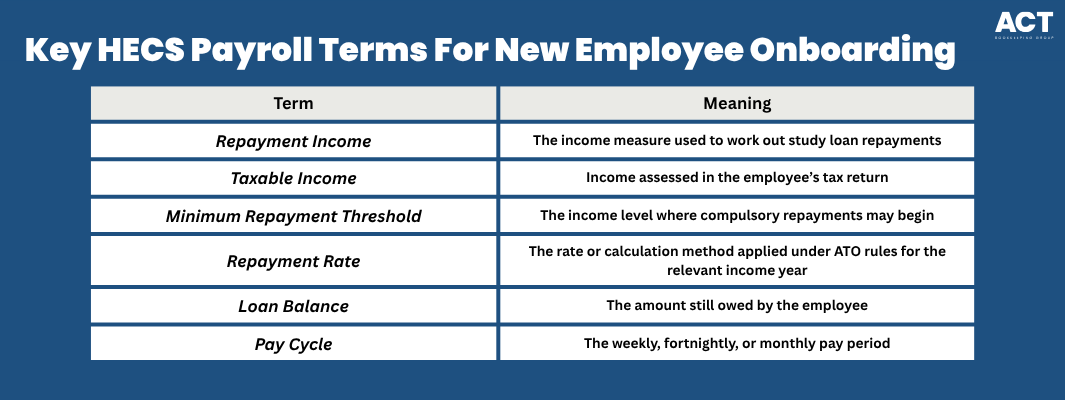
You generally start paying HECS through the tax system when your repayment income is above the minimum repayment threshold for the income year. For the 2025-26 financial year, the minimum repayment threshold is $67,000. This does not mean every employee starts repaying as soon as they start work. The final compulsory repayment amount is worked out through the employee’s income tax return, while payroll withholding helps collect tax during the year.
How Does HECS Repayment Work in Payroll?
HECS repayment withholding in payroll starts with the employee’s declaration. If the employee declares a study or training support loan, payroll software can withhold additional tax using the correct tax tables. This withholding is not a direct debt repayment from the employer to the loan. Compulsory repayments are made through the income tax system, and the final amount is confirmed after the employee lodges their income tax return.
What Is Repayment Income?
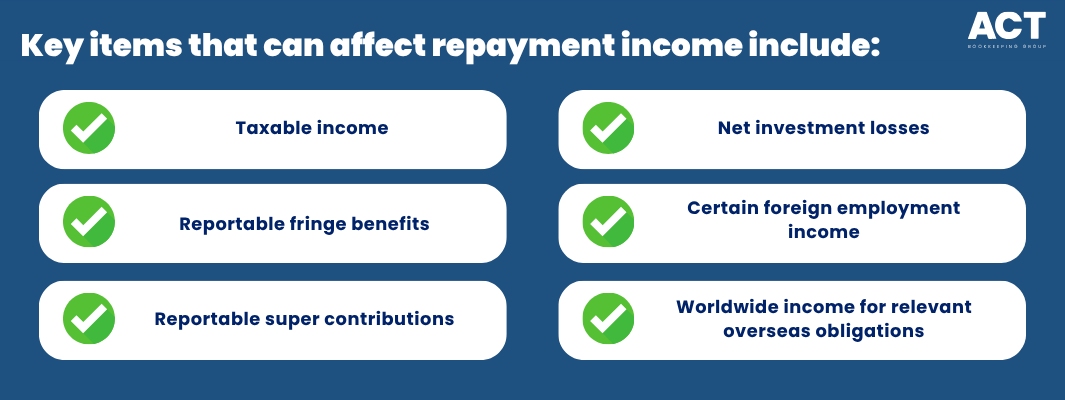
Repayment income is not always the same as taxable income. It can include taxable income, excluding any assessable First Home Super Saver released amounts, plus reportable fringe benefits, total net investment loss, reportable super contributions, and exempt foreign employment income amounts. Worldwide income may also be relevant for overseas repayment obligations. This is why bookkeepers should not estimate an employee’s compulsory repayment amount by looking only at their regular wage. If repayment income exceeds the minimum threshold, the final compulsory repayment is worked out through the employee’s tax return.
How Do Voluntary Repayments Fit In?
Voluntary repayments are extra payments an employee chooses to make toward their student loan. They are separate from compulsory repayments, which are assessed through the taxation system when the employee’s repayment income reaches the threshold. Employees may make voluntary repayments if they want to reduce their loan balance or repay their HECS debt early. Bookkeepers can explain the payroll difference, but they should not advise whether making voluntary HECS repayments is the right financial choice for the employee.

What Happens at Tax Time?
At tax time, the employee’s income tax return brings together their taxable income, repayment income, and any compulsory repayment amount. If enough tax was withheld during the year, the employee may have less to pay when their ATO income tax notice of assessment is issued. If too little was withheld, the employee may have an amount to pay after assessment, including any compulsory repayment calculated when they lodge their tax return. If too much was withheld, the tax return process may adjust the final result.
We’re more than bookkeeping experts
As part of ACT Tax Group, we offer complete accounting and business advisory services tailored to your needs.
How ACT Bookkeeping Can Help with HECS And Payroll Onboarding
ACT Bookkeeping can help businesses set up a clear onboarding process for employee declarations, payroll records, and pay cycle checks. We help with bookkeeping, payroll setup, Business Activity Statement (BAS) support, choosing the best GST reporting method for your business, and practical double entry bookkeeping systems that keep employee information organised. You can book a consultation with our team if your payroll setup needs review. We can check your onboarding checklist, payroll software settings, employee records, and bookkeeping process so HECS, HELP, and study and training loan declarations are handled consistently.

Keeping HECS Onboarding Clear
HECS onboarding works best when the process is simple and documented. Collect the tax declaration form, enter the payroll details correctly, use current ATO settings, and keep clear, compliant records for employees that show how each employee was set up. For ACT businesses, this reduces avoidable payroll errors. It also helps employees understand when they may start repaying, how compulsory repayments differ from voluntary repayments, and why accurate declarations matter.
