

Published on 04 Jun 2026
What is salary packaging and how does it affect your payroll bookkeeping? Salary packaging is when an employee agrees to receive less income before tax in return for benefits of similar value, such as extra superannuation, a car, or other benefits allowed under the arrangement. For Australian Capital Territory (ACT) businesses, each salary packaging arrangement must be recorded correctly in payroll, bookkeeping, superannuation, Fringe Benefits Tax (FBT) records, and Single Touch Payroll (STP) reporting.
Salary packaging can affect taxable income, take home pay, FBT, and payroll reporting. It may help some employees pay less income tax, but the result depends on the employee’s financial situation, marginal tax rate, employer offers, and the type of benefits included.
What Is Salary Packaging?
Salary packaging, also known as salary sacrifice, is an agreement where an employee gives up part of their pre-tax salary in exchange for benefits of similar value. These benefits may include extra superannuation contributions, a novated lease, an eligible electric vehicle, living expenses, utility bills, mortgage repayments, loan repayments, or other benefits allowed under the arrangement.
Salary packaging must be set up before the employee earns the income. If the arrangement is made after the pay has already been earned, it may not be treated as a valid salary sacrifice arrangement, which can affect income tax, payroll records, and expected tax savings.
Unsure how to record salary packaging correctly in payroll?
Schedule a complimentary consultation with us today to set up accurate payroll categories and records.
Salary Packaging Changes the Way Payroll Is Recorded
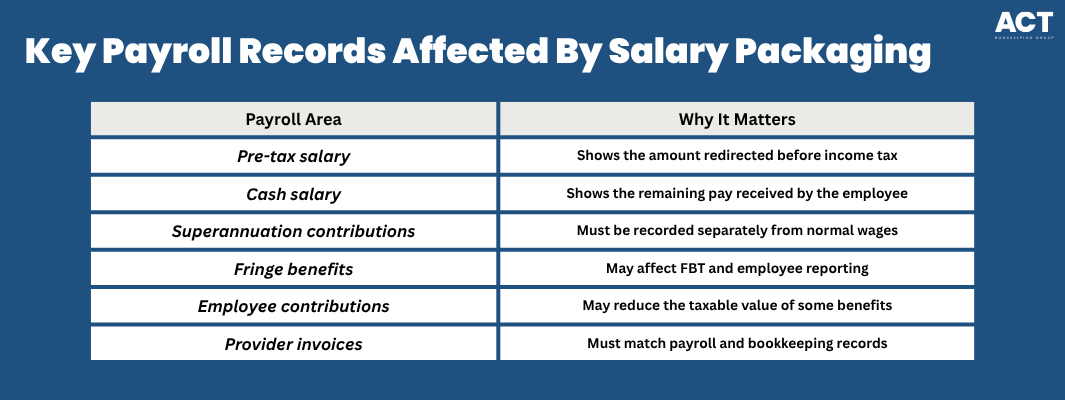
Salary packaging affects payroll bookkeeping because salary, pre-tax dollars, after tax income, benefits, and employee contributions may need separate treatment. A bookkeeper must record what was paid as salary, what was packaged, and what was provided as a benefit. This matters because the salary package depends on the benefit type, whether FBT applies, and whether the employer must pay FBT. Some benefits may be exempt from FBT, while other fringe benefits may need FBT records and may need to be reported as reportable fringe benefits.
How Does Salary Packaging Affect Income Tax and Take-Home Pay?
Salary packaging may reduce taxable income when part of an employee’s pay is redirected to approved benefits before income tax is calculated. This can mean less tax for some employees and more take home pay, but the result is not the same for everyone. Employees may use salary packaging where the arrangement meets ATO requirements and normal PAYG withholding obligations are applied correctly, but it is not an automatic pay rise. The benefits of salary packaging depend on the employee’s tax bill, pay level, chosen benefits, and any salary packaging provider fees.

FBT Needs Clear Bookkeeping Records
Fringe Benefits Tax is a tax employers may need to pay on certain benefits provided to employees or their associates. If a business offers salary packaging, it must know when it may need to pay FBT, keep FBT records, or confirm that a benefit is exempt. Employers also need to choose the right FBT calculation method so that vehicle, entertainment, and other fringe benefits are treated correctly.
Salary Packaging Providers Still Need Payroll Checks
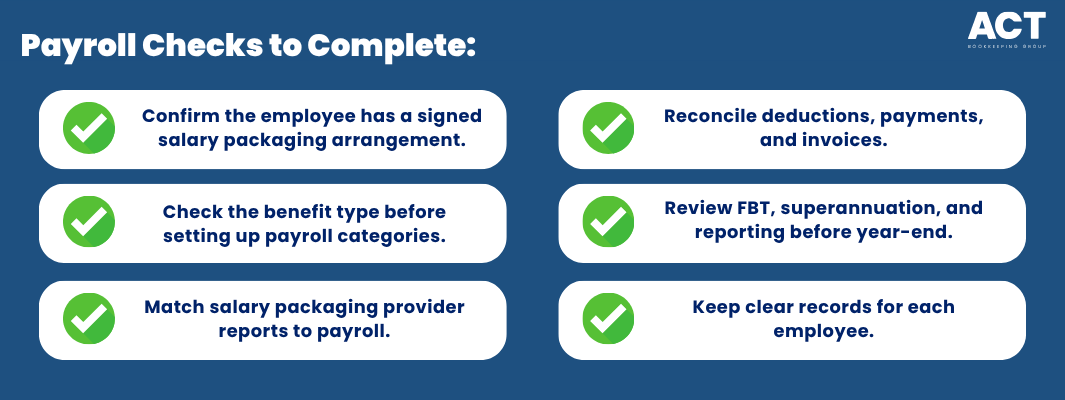
A salary packaging provider may calculate deductions, manage benefits, and prepare reports, but the employer still needs accurate bookkeeping and must ensure salary sacrifice amounts are reported correctly through STP. Most employers still need to check that payroll entries, bank payments, invoices, and employee records match. Errors often happen when the salary packaging provider report does not match the payroll file. This can lead to incorrect income, benefit, payroll tax, or employee contribution records, so employers should understand their payroll tax obligations alongside salary packaging entries.
What Should Employers Consider Before Offering Salary Packaging?
Employers should check whether salary packaging suits their business, payroll system, and employees. Any employer offers should be practical to manage, clearly documented, and consistent with employment conditions. Australian workers benefit most when salary packaging is explained clearly, without promises of automatic tax savings or guaranteed pay less tax outcomes, especially where tax debts or ATO payment plans are already affecting cash flow.
We’re more than bookkeeping experts
As part of ACT Tax Group, we offer complete accounting and business advisory services tailored to your needs.
How ACT Bookkeeping Can Help with Salary Packaging Payroll Bookkeeping
ACT Bookkeeping helps Australian businesses keep salary packaging, payroll, and bookkeeping records organised. We support payroll setup, provider reconciliations, Business Activity Statement (BAS) ready records, FBT record preparation, superannuation tracking, and payroll reporting processes. If your employer offers salary packaging, or you are considering salary packaging for staff, you can arrange a consultation with our team. We can review payroll categories, identify record gaps, and help keep your bookkeeping practical and accurate.

Conclusion
Salary packaging can be useful, but it needs careful payroll bookkeeping. It can affect income tax, taxable income, pre-tax salary, take home pay, salary sacrifice reporting, fringe benefits, FBT, reportable fringe benefits, and employee benefit records. The next step is to review each salary sacrifice arrangement against your payroll setup, provider reports, and bookkeeping records. Clear records help the business manage payroll, support employees, and meet reporting requirements.
