

Published on 29 Oct 2026
Estimate Tax Return calculations depend on accurate financial records, making Goods and Services Tax (GST) control account reconciliation an important step before estimating taxable income. Incorrect GST entries can distort business profit figures, affect tax deductions and create confusion about potential income tax obligations. For Australian small businesses, understanding the relationship between income and tax starts with reliable bookkeeping. Before using a tax return calculator or estimating tax payable, you need to confirm that your financial records accurately reflect business transactions throughout the financial year.
The Importance of Reconciling GST Control Accounts Before Estimating Your Tax Return
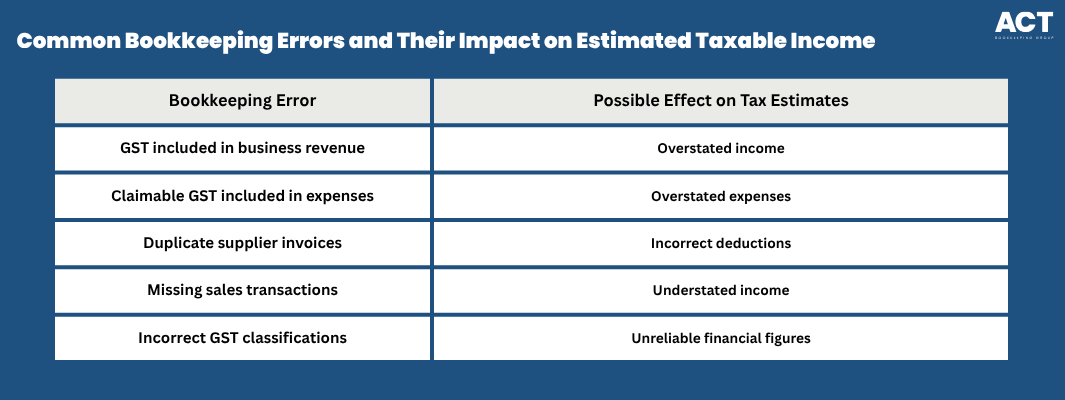
GST control accounts track GST payable on taxable sales and GST credits on eligible business purchases. Reconciling these accounts helps identify recording errors before your accountant calculates estimated tax using your business income statement. Incorrect entries may affect taxable income by overstating revenue or expenses. While GST itself generally does not form part of business profit when recorded correctly, mistakes can change the figures used for income tax purposes.
Are GST errors affecting your tax estimates?
Schedule a complimentary consultation with us today to reconcile your GST accounts.
The Hidden Impact of GST Errors on Your Profit Figures
GST errors can affect how much tax your business expects to pay, particularly when claimable GST is incorrectly included in expenses. These mistakes may also lead to inaccurate tax deductions or unreliable financial reports. The standard Australian GST rate is 10%, and the GST component of a fully taxable GST-inclusive purchase is generally one-eleventh of the total amount.
Example: A Canberra electrician records a $5,500 GST-inclusive equipment purchase entirely as an expense. If the business is entitled to the full $500 GST credit, the equipment’s cost for income tax purposes is generally $5,000. Whether the business can claim an immediate deduction or must depreciate the equipment depends on the applicable tax rules.

The Relationship Between GST Control Accounts and Estimated Taxable Income
Your taxable income depends on assessable income, allowable deductions and applicable tax adjustments. GST reconciliation helps ensure the income before tax shown in your business accounts provides a reasonable starting point for an estimate tax return calculation.
Example: A plumbing business records a $1,100 supplier invoice twice. If the purchase is fully creditable and deductible, expenses could be overstated by $1,000, with GST credits overstated by $100.
A Practical GST Reconciliation Process Before Tax Time
Accurate bookkeeping makes it easier to estimate taxable income, review tax obligations and prepare financial information for your registered tax agent. A consistent reconciliation process also helps identify problems before the end of the tax year.
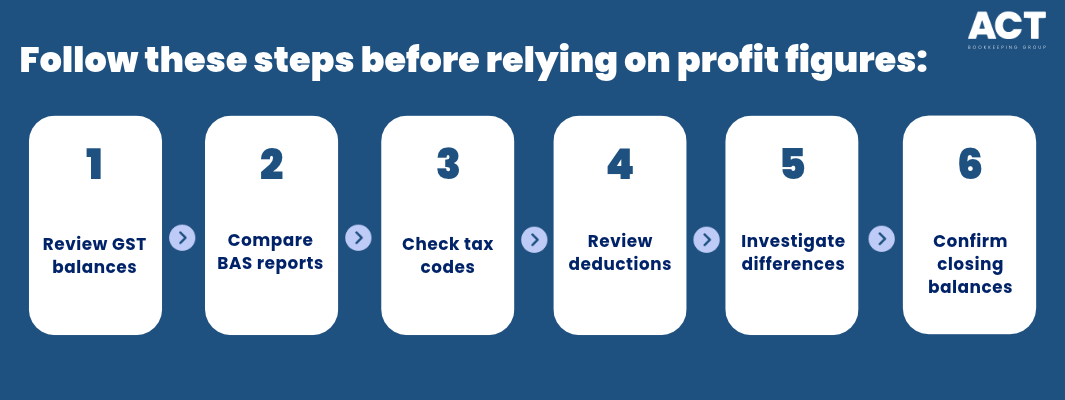
Follow these steps before relying on profit figures:
Review GST balances: Check GST collected, GST paid and outstanding amounts.
Compare BAS reports: Match Business Activity Statement (BAS) figures against accounting records.
Check tax codes: Confirm purchases and sales have the correct GST treatment.
Review deductions: Identify duplicate expenses and transactions recorded incorrectly.
Investigate differences: Check missing invoices, adjustments and payment timing.
Confirm closing balances: Reconcile remaining amounts against BAS lodgements and payments.
The Australian Taxation Office (ATO) allows businesses to account for GST on a cash basis if eligible, or on a non-cash basis. Cash-basis reporting generally follows payments received or made, while non-cash reporting generally follows the earlier of payment or invoicing. GST reporting methods may differ from those used for income tax purposes.
The Role of Accurate Bookkeeping in Tax Return Calculator Results
A tax calculator may provide an estimate of income tax, but its results depend on accurate information. Business owners should distinguish accounting profit from taxable income before using calculator results to make financial decisions.
Other factors can affect the final amount of tax payable or any tax refund:
Business structure: Sole traders and companies have different income tax treatments.
Eligible deductions: Expenses must meet the applicable deduction rules.
Tax rates: Australian income tax rates vary according to the taxpayer and circumstances.
Tax offsets: Eligible offsets may reduce income tax payable.
Tax paid: Withholding and instalments may affect the final balance.
Example: A sole trader estimates annual income using unreconciled bookkeeping figures. After correcting duplicated expenses, the accountant identifies a higher taxable income amount, changing the estimated tax calculation.
Personal circumstances, including the Medicare levy, Medicare levy surcharge, residency status and private health insurance, may also affect individual tax outcomes. These factors require separate consideration rather than being determined through GST reconciliation.
We’re more than bookkeeping experts
As part of ACT Tax Group, we offer complete accounting and business advisory services tailored to your needs.
How ACT Bookkeeping Can Help with GST Reconciliation and Accurate Financial Records
At ACT Bookkeeping, we help Australian businesses maintain organised records, reconcile GST control accounts and prepare reliable financial information. Our bookkeeping support includes transaction reviews, BAS assistance, accounting software processes and identifying discrepancies that could affect profit reporting. We understand that managing bookkeeping alongside daily business responsibilities can be challenging. Book a consultation with our team to discuss your GST records, improve bookkeeping accuracy and provide your tax agent with dependable figures for estimating income tax.

Build More Reliable Tax Estimates with Reconciled Accounts
Accurate tax estimates begin with reliable financial information. Reconciling GST control accounts helps identify incorrectly recorded transactions, improve reported profit figures and support accurate tax return preparation. Before estimating your next tax return, review GST balances, verify business expenses and confirm that financial reports reflect actual transactions. This provides a clearer starting point for assessing taxable income and planning for tax obligations.
