
Published on 29 Oct 2026
An estimated tax return calculator can help you understand your potential income tax bill or tax refund, but the result depends on accurate financial information. Before using one, reconcile your business income, business expenses, tax withheld, bank transactions and other relevant records. Missing income or incorrectly recorded expenses can affect your estimated tax position.
Essential Bookkeeping Figures to Reconcile Before Using an Estimated Tax Return Calculator
Before using an estimated tax return calculator, check your total income, eligible deductions and tax already withheld during the financial year. These figures help determine your taxable income and provide the foundation for estimating how much tax you may owe or receive back. Your bookkeeping records should match bank statements, invoices, receipts and income statements. Reviewing these documents helps identify missing transactions, duplicated expenses and incorrect figures before entering information into a tax calculator.
Unsure whether your expenses are recorded correctly?
Schedule a complimentary consultation with us today to review expense records and remove duplicates.
Essential figures to reconcile include:
Gross annual income: Employment income, business income and other taxable earnings.
Business expenses: Operating costs and other potentially eligible deductions.
Tax withheld: Amounts deducted from wages or other relevant payments.
Bank transactions: Deposits, withdrawals and outstanding transactions.
GST records: Goods and Services Tax (GST) collected and eligible credits.
Tax payments: Pay as You Go (PAYG) instalments and other tax already paid.
Accurate Bookkeeping Supports More Reliable Tax Estimates
A tax return calculator uses the figures you provide to estimate your income tax position. However, it cannot automatically identify incorrectly classified expenses, missing income or unsupported tax deductions. For Australian residents entitled to the full tax-free threshold, the first $18,200 of taxable income is generally free from income tax. Applicable tax rates depend on the financial year, with the relevant resident income tax rate reducing from 16% to 15% from 1 July 2026. Tax offsets and individual circumstances can also affect the final amount payable.

Reconciling Business Income and Employment Income
Start by comparing your business income against invoices, customer payments, bank deposits and accounting software records. Include relevant additional income and check whether transactions belong to the correct financial year. If you receive employment income, review your income statement or payment summary to confirm your annual income and total tax withheld. Sole traders should also consider other income sources because their business income generally forms part of their individual tax return.
Example: A Canberra electrician earns $65,000 from business activities and $20,000 from part-time employment. Entering only the business income into a tax refund calculator could produce an inaccurate result because both income sources may affect their total taxable income.
Business Expenses and Tax Deductions to Review
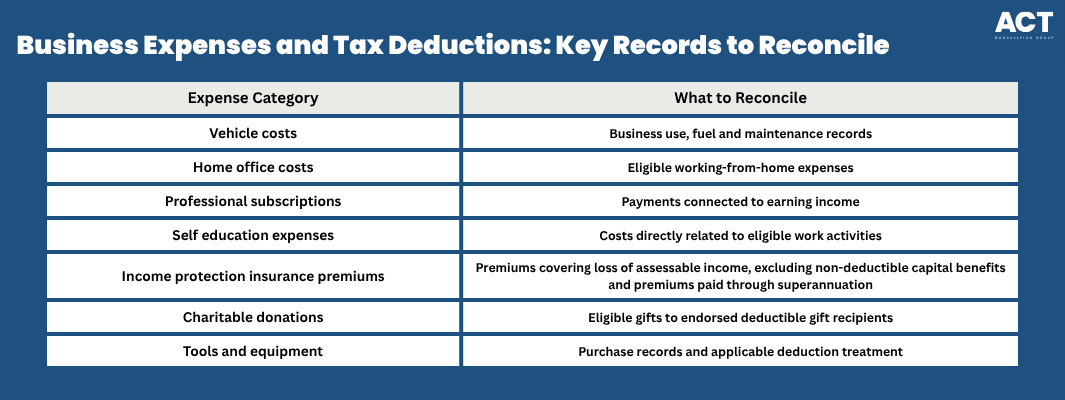
Business expenses should be checked against receipts, supplier invoices and bank transactions before calculating estimated tax. Subtracting eligible deductions from assessable income helps determine taxable income, but not every business payment qualifies for an immediate deduction. Separate personal spending from genuine business costs and confirm whether expenses have already been recorded. Some purchases, including equipment and vehicles, may require depreciation or other tax treatment rather than an immediate deduction.
Example: A sole trader buys a $4,000 piece of equipment for business use. The purchase must be recorded correctly, while its deduction treatment depends on the applicable tax rules and business circumstances.
The Importance of Reconciling GST and Bank Transactions
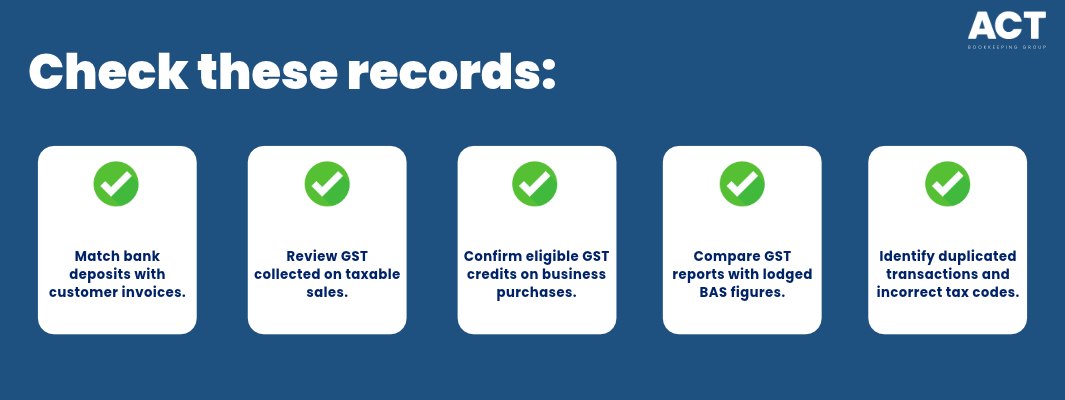
GST reconciliation helps ensure your bookkeeping figures reflect business income and expenses correctly. For GST-registered businesses, amounts collected or paid as GST generally need to be separated from income and expenses when calculating income tax. Australia’s standard GST rate is 10%, and most businesses must register when their current or projected GST turnover meets the $75,000 threshold, subject to applicable rules and exceptions. Comparing bookkeeping reports with Business Activity Statement (BAS) records helps identify discrepancies while accounting for differences in reporting periods and accounting methods.
Example: A Canberra plumbing business receives $11,000 for a taxable service, including $1,000 GST. Recording the GST component separately prevents the full payment from being incorrectly treated as business income for income tax purposes.
How Tax Withheld Affects Your Estimated Tax Refund
Tax withheld represents money an employer or other payer has already deducted towards your income tax obligations. Your total tax withheld, PAYG instalments and applicable credits help determine whether you may receive a tax refund or owe money.
For example, receiving a pay rise during the financial year may increase your total income and affect the tax withheld amount. Compare your income statement with payroll records to confirm what your employer withheld. A basic calculation follows this sequence:
Determine assessable income from all relevant sources.
Subtract eligible deductions to calculate taxable income.
Apply the relevant tax rates and adjustments.
Account for applicable tax offsets, the Medicare levy, Medicare levy surcharge and compulsory study and training support loan repayments.
Subtract relevant tax payments and withholding credits from the total tax payable.
We’re more than bookkeeping experts
As part of ACT Tax Group, we offer complete accounting and business advisory services tailored to your needs.
Other Tax Factors That Can Change Your Final Refund
Your estimated tax refund may change because a calculator does not necessarily account for every part of your tax affairs. These factors can include the Medicare levy, Medicare levy surcharge, Low Income Tax Offset and private health insurance adjustments. Additional income from capital gains, taxable government payments or other sources may also affect the calculation. Family tax benefits are generally not taxable, while certain non-cash benefits and reportable fringe benefits may affect income tests without being included in taxable income.
Additional factors to review:
Tax offsets: The low income tax offset and other tax offsets where eligible.
Medicare levy: Generally 2% of taxable income, subject to applicable reductions or exemptions.
Private health insurance: Relevant rebate adjustments and Medicare levy surcharge considerations.
Capital gains: Taxable gains from investments or asset disposals.
Residency: Different rules may apply to foreign residents and working holiday makers.
Understanding the Difference Between Estimated and Actual Tax Refunds
A tax refund calculator provides an estimated refund rather than a final tax assessment issued by the ATO. Your actual refund or tax bill depends on your assessable income, eligible deductions, tax offsets, tax already paid and other individual circumstances. An instant estimate can assist with financial planning, but it should not replace professional guidance. A registered tax agent can review your tax affairs, confirm applicable deductions and help determine your income tax obligations before the ATO issues its assessment.

How ACT Bookkeeping Can Help with Tax Return Preparation Records
At ACT Bookkeeping, we help Canberra businesses and sole traders maintain organised bookkeeping records through bank reconciliations, expense categorisation, GST checks, BAS support and payroll processing. Our team helps ensure your financial information is complete and ready for review when preparing your tax return. If your records contain missing transactions, inconsistent expenses or unclear income figures, book a consultation with ACT Bookkeeping. We can help organise your bookkeeping and prepare the information your registered tax agent needs for your tax assessment.
