
Published on 24 Sep 2026
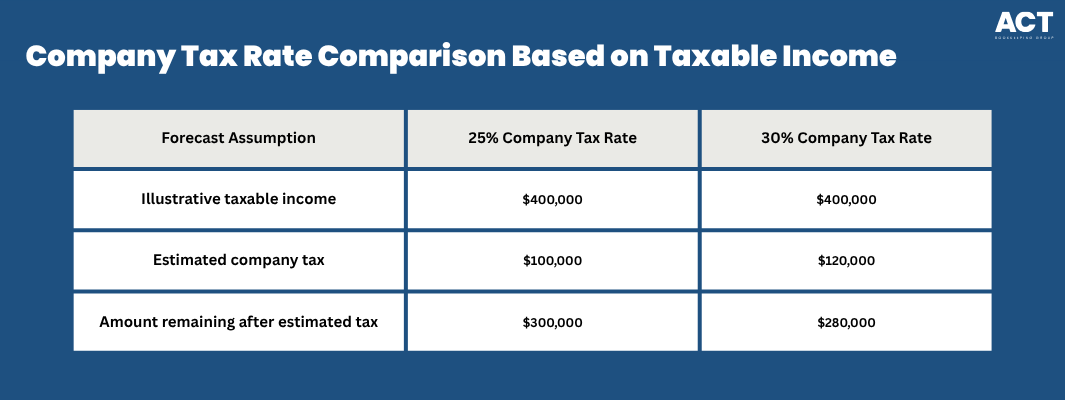
How Corporate Tax Rates Can Affect Your Bookkeeping Forecasts and Budgets shows how the corporate tax rate you expect changes how much cash your business needs to set aside. If your budget uses the wrong company tax rate or ignores income tax, it may overstate available cash. Company tax is not only a year-end issue. Good bookkeeping helps you monitor taxable profit, business activities and cash flow so you can understand your likely tax position and prepare for tax obligations.
Choosing the Right Company Tax Rate for Your Forecast
Australian companies that qualify as a base rate entity must use the lower company tax rate of 25%, while the full company tax rate of 30% generally applies to other companies. Eligibility depends on the company’s aggregated turnover and how much assessable income comes from passive sources.
The Australian Taxation Office (ATO) explains that a base rate entity generally needs aggregated turnover below $50 million and no more than 80% of assessable income to be base rate entity passive income. Treasury’s 2025–26 Tax Expenditures and Insights Statement reported that about 403,000 companies received the lower rate in 2022–23, and 82% had annual turnover below $2 million.
Is Your Forecast Using the Correct Company Tax Rate?
Schedule a complimentary consultation with us today to improve your tax and cash-flow forecasts.
Corporate Tax Rates Shape Your Available Cash
Corporate income tax affects how much profit remains available after tax, but accounting profit and taxable income are not always the same. Company tax deductions, timing differences, capital gains and other adjustments can change the correct amount of tax payable for an income year. Your bookkeeping forecast should not simply apply a percentage to gross income and assume the result is final. It should give your accountant or registered tax agent reliable records so allowable deductions and specific circumstances can be reviewed under current tax laws.
Different Types of Income Can Change the Tax Position
Not all corporate income is treated the same way when testing eligibility for the lower rate. Trading income may sit alongside passive income such as rental income, interest income, dividends, corporate distributions, franking credits and certain net capital gains.
The ATO gives practical examples. Coffee and Cake Pty Ltd had $700,000 of assessable income, including $200,000 of rental income, and remained within the passive income test, while another company earning only passive income did not qualify for the lower company tax rate. When reviewing income, check:
Trading income from ordinary business activities
Rental income from investment properties
Interest, dividends and other passive income
Capital gains or net capital gains
Whether foreign income or connected entities affect the company’s tax position or aggregated turnover

Reliable Bookkeeping Improves Tax Forecasts
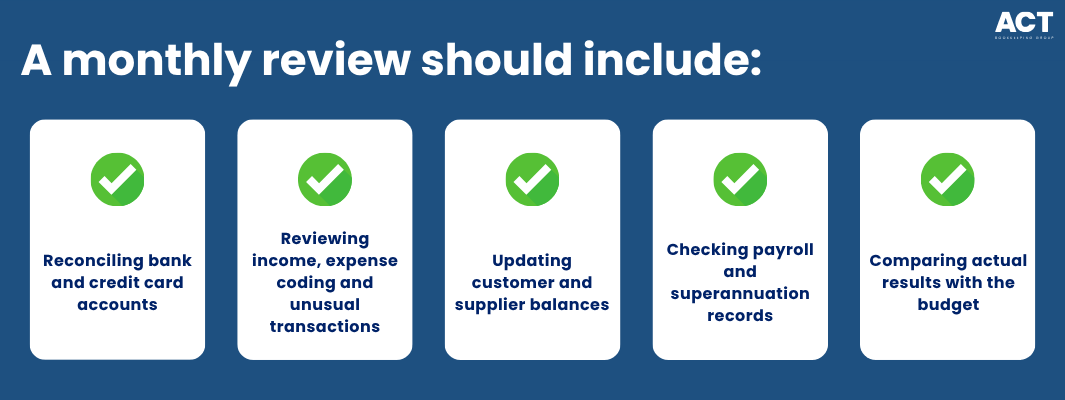
A useful forecast depends on current records. Income, expenses, accounts receivable, accounts payable, payroll, asset purchases and cash balances help you see whether the business is tracking towards its expected taxable profit.
Regular bookkeeping makes it easier to identify deductible costs such as eligible office supplies and operating expenses. Some costs may be immediately deductible while others need different tax treatment, so do not assume an asset purchase qualifies for an instant asset write off or another tax concession without checking current eligibility requirements.
PAYG Instalments Affect Your Budget and Cash Flow
Pay As You Go (PAYG) instalments are prepayments towards expected income tax, so include them in your cash-flow forecast. A company may be profitable but face pressure when PAYG instalments and Goods and Services Tax (GST) amounts reported through a Business Activity Statement (BAS) are due with payroll and supplier payments.
For 2026–27, the ATO’s gross domestic product adjustment factor for GST and PAYG instalments is 5%, while substituted accounting periods starting 1 January, 1 February or 1 March 2026 continue at 4%. This does not change the corporate tax rate, so use activity statement amounts when forecasting. A practical process is:
Update bookkeeping to the latest completed month.
Compare actual income and expenses with the budget.
Add scheduled PAYG and BAS payments.
Update the expected tax position.
Speak with a registered tax agent if instalments no longer reflect expected income tax.
We’re more than bookkeeping experts
As part of ACT Tax Group, we offer complete accounting and business advisory services tailored to your needs.
ACT Bookkeeping Support for Corporate Tax Forecasting
We help you keep organised, timely records so your budget is based on reliable numbers. Our support can include transaction coding, bank reconciliations, accounts payable, accounts receivable, payroll records, GST accuracy, BAS support and reports that improve visibility over income, expenses and cash flow.
Where corporate tax, tax planning or international tax rules require specialist advice, we can prepare accurate records for your accountant or registered tax agent. You can book a meeting with ACT Bookkeeping to review your bookkeeping systems, reporting process and forecast for clearer financial information.

Building Your Budget Around Reliable Numbers
The key takeaways are straightforward: use the correct company tax rate, understand what contributes to assessable income, monitor aggregated turnover and passive income, and separate accounting profit from taxable income. Good bookkeeping gives you a clearer view of how much tax may be due and how much cash may be available.
Review your forecast throughout the financial year rather than waiting for the tax return. When your bookkeeping stays current and tax assumptions reflect the business’s actual position, you can plan spending, tax payments and decisions with greater confidence and fewer surprises.
Frequently Asked Questions
Do Australian Resident Companies Pay Tax on Worldwide Income?
Australian resident companies generally pay tax on worldwide income under the Australian taxation system, although some foreign income may be non-assessable non-exempt income. Assessable foreign income contributes to total assessable income, and foreign tax paid may qualify for a foreign income tax offset to reduce double taxation, subject to relevant rules and limits. Businesses with overseas income should work with a registered tax agent to confirm the correct treatment.
How Does the Aggregated Turnover Threshold Affect Small Business Concessions?
The aggregated turnover threshold can affect whether a business qualifies for small business concessions and other tax treatments. Many business owners should consider whether connected entities or affiliates contribute to aggregated turnover when checking concessions or whether eligible depreciating asset costs can be immediately deducted under simplified depreciation rules. Keeping accurate bookkeeping records makes these checks easier and supports a clearer view of the overall tax burden.
When Do Specialist Tax Rules Apply to a Company?
Listed investment company status has eligibility requirements, while the Income Inclusion Rule forms part of Australia’s Pillar Two global minimum tax for in-scope multinational enterprise groups that meet the €750 million revenue threshold. The Income Inclusion Rule applies for fiscal years starting on or after 1 January 2024. These rules are unlikely to apply to most small businesses and are separate from broader policy discussions about economic growth, so specialist tax advice is appropriate where relevant.
