Published on 24 Sep 2026
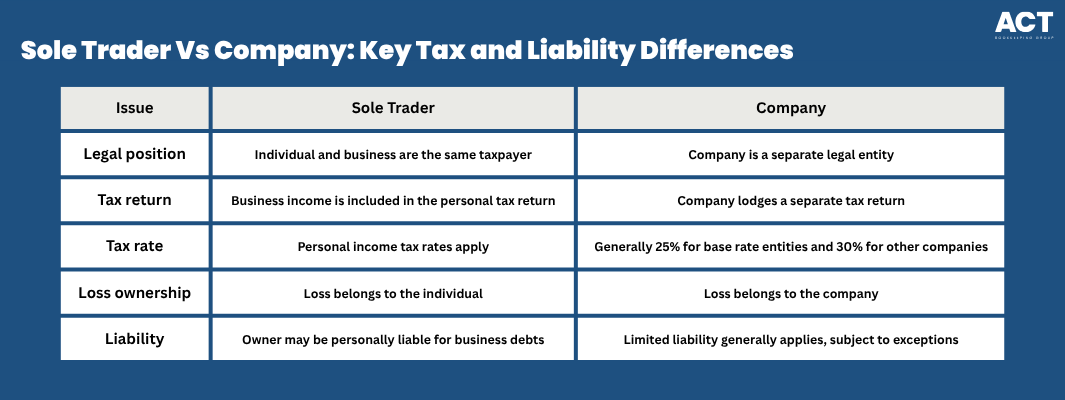
Company vs Sole Trader: How Tax Losses Are Tracked and Carried Forward is about who owns a tax loss and how that loss can be used in future tax returns. A sole trader reports business income through a personal tax return, while a company is a separate legal entity that lodges its own tax return and keeps its tax losses within the company.
The difference matters when a business has a difficult year, changes business structure, or moves from a sole trader business structure to a company structure. Clear bookkeeping separates business finances from personal income and gives your tax adviser reliable records when deciding whether a loss can be used now or carried forward.
The Main Difference Between Company and Sole Trader Tax Losses
The key difference between a company vs sole trader is the taxpayer that owns the loss. A sole trader and the individual are the same taxpayer for income tax purposes, while a proprietary limited company, often called a Pty Ltd company, is a separate legal entity with its own Australian Company Number (ACN) and separate business tax return.
For a sole trader, an eligible business loss may sometimes reduce other personal income, subject to the tax rules that decide whether a business loss can reduce other personal income. For a company, company losses generally stay with the company and may be carried forward against future company profits if the required loss tests are met.
Can’t use your sole trader loss after restructuring?
Schedule a complimentary consultation with us today to organise records before moving to a company.
Tax Losses Follow the Taxpayer, Not Just the Business Activity
Tax losses stay with the taxpayer that incurred them, so changing from a sole trader structure to a company business structure does not automatically move an old sole trader loss into the company. Company debts, company assets and company money also belong to the legal entity and should not be treated as the owner’s personal assets. This is one reason professional advice is useful before changing business structure. A business advisor or registered tax professional can review existing losses, business assets, business liabilities and personal guarantees before the new structure begins trading.
According to the Australian Bureau of Statistics, Australia had 2,814,778 actively trading businesses at 30 June 2026. Of these, 1,271,197 were companies and 848,300 were sole proprietors.
Sole Trader Tax Loss Treatment
A sole trader reports business income and allowable deductions using the individual Tax File Number (TFN), with the result included in the personal tax return. When expenses are higher than assessable business income, a loss may arise, but the owner cannot assume that the full amount will immediately reduce personal tax or other income.
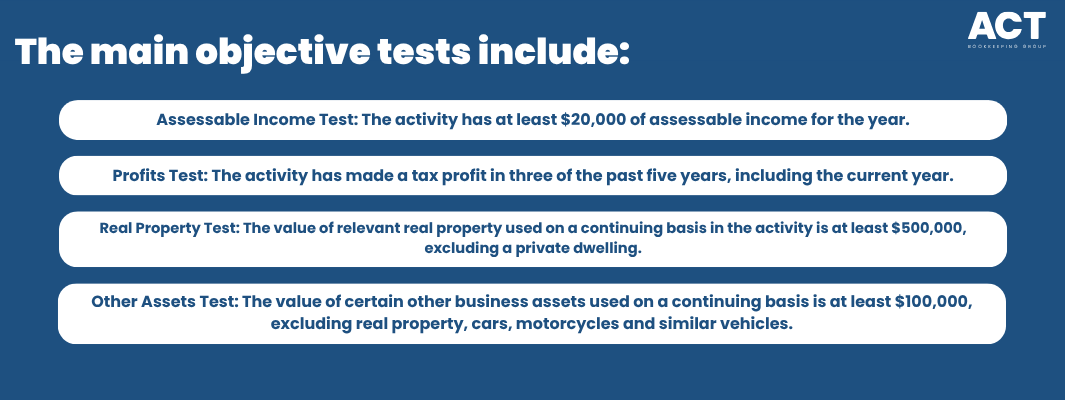
The Australian Taxation Office (ATO) applies non-commercial loss rules to business activities carried on by individuals, including sole traders. To offset a business loss against other assessable income, a sole trader generally needs income for non-commercial loss purposes of less than $250,000 and to satisfy one of the four tests, unless an exception applies or the Commissioner exercises a discretion. Otherwise, the loss is deferred.
Deferred Non-Commercial Losses for Sole Traders
A deferred non-commercial loss does not disappear. It is carried forward for the relevant business activity and may be used against future income from that activity, or against other assessable income in a later year when the non-commercial loss rules allow it. This is different from assuming every accounting loss shown in software is immediately deductible for income tax. The tax result may change after private expenses, capital purchases, depreciation and non-deductible items are considered.
Real Example: A landscaping sole trader records a $15,000 accounting loss. After the accountant reviews equipment purchases and private vehicle use, the final tax loss may be different, so the bookkeeping result should not be treated as the final tax figure.
Carrying Forward Company Tax Losses
A company is its own taxpayer, so company tax losses generally remain inside the company and may be carried forward for future years. Companies pay company tax on taxable company profits, and an unused loss may reduce taxable income in a later year if the company satisfies the relevant loss tests. A shareholder or director cannot normally take a company loss and use it to reduce personal income or pay personal tax. The annual company tax return, tax reconciliation and carried-forward loss schedule should therefore be kept separately from the owner’s personal tax records.
Real Case Example: In Avondale Motors (Parts) Pty Ltd v Federal Commissioner of Taxation, the court considered whether a company could use earlier losses after changes in ownership and business activity. It remains a useful reminder that company changes can affect access to older losses.

Company Loss Tests and Ownership Changes
Changes to shareholdings or business activities can affect how older losses are reviewed, so they should be documented carefully. A company structure can provide limited liability, but company registration also brings separate responsibilities.
Keep company registration and ownership records with the financial records. Australian Securities and Investments Commission (ASIC) records, including the Australian Company Number, company details and annual review information, help your accountant identify structural changes but do not replace bookkeeping records. Useful records include:
Share registers and share transfer documents.
Company registration records.
Annual financial statements and company tax returns.
Tax loss schedules and tax reconciliations.
Records of major changes in business activities.
Tax Losses Are Different from Accounting and Capital Losses
A bookkeeping loss, tax loss and capital loss are different figures. Accounting software may show that expenses were higher than revenue, but the income tax calculation can change after tax adjustments, so the bookkeeping result is a starting point rather than the final tax outcome. Capital losses also need separate tracking because they generally apply against capital gains rather than ordinary business income. Keeping these categories separate helps your accountant prepare the correct tax return.
Business Structure Changes Affect More Than Tax Losses
Choosing between sole trader vs company involves more than the company tax rate or possible tax benefits. A sole trader business is often the simplest business structure, while a company has more ongoing costs, a separate tax return, an annual review fee and company registration obligations. The structure can also affect business debts, personal assets, asset protection, superannuation obligations and how money is taken from the business. Limited liability can separate personal and business assets, but directors may still be personally liable in some situations, including where personal guarantees apply.
We’re more than bookkeeping experts
As part of ACT Tax Group, we offer complete accounting and business advisory services tailored to your needs.
Records That Support Carried-Forward Losses
Tax-loss records may need to be kept longer than ordinary business records. The ATO generally requires records for most business transactions to be kept for five years, while records supporting tax losses should be retained for the applicable period after the loss is fully deducted or recouped.
“Every year we see small businesses run into avoidable issues because they haven’t kept accurate records,” explains Angela Allen, Assistant Commissioner at the Australian Taxation Office. Reliable records support tax return figures and make later review easier.
A practical record-keeping process is to:
Reconcile the business bank account and other key accounts at year end.
Separate private spending from business expenses and review asset purchases.
Confirm payroll, superannuation, GST and BAS records are up to date where applicable.
Give the completed bookkeeping file and supporting documents to the tax adviser.
Keep the final tax return, tax reconciliation and carried-forward loss information together.
How ACT Bookkeeping Can Help with Tax-Loss Record Keeping
At ACT Bookkeeping, we help small to medium-sized Australian businesses maintain organised, timely and accountant-ready records. We can support bookkeeping, payroll, GST records, BAS support, software processes and bank reconciliations so your accountant has clear information when reviewing company vs sole trader tax losses.
If your sole trader business or company has made a loss, changed structure or has older balances that are difficult to reconcile, you can book a consultation with our team. We can help organise the records and prepare reliable information for your accountant or tax adviser, while the registered tax professional confirms the final income tax treatment.

Keeping Your Loss Records Ready for Future Tax Returns
The main difference between sole trader and company losses is who owns the loss. A sole trader reports business results through the individual tax return, while a company is a separate legal entity with its own tax return, company assets, company debts and carried-forward loss records. Keeping clean bookkeeping records, separating business and personal transactions, and retaining final tax working papers makes future loss tracking easier. It also gives your adviser better information if the business changes ownership or restructures.
Tax losses can affect future tax returns for years, so they should be tracked carefully. Good records help you understand your business finances and give your tax professional the information needed to apply the tax rules to your circumstances.
