

Published on 01 Oct 2026
Capital Gains Tax on Shares is easier to manage when your buy, sell and supporting records are complete. Clear records help your accountant calculate a capital gain or capital loss, identify the financial year and prepare your tax return. For share investors, Capital Gains Tax (CGT) is part of income tax, and net capital gain is generally included in assessable income. Different rules apply if shares are trading stock in a business.
Complete Buy and Sell Records Support Accurate Capital Gains Tax
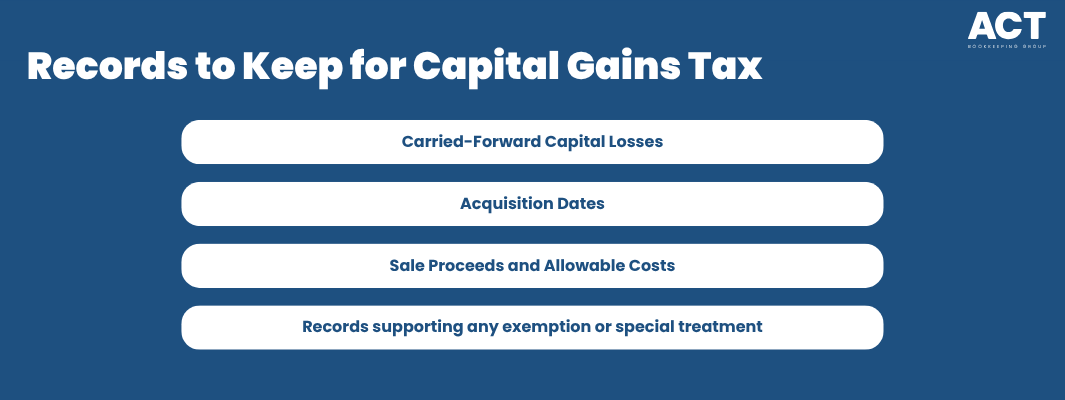
Keep evidence of what you bought, when you bought it, the purchase price, brokerage and what you received when you sell. Each CGT asset should have a clear history so your tax agent can calculate the gain or loss. For each share parcel, keep the buy and sell contract notes, acquisition and sale dates, number and class of shares, purchase price and sale proceeds, brokerage and transaction costs, Dividend Reinvestment Plan (DRP) statements, and records of takeovers, demergers and buy-backs for your accountant to review.
Share records scattered across brokers, emails and old statements?
Schedule a complimentary consultation with us today to bring every buy and sell record together.
Share Parcels Need to Be Tracked Separately
Shares in the same company may have been bought at different times and prices, so each parcel can produce a different capital gain when sold. Tracking parcels helps your tax agent identify which shares were sold and whether a CGT discount may apply. The Australian Securities Exchange (ASX) Australian Investor Study 2023 surveyed 5,519 Australian adults. It found that 70% of on-exchange investors used an online broker or trading platform, while the median number of share or listed investment trades was 12.
Sale Dates and Cost Details Affect the Financial Year
The timing of a CGT event matters because it determines which financial year the capital gain or capital loss belongs to. Where a share sale is made under a contract, the relevant date is generally when the contract is entered into, not the settlement date. A real example appears in Australian Taxation Office (ATO) Class Ruling CR 2025/5 on Boral’s off-market takeover, where the CGT event occurred when shareholders entered the contract to dispose of their shares. It confirms the contract date, rather than settlement, is the relevant time for this CGT event.

Capital Losses and the CGT Discount Need Clear Records
Capital losses can reduce current year capital gains, but they cannot be deducted from wages, dividends or other income. If losses are not fully used in the same financial year, they can be carried forward and applied against future capital gains in later financial years. Eligible Australian resident individuals may receive a 50% CGT discount on a capital gain from an asset held for at least 12 months. Your accountant applies available capital losses before calculating the discount and net capital gain, so records from previous years may remain important.
Dividends and Corporate Actions Need Their Own Records
Dividend income is separate from the gain or loss made when shares are sold. Keep dividend statements, including any franking credits, because these can affect taxable income even when you have not sold the investment. A DRP needs careful tracking because reinvested dividends create additional shares with their own acquisition details for CGT purposes. Takeovers, buy-backs and demergers can also change the number, cost or market value of assets you hold, so keep every relevant notice.
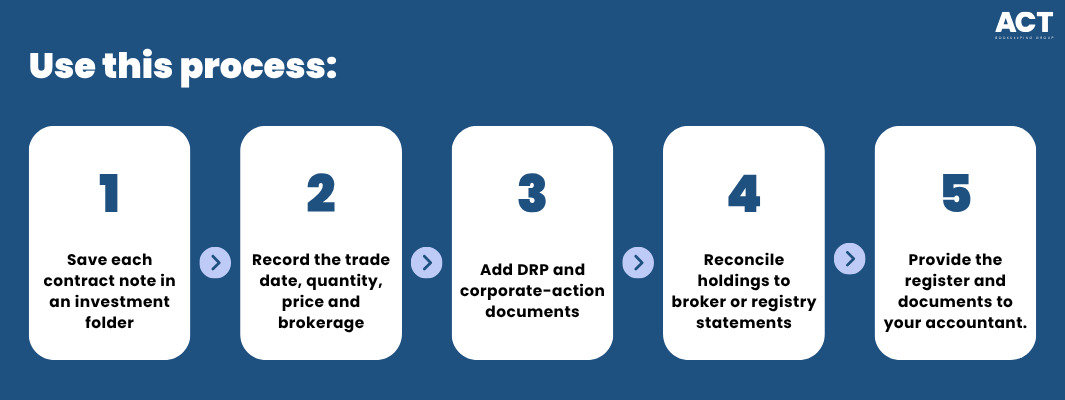
A Simple Record-Keeping Process Makes Tax Time Easier
Consistent CGT records reduce unnecessary rebuilding work at tax time. Keep CGT records for at least five years after the relevant CGT event, and longer if used in a later tax return or to support carried-forward net capital losses.
Common Record Gaps Can Delay Capital Gains Tax Calculations
Missing purchase records, forgotten brokerage, incomplete DRP history and unclear parcel selection can slow the calculation of a capital gain, capital loss or net capital gain. They can also make it harder to determine whether an investment qualifies for a discount. Common gaps include:
changing brokers without downloading statements
recording only money received from a sale
overlooking reinvested dividends
mixing several share parcels into one figure
deleting takeover or demerger documents
relying on memory when completing a tax return.

We’re more than bookkeeping experts
As part of ACT Tax Group, we offer complete accounting and business advisory services tailored to your needs.
How ACT Bookkeeping Can Help with Share Investment Records
ACT Bookkeeping can help organise your investment records, so your accountant receives complete, practical information. We can maintain transaction registers, reconcile broker records, organise supporting documents and keep your bookkeeping ready for tax time, while your accountant or registered tax agent determines the correct CGT treatment. If your share records are spread across emails, platforms and old statements, book or schedule a meeting with our team. We can help bring the information together, improve your record-keeping process and maintain organised records for future tax returns.

Keep Your Share Records Ready for Tax Time
Good share record keeping starts when you buy an investment, not when you sell it. Keeping purchase records, sale proceeds, brokerage, DRP statements and corporate-action documents together gives your accountant the information needed to calculate capital gains and losses accurately and determine whether you need to pay Capital Gains Tax.
A simple digital register can save time, reduce financial stress and make your tax return easier to prepare. Start by gathering records for every current holding, then reconcile each parcel before the next CGT event occurs so your accountant has the information needed to work out how much tax you may need to pay.
