

Published on 18 Jun 2026
How Much Tax Should Come Out of Weekly Employee Wages? A Practical Guide for Small Employers is a common question because weekly tax is based on each employee’s gross income, Tax File Number declaration, tax-free threshold choice, tax rates, and personal circumstances. The amount of tax withheld is not a flat dollar amount for every worker, so small employers need to use the Australian Taxation Office (ATO) weekly tax table that applies to the payment date, payroll software updated for the correct financial year, or the ATO tax withheld calculator.
How Much Tax Do I Pay Weekly as an Employee?
The question “how much tax do I pay weekly” depends on the employee’s weekly earnings for the pay period, declaration details, whether they are an Australian resident for tax purposes, and whether they claim the tax-free threshold. The employee’s final taxable income is worked out through their income tax return. For most employees, income tax is taxed progressively, which means higher income can be taxed at higher tax rates as it moves through Australian tax thresholds.
Employers do not usually calculate an employee’s full yearly income tax by hand each week. Instead, they calculate tax withheld for each pay period using ATO guidance, the weekly tax table for the payment date, updated payroll software, or the ATO tax withheld calculator.
Unsure how much tax to withhold each week?
Schedule a complimentary consultation with us today to calculate correct PAYG withholding.
Weekly Payroll Starts with Gross Income, Not Net Income
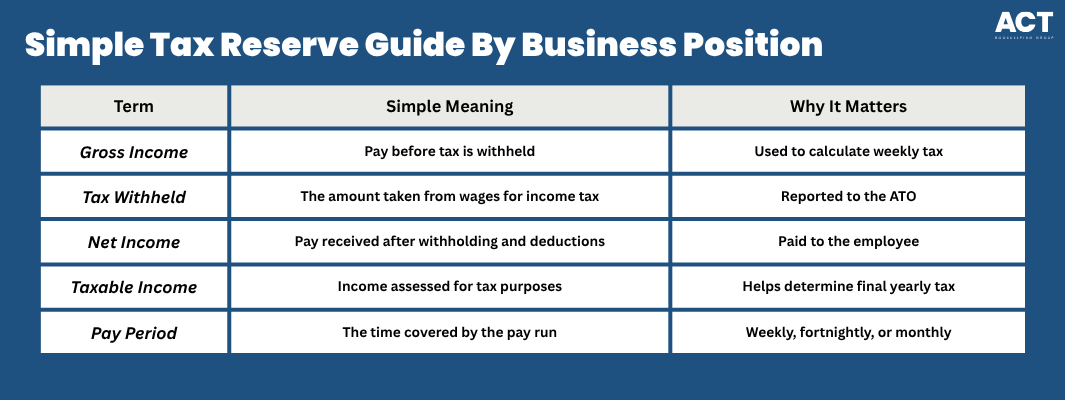
Weekly tax should generally be calculated from the employee’s gross payment for the pay period, before tax is withheld, using the relevant ATO tax table and the employee’s declaration details. Net income is the money the employee receives after tax withheld, and any approved deductions have been applied. This difference matters because employers can make mistakes when they calculate from net income instead of gross or net income properly. If wages, salary, normal weekly earnings, or extra pay are entered incorrectly, the amount of tax withheld may also be wrong.
What Role Does the Tax-Free Threshold Play?
The tax-free threshold reduces the amount of income tax withheld from an employee’s regular pay when they are eligible and choose to claim it. Most Australian residents can claim it from one employer, but employees with more than one job need to be careful because claiming it twice can leave them with a tax debt at the end of the financial year. Employers should rely on the employee’s TFN declaration and withholding declaration rather than guessing what should apply. If the employee is unsure, they should seek their own financial advice or taxation advice based on their specific taxation position.
How Does the Weekly Tax Table Help Employers?
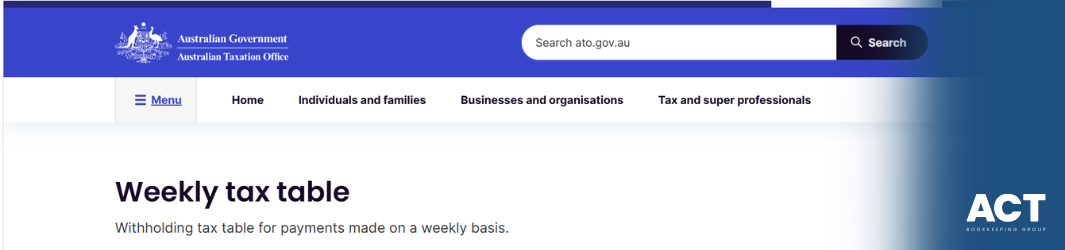
The weekly tax table helps employers calculate withholding amounts for employees paid weekly. It works by using the employee’s total weekly earnings, including any allowances and irregular payments that must be included in that week’s pay, ignoring cents, and then using the appropriate column for the employee’s details. A reliable payroll system should update these figures when tax rates, personal income tax rates, or ATO instructions change. If you use the ATO website or an income tax calculator, make sure the figures provided relate to the correct financial year and are used for illustrative purposes only unless they match the employee’s full circumstances.
Why Is a Flat Percentage Not Reliable for Weekly Wages?
A flat percentage is not reliable because income tax based on Australian tax thresholds is progressive and personal circumstances can change the amount of tax withheld. One employee may need extra withholding due to a study debt, while another may have less withheld because they claim the tax-free threshold. This is why simple guesses like “take out 20%” or “withhold 30 cents in the dollar” can create payroll errors. A proper calculation uses the ATO weekly tax table for the payment date, the ATO tax withheld calculator, updated payroll software, or current ATO guidance to estimate the correct amount of tax to withhold for that pay period.
How Do Study and Training Support Debts Affect Weekly Tax?
A study or training support debt can increase the amount withheld from an employee’s weekly pay when the relevant ATO study and training support loan withholding rules apply. From 1 July 2025, compulsory repayments are calculated under a marginal repayment system, meaning they are calculated only on repayment income above the minimum repayment threshold. This can apply to debts such as Higher Education Loan Program (HELP) debts and other training support arrangements.
The employee’s declaration tells the employer whether the payroll system needs to apply the relevant ATO study and training support loan withholding schedule. If the box is missed or entered incorrectly, the employee may end up with a larger tax debt when their final income tax return is assessed.

How Do Irregular Payments and Extra Pay Affect Tax Withheld?
Irregular payments, bonuses, commissions, leave loading, and back pay can affect the total amount withheld in a week. These payments may not always be treated the same as normal weekly earnings, so employers should check the right payroll category before processing them. This is especially important for small businesses where extra pay may happen during busy periods, public holidays, seasonal work, or project completion. Good bookkeeping helps ensure the total amount paid, the tax withheld, and the employee’s net income are recorded clearly.
What Should Employers Report to the ATO?
Employers generally report payroll information through Single Touch Payroll (STP), including salary and wages, PAYG withholding, and super information. They also report withholding amounts through activity statement processes, depending on their reporting cycle. The ATO collects income tax through the PAYG withholding system during the year, rather than waiting until every employee lodges their tax return or pays via PAYG instalments for business and investment income. This helps working Australians pay income tax gradually, while employers play an important role in calculating, withholding, reporting, and paying the withheld amounts.
We’re more than bookkeeping experts
As part of ACT Tax Group, we offer complete accounting and business advisory services tailored to your needs.
What Records Should Small Employers Keep?
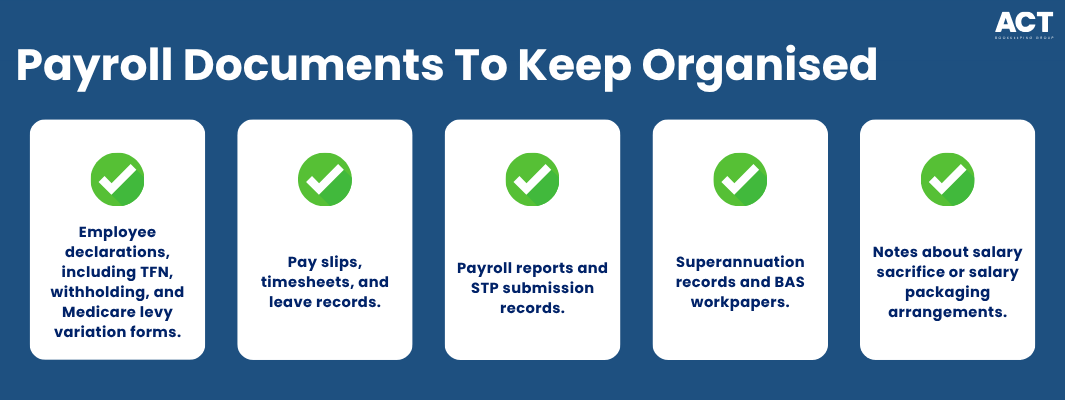
Small employers should keep clear payroll records that explain how each weekly amount was calculated. These records support payroll, bookkeeping, BAS preparation, employee queries, and ATO review if questions arise later. A practical record-keeping system should show gross income, tax withheld, deductions, superannuation, net income, and any additional withholding or employee declaration that affected the calculation. This also helps employers explain figures provided to employees, deal with issues such as overdue BAS statements and ATO payment plans, without needing to search through old spreadsheets or emails.
How ACT Bookkeeping Can Help with Weekly Payroll and PAYG Withholding
ACT Bookkeeping helps small to medium-sized Australian businesses keep payroll, bookkeeping, and wage records organised so weekly pay runs are easier to manage. We can help with payroll setup, weekly wages, tax withheld checks, STP reporting, BAS preparation records, superannuation tracking, and practical bookkeeping processes that support ATO-ready records. If you are unsure how much tax should come out of weekly wages, you can book a consultation with our team. We will help you review your payroll workflow, check the information your payroll system relies on, and create a clear process for wages, withholding amounts, net pay, and reporting.
Final Thoughts on Weekly Employee Wage Tax
The amount of tax that should come out of weekly employee wages depends on the employee’s gross weekly pay, TFN declaration, tax-free threshold choice, tax status, study or training support debt, irregular payments, and the current weekly tax table. There is no single amount of tax or flat dollar figure that suits every employee. For small employers, the best approach is to keep employee details current, use the ATO weekly tax table for the payment date, the ATO tax withheld calculator or updated payroll software, check the ATO website for further information when needed, and keep payroll records clean every week. With organised bookkeeping and a consistent payroll process, you can pay employees correctly, reduce stress, and stay on top of Australian income tax obligations.
