

Published on 19 Nov 2026
A record-retention policy for Business Activity Statements, payroll and bookkeeping files helps Australian businesses understand which financial documents to keep, how long to retain them and how to store them securely. Without clear procedures, missing receipts, incomplete payroll details and misplaced invoices can create problems when preparing tax returns or responding to Australian Taxation Office (ATO) enquiries.
For business owners across the Australian Capital Territory (ACT), maintaining accurate business records is essential for meeting tax obligations and managing finances. Whether you operate a trade business, professional service or growing company, a practical policy helps simplify bookkeeping, support accurate reporting and reduce the risk of penalties.
Record-Retention Periods for Australian Business and Tax Records
Understanding how long to keep tax records is an important part of managing business finances in Australia. Most tax records must be retained for five years, while employment records generally require seven years under Fair Work requirements. Companies must also retain financial records for at least seven years under corporate law.
The ATO generally calculates the five-year period from when records were prepared, obtained or the relevant transactions completed, whichever occurs later. Different starting dates apply to certain superannuation records, while assets, tax losses and ongoing reviews may require longer retention.
Unsure how long to keep BAS and payroll records?
Schedule a complimentary consultation with us today to clarify your record-retention obligations.
Record Type | General Retention Period |
|---|---|
Business Activity Statement (BAS) supporting records | 5 years |
Goods and Services Tax (GST) invoices and receipts | 5 years |
Income and tax return supporting records | 5 years |
Employee payroll and wage records | 7 years |
Company financial records | 7 years |
Asset purchases and investment records | Potentially longer |
These periods provide a general guide, but businesses should confirm their specific obligations before disposing of documents.
Accurate Record Keeping Supports Tax Compliance and Financial Management
Accurate record keeping helps businesses track income, monitor expenses and maintain proof of financial transactions. It also provides supporting documents when claiming deductions, preparing tax returns or responding to audits.
According to the ATO’s October 2026 estimates, the small business income tax gap was $36.0 billion for 2023–24, reflecting various compliance issues. Keeping reliable records helps businesses identify errors and explain how their financial figures were calculated.
Essential BAS, Payroll and Bookkeeping Documents to Retain
A record-retention policy should identify the documents needed for tax purposes, payroll administration and general bookkeeping. Maintaining organised records helps businesses present accurate financial information and meet reporting obligations.
BAS and Tax Records
Retain sales invoices, supplier receipts, bank statements, GST calculations, BAS supporting documents, income records, tax return information and business asset purchase or sale records.
Payroll and Employment Records
Keep employee details, payslips, timesheets, wage calculations, allowances, leave balances, Pay As You Go Withholding (PAYGW) records, superannuation payment evidence and Single Touch Payroll (STP) reports.
General Bookkeeping Records
Maintain bank reconciliations, financial statements, loan documents and utility bills, including electricity and internet expenses, together with receipts for stationery, uniforms, vehicle expenses and equipment purchases. Keep relevant investment and dividend statements where applicable, ensuring expenses are supported by appropriate records.
Example: A Canberra electrician employing apprentices should keep supplier invoices, payroll details, payslips and superannuation records. These documents help explain business costs and support accurate financial reporting.
Five Practical Steps to Build a Record-Retention Policy
Building an effective policy starts with identifying your essential records and assigning clear responsibilities for maintaining them. A consistent process helps prevent documents from being lost and reduces unnecessary bookkeeping work.
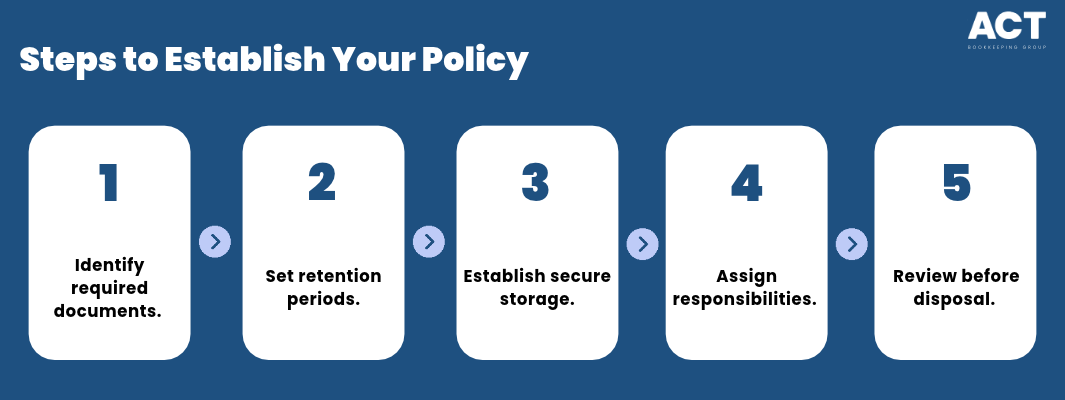
Steps to Establish Your Policy
Identify required documents. List the invoices, receipts, payroll files, bank statements and other business records you need to keep.
Set retention periods. Record the applicable timeframe and relevant starting date for each document category.
Establish secure storage. Organise paper receipts and electronic records using clearly labelled folders.
Assign responsibilities. Nominate someone to maintain records, check missing information and manage access.
Review before disposal. Confirm that retention periods have expired and no outstanding obligations require further storage.
Your policy should explain how to retrieve documents when requested and how to correct missing or inaccurate details. Regular reviews help maintain consistency as your business changes.
Secure Electronic Records Simplify Bookkeeping and Tax Preparation
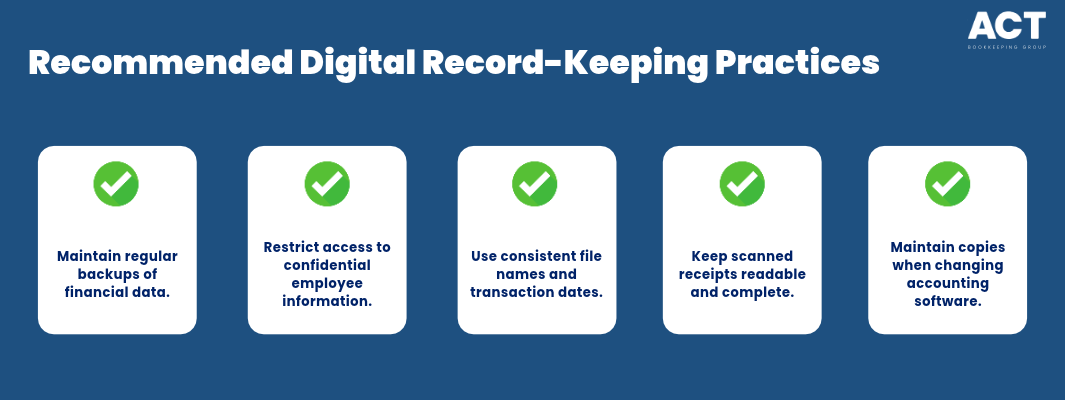
Electronic records make it easier to organise invoices, receipts and financial information without relying entirely on paper files. However, businesses must protect records against unauthorised changes, keep them accessible and readable, and ensure original data can be reconstructed when accounting systems change.
Example: A Canberra plumbing business can organise its invoices by financial year and BAS reporting period. This helps staff track purchases, review supplier costs and retrieve supporting documents when needed.
Proper Expense Records Support Accurate Tax Deductions
Keeping detailed expense records is vital when claiming business deductions or calculating costs that involve personal and work purposes. Businesses and individuals should maintain appropriate proof of amounts spent, including receipts, invoices and records showing how business-use percentages were determined.
For example, a vehicle used for both personal and business travel requires records supporting the business portion of car expenses. Sole traders may use the cents per kilometre or logbook method for eligible cars, while companies must use actual expenses supported by records.
Example: An arborist using a vehicle for business and personal travel can maintain a logbook and relevant expense receipts. These records help calculate eligible deductions and explain the amount claimed.
We’re more than bookkeeping experts
As part of ACT Tax Group, we offer complete accounting and business advisory services tailored to your needs.
Special Payments That May Require Different PAYG Tax Tables
Not every employee payment follows the standard fortnightly tax table. The ATO provides other tax tables and withholding instructions for certain payments, including termination payments, unused annual leave and long service leave payments. Different rules may also apply to foreign residents, statutory office holders, labour hire workers and certain accident payments. Employers should confirm the relevant payment category rather than relying on the standard fortnightly calculation.
Payment Type | What to Check |
|---|---|
Normal employee wages | Standard fortnightly withholding rules |
Bonuses and commissions | Applicable additional payment calculations |
Holiday pay | Treatment based on payment circumstances |
Long service leave payments | Whether paid during employment or on termination |
Termination payments | Relevant termination withholding table |
Foreign resident payments | Appropriate tax scale and declaration |
Correcting Payroll Software That Uses Incorrect Tax Tables
If incorrect tax was withheld, identify the affected payments and follow the relevant ATO correction procedures. Reporting errors may require updates to Single Touch Payroll (STP) records or Business Activity Statements (BAS). Where required withholding was not deducted, employers may need to make a written voluntary disclosure to the ATO rather than simply revising their BAS.

Bookkeeping Compliance
At ACT Bookkeeping, we understand that keeping track of financial records, payroll documents and BAS requirements can take time away from running your business. Our team can help you review existing processes, organise documents and establish practical record-keeping procedures that support accurate financial reporting.
We provide approachable accounting and bookkeeping support tailored to our clients’ needs. Book a consultation with ACT Bookkeeping to discuss your record-retention obligations and simplify your financial administration.
Frequently Asked Questions
How Long Should I Keep Records for Work-Related Expenses?
You generally need to keep records supporting work-related expenses for five years from the date you lodge your tax return, although exceptions apply. Receipts, invoices and other relevant documents help substantiate deductions. Accurate records are critical for meeting tax obligations and avoiding reporting errors.
What Are the Benefits of Keeping Records When Managing Investments?
Accurate record keeping helps you track income, expenses and transactions when managing investments. Keep purchase documents, dividend statements and sale details, particularly if you intend to sell investments later. Capital Gains Tax (CGT) records generally must be retained for five years after disposal, unless specific exceptions apply.
How Can I Check Whether My Business Records Meet ATO Requirements?
The answer depends on your business activities and the documents you maintain. Review the Australian Taxation Office’s record-keeping requirements and check that your financial records are complete, legible and accessible. If you are uncertain, arrange professional advice to clarify your obligations and address any questions or comments about your record-keeping procedures.
