

Published on 08 Oct 2026
Company Structure Bank Accounts and Credit Cards should be kept separate from personal banking if you want clean bookkeeping and clear company records. When business income, personal spending and company expenses move through the same accounts, reconciliation becomes harder and the true financial position of the business can be difficult to see. This matters when you operate through a company structure because a company is a separate legal entity from its owners and directors. Keeping company money distinct supports better business decisions, clearer reporting obligations and a more organised approach to tax obligations, cash flow and business operations.
Separate Company Banking Creates Clear Financial Boundaries
A company business structure should have its own bank account, and company credit cards should be used for company spending wherever practical. Companies need a separate bank account for tax purposes, while a sole trader is not required to have one. Clear separation gives your bookkeeper a reliable trail from the bank feed to the invoice, receipt or payment record. It also reduces the risk of personal expenses being mixed with business profits, business debts or other transactions that may have different tax implications.
Mixing company and personal spending?
Schedule a complimentary consultation with us today to separate transactions and simplify bookkeeping.
Separation Creates Cleaner Bookkeeping and Better Business Decisions
Separate accounts make it easier to match transactions to invoices and receipts, prepare reliable reports and monitor cash flow. Your profit and loss report, balance sheet and cash position are less likely to be distorted by personal purchases or unexplained transfers. Australia had 2,741,087 actively trading small businesses at 30 June 2026, up 3.2% from the previous year, and businesses employing fewer than 20 people represented 97% of actively trading businesses.
A Company Structure Changes How Business Money Is Managed
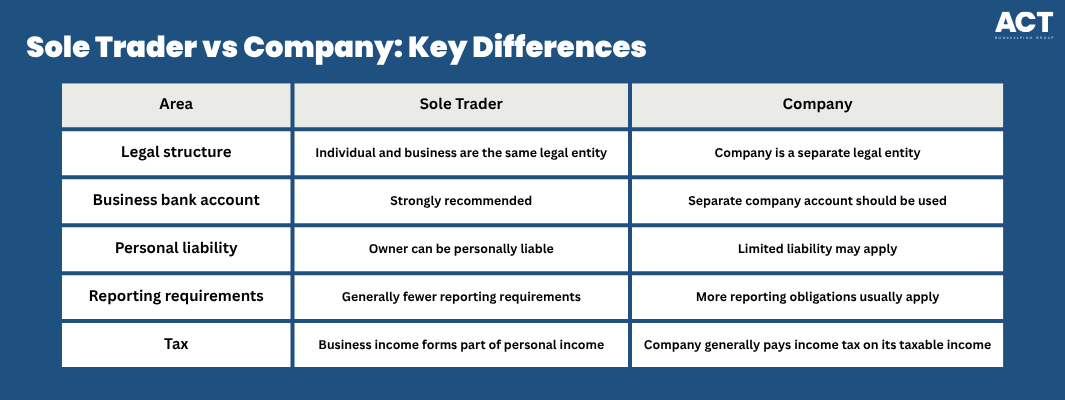
A company is a legal entity that is separate from its shareholders and directors. It can own assets, receive business income and take on business debts in its own name, while the people who own or manage it have different responsibilities.
This is a key difference between a company structure and a sole trader structure. A sole trader generally has full control of the business but can have personal liability for business debts, while a company can provide limited liability in many situations, although directors can still have personal responsibilities under Australian law. As a business grows, the right business structure may change because ownership structure, risk tolerance, growth potential, tax planning and asset protection can become more important.
Mixed Spending Creates Bookkeeping and Tax Problems
Using one account or card for both private and company expenses makes it harder to explain each transaction. It can also create problems where company money is used for personal purposes and the treatment is not recorded correctly. The Australian Taxation Office (ATO) says Division 7A may apply when a private company provides money or benefits to a shareholder or associate for private use. A personal expense paid by the company may need to be repaid or put on a complying loan before the company’s lodgment day, or it may be treated as an assessable unfranked dividend.
Real Example: ATO guidance uses Jian, a plumber who paid to repaint his home from his company bank account. He repaid the amount in full before the company’s lodgment day, so there were no Division 7A consequences.

Personal Credit Card Use Creates Extra Bookkeeping Work
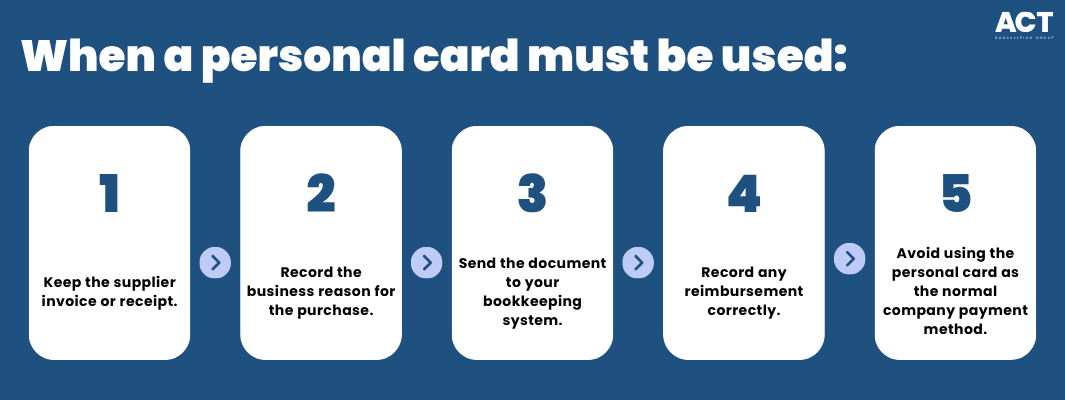
A director may occasionally use a personal credit card for a genuine business purchase. This can happen when a supplier does not accept the company card or when a business expense must be paid quickly, but the transaction still needs a clear record. The bookkeeping should show what was purchased, why it related to the business and how the company dealt with the payment. Treating personal-card use as an exception helps keep personal circumstances separate from the company’s financial activity.
Real Example: A published ATO private ruling described a director using a personal credit card to pay company liabilities, with the company recording the amounts in its books before later settling them. The facts of each case matter, but the example shows why a complete transaction trail is useful.
A Practical Banking Setup Supports Stronger Business Operations
For many small companies, a simple banking setup is enough. One main operating account, one company credit card or controlled card system, and extra accounts only where they serve a clear purpose can make daily bookkeeping more manageable. This makes monthly financial reviews faster and more reliable. The best setup depends on the type of business, the number of people involved and how payments are made. A company with staff cards, payroll and regular suppliers may need a different process from a smaller business where one director manages most transactions.
We’re more than bookkeeping experts
As part of ACT Tax Group, we offer complete accounting and business advisory services tailored to your needs.
Strong Records Support Every Bank and Credit Card Transaction
Bank and credit card statements are important, but they do not always explain why money was spent. The ATO requires businesses to keep banking records generally for five years, while Australian Securities and Investments Commission company financial record requirements apply separately to companies. Good records connect each payment to an invoice, receipt or other evidence showing the business purpose. This makes Business Activity Statement (BAS) preparation, Goods and Services Tax (GST) coding and annual tax returns easier because the records are organised before reporting deadlines arrive.

How ACT Bookkeeping Can Help With Company Banking and Clean Records
We can help you organise company bank accounts, credit cards, bookkeeping software and transaction processes so your records remain clear throughout the year. Our team can reconcile accounts, follow up missing documents, support BAS and payroll processes, maintain consistent coding and flag unusual personal or director-related transactions for review by your accountant or tax adviser. If your accounts have become mixed or difficult to reconcile, book a meeting with ACT Bookkeeping to review your current process. You can also schedule a consultation so we can help you create a practical system for organised records, GST accuracy, regular bookkeeping and smoother reporting obligations.
Frequently Asked Questions
Which Business Structure Is Right for a New Business?
The common business structures include sole trader, company, partnership and trust structure. The right structure depends on your business idea, business ownership, potential liability, costs and future plans, so new businesses should consider their circumstances carefully before choosing between the different types of business structures. Many businesses start as a sole trader because it is simple, while many business owners later change business structures as the business grows. A business name and Australian Business Number (ABN) are registrations rather than business structures.
How Do Sole Trader and Company Structures Affect Personal Liability?
A sole trader is personally responsible for business debts and has unlimited liability, which means personal assets may be exposed if the business cannot meet its obligations. A sole trader also uses an individual Tax File Number (TFN) for tax purposes and personally pays tax on business income. A company is a separate legal entity, so shareholders are generally not responsible for the company’s debts simply because they own shares, although directors can have personal obligations in some circumstances. A company may also make it easier to raise capital, and a shareholder’s agreement can help clarify business ownership and decision-making between shareholders.
How Does a Partnership Business Structure Work?
A partnership business structure involves two or more people carrying on a business together and sharing income or losses. A written partnership agreement can clarify each partner’s share, responsibilities, decision-making and arrangements involving other partners. Despite minimal reporting requirements compared with a company, a partnership still has tax and registration obligations. Under an ordinary partnership structure, the partnership lodges a tax return but does not pay income tax. Each partner includes their share of net income or loss in their own tax return, whether actually received or not. Some limited partnerships are taxed as companies, so legal issues and tax treatment should be checked before setup.
How Does a Trust Structure Manage Business Income and Assets?
In a trust structure, the trustee manages the trust and its tax affairs. For a discretionary trust, the trustee decides distributions under the trust deed, with resolutions generally made by 30 June for beneficiaries to be presently entitled; a corporate trustee may be used instead of an individual trustee. Trusts can be used where beneficiaries include family members and may offer some tax flexibility depending on the circumstances, but outcomes are not automatic. The structure, trust deed, distributions and potential liability should be reviewed professionally because the tax and legal rules can be more complex.
