
Published on 06 Nov 2026
FBT Electric Vehicles rules allow Australian employers to calculate eligible home charging expenses using the Australian Taxation Office (ATO) rate of 5.47 cents per kilometre from 1 April 2026. This simplified method helps businesses manage electricity costs without separately measuring every charge at an employee’s home. For businesses providing electric cars through employment arrangements or a novated lease, understanding Fringe Benefits Tax (FBT) requirements is important.
Understanding the ATO EV Home Charging Rate
The ATO EV home charging rate is an optional method for calculating electricity expenses when eligible electric vehicles are charged at home. Under Practical Compliance Guideline PCG 2024/2, employers can estimate these expenses using kilometres travelled, provided the applicable eligibility and record-keeping requirements are satisfied. The rate increased from 4.20 cents to 5.47 cents per kilometre, approximately 30.2%, for the FBT year commencing 1 April 2026. Businesses must apply the rate relevant to their reporting period.
Unsure how to calculate EV home charging reimbursements?
Schedule a complimentary consultation with us today to review your charging calculations.
Understanding the FBT Exemption for Electric Vehicles
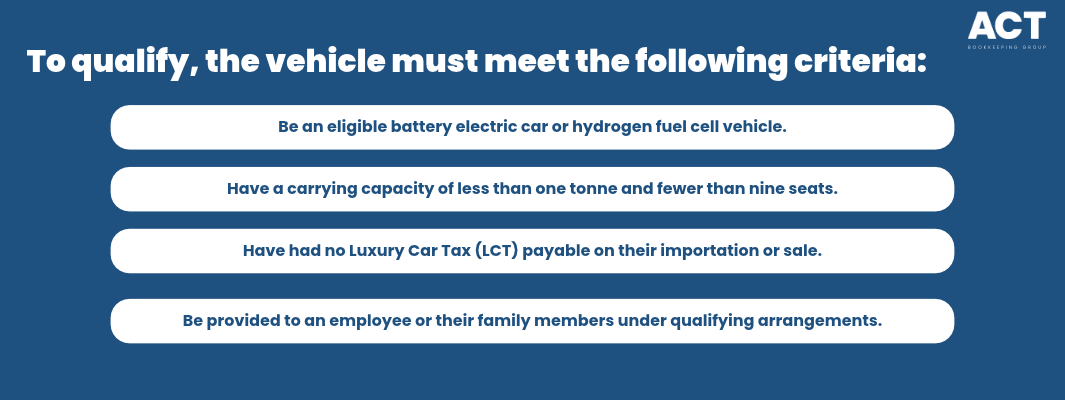
The federal government’s electric vehicle FBT exemption applies to eligible electric cars first held and used on or after 1 July 2022, provided all other eligibility conditions are met. Qualifying employers can provide private use of these vehicles without paying FBT on the car benefit and certain associated running costs.
The Luxury Car Tax (LCT) threshold for fuel-efficient vehicles is relevant when assessing eligibility, including certain second-hand electric cars. The federal government has also proposed changes to the EV FBT exemption from April 2027, but these changes are not yet law.
FBT Year | Home Charging Rate |
|---|---|
1 April 2022 to 31 March 2026 | 4.20 cents/km |
From 1 April 2026 | 5.47 cents/km |
Calculating EV Home Charging Expenses Using the ATO Rate
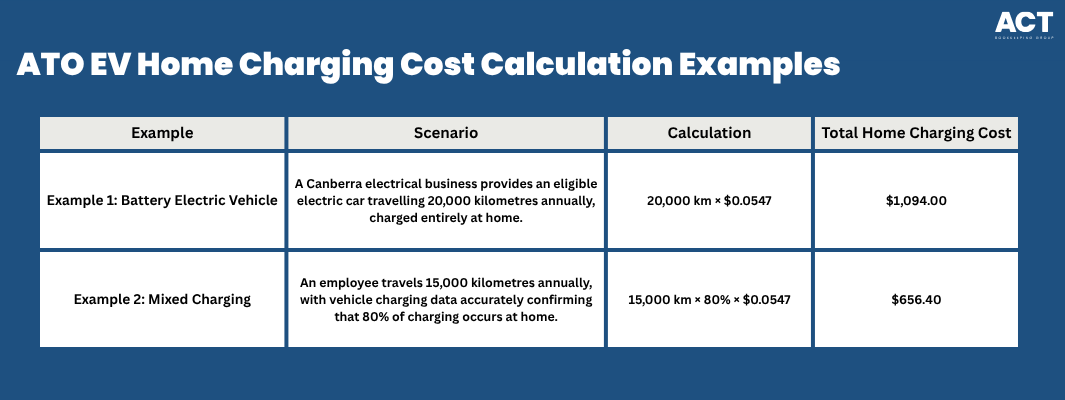
Employers calculate eligible home charging expenses by multiplying the relevant kilometres by the applicable ATO rate. The method can support reimbursements and FBT calculations where the necessary records and conditions are satisfied. The following examples illustrate the calculation using the 5.47 cents per kilometre rate for the FBT year beginning 1 April 2026.
Important: Commercial charging expenses require separate documentation. Where the home charging percentage cannot be accurately determined, businesses must either disregard commercial charging costs when using the simplified rate or use actual commercial charging costs without applying that rate.
FBT Considerations for Novated Leases and Hybrid Vehicles
A novated lease allows employees to fund an eligible vehicle through a salary sacrifice arrangement, potentially using pre-tax income. Where the EV FBT exemption applies, eligible car benefits may be exempt from FBT, although a reportable fringe benefits amount may still arise.
Plug-in hybrid electric vehicles generally stopped qualifying for the FBT exemption from 1 April 2025, unless their use was already exempt and a financially binding commitment to continue providing private use remained in place. Updated ATO guidance separately provides a method for calculating electricity expenses attributable to eligible plug-in hybrid travel.
Example 3: Novated Lease
An employee receives an eligible Tesla Model Y RWD through a novated lease. The employer must confirm the vehicle’s eligibility, charging records and reportable benefits rather than assuming every EV-related expense is exempt.
Essential Bookkeeping Records for Electric Vehicle Expenses
Accurate records help employers distinguish home charging expenses, public charging payments and other vehicle running costs. Installing a home charging station may involve different tax treatment from electricity used to charge the car.
Businesses should:
Record opening and closing odometer readings.
Retain supporting household electricity bills.
Document charging locations and relevant percentages.
Reconcile employee reimbursements with payroll records.
Review vehicle eligibility and FBT reporting requirements.
We’re more than bookkeeping experts
As part of ACT Tax Group, we offer complete accounting and business advisory services tailored to your needs.
How ACT Bookkeeping Can Help with EV Charging Records and FBT Support
At ACT Bookkeeping, we help Canberra businesses organise electric vehicle expenses, maintain accurate reimbursement records and manage bookkeeping processes supporting FBT reporting. Our team works alongside your accountant to keep the necessary financial information clear and accessible. Book a consultation with ACT Bookkeeping to discuss home charging records, payroll reimbursements and practical bookkeeping support for your business.
Keeping Your Electric Vehicle Records Compliant
The updated ATO home charging rate provides a practical way to calculate eligible electricity costs. Understanding the FBT exemption, vehicle eligibility and reimbursement requirements helps businesses maintain accurate records. Review your current EV charging arrangements, confirm the applicable rate and seek professional advice when assessing complex salary sacrifice or vehicle benefit arrangements.
