
Published on 13 Nov 2026
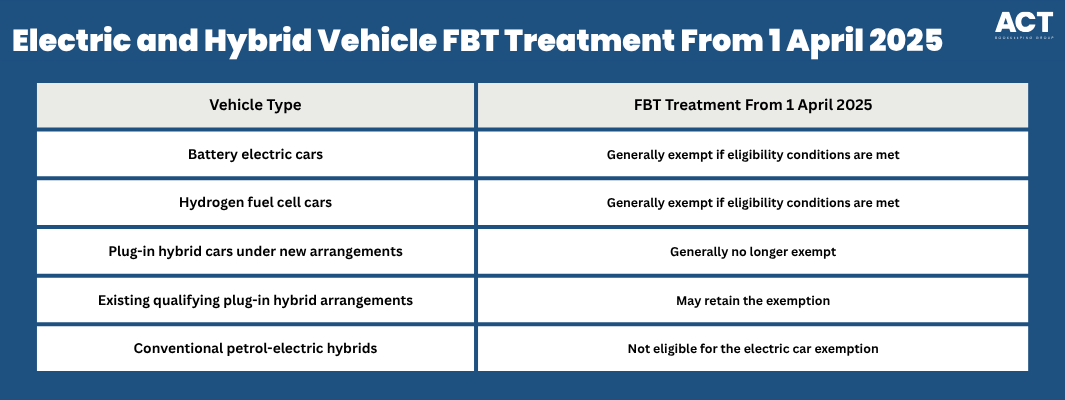
The FBT exemption electric vehicles rules changed on 1 April 2025, meaning plug-in hybrid electric vehicles generally no longer qualify for the Fringe Benefits Tax (FBT) exemption in Australia. Businesses providing these vehicles to employees for private use may now need to pay FBT unless their existing arrangements qualify for transitional relief.
Changes to the FBT Exemption for Electric Vehicles From 1 April 2025
From 1 April 2025, plug-in hybrid electric vehicles generally stopped qualifying for the FBT exemption under new employment arrangements. These vehicles combine an electric motor with a petrol engine, unlike fully battery electric vehicles that operate without petrol. The Federal Government introduced the electric car discount from 1 July 2022 to encourage the use of zero or low emissions vehicles. However, the exemption for plug-in hybrids was designed to end, while eligible battery electric and hydrogen fuel cell vehicles could continue receiving favourable treatment.
Unsure whether your plug-in hybrid still qualifies for FBT exemption?
Schedule a complimentary consultation with us today to review your exemption records.
The Growing Importance of Electric Vehicle Tax Compliance
Electric vehicles are becoming increasingly common in Australian business fleets, making accurate vehicle records and FBT reporting more important. The Electric Vehicle Council reported that Australian electric vehicle sales increased by 38% in 2025, reflecting growing demand for electric transport.
Its 2025 figures also recorded 53,484 plug-in hybrid vehicles sold, while battery electric car sales reached approximately 103,300. Julie Delvecchio, Chief Executive Officer of the Electric Vehicle Council, described the growth as “an undeniable shift towards EVs”, highlighting the importance of businesses understanding the different tax treatments.
Eligibility Requirements for the Electric Car FBT Exemption
Eligible electric cars can remain exempt from FBT when employers provide them to a current employee for private use. However, the vehicle must satisfy specific conditions under Australian FBT law, including requirements concerning its type, first use and luxury car tax treatment.
The following criteria generally apply:
Vehicle type: The car must be battery electric or hydrogen fuel cell powered, or meet the transitional plug-in hybrid rules.
First use: The first time the car was both held and used must have been on or after 1 July 2022. A car held earlier may still qualify if it was first used on or after that date.
Vehicle classification: It must be designed to carry fewer than nine people and a load below one tonne.
Luxury Car Tax: Luxury Car Tax (LCT) must never have been payable on the car’s supply or importation.
Employee benefit: The vehicle must be provided for private use by a current employee or their associate, which may include family members.
Meeting these conditions is essential before treating car fringe benefits as exempt.
The Luxury Car Tax Threshold and Electric Vehicle Eligibility
The Luxury Car Tax threshold helps determine whether an electric car qualifies for the FBT exemption. For the 2026–27 financial year, the Luxury Car Tax (LCT) threshold is $91,661 for fuel efficient vehicles and $80,809 for other vehicles.
The threshold for fuel efficient cars is not the same as the general car deduction limit. Businesses should consider optional extras and the vehicle’s LCT value, rather than relying only on the advertised purchase price. To qualify for the FBT exemption, LCT must not have become payable on any supply or importation of the car before the benefit is provided, including relevant previous sales.
Example 1: Purchasing an Eligible Electric Car
A Canberra business purchases a battery electric vehicle that satisfies the relevant FBT conditions and has never attracted LCT. Providing it to an employee for personal use may qualify for the exemption, subject to the remaining requirements.
Transitional FBT Exemption Rules for Existing Plug-In Hybrid Novated Leases
Some existing plug-in hybrid arrangements can continue receiving the FBT exemption after 1 April 2025. To qualify, the vehicle must have been used or available for exempt private use before that date, and a financially binding commitment made before 1 April 2025 must cover its continued provision for private use afterwards.
A novated lease is an arrangement involving an employee, employer and vehicle finance provider, often funded through salary sacrificing from pre tax income. A new financially binding commitment from 1 April 2025, including certain lease renewals or employer changes, can end the transitional FBT exemption. An optional extension exercised on or after that date does not preserve the exemption under the original commitment.
Example 2: Existing Lease Arrangement
An employee received an eligible plug-in hybrid through a novated lease in February 2025. If the original binding commitment continues without a relevant change, the exemption may remain available.
Example 3: New Lease After April 2025
An employee enters a new plug-in hybrid novated lease in June 2025. The vehicle generally cannot qualify for the electric vehicle FBT exemption, even though it can operate using electric power.
FBT Obligations for Plug-In Hybrids That No Longer Qualify
When a plug-in hybrid loses its exemption, the employer may need to calculate the taxable value of the car fringe benefit and determine whether FBT is payable. This may increase the total cost of providing the vehicle, particularly where employees use it for personal travel. Salary packaging arrangements may also require adjustment because FBT obligations affect the overall financial benefit. Employers should assess the applicable calculation method and any employee contributions rather than assuming every vehicle creates the same tax liability.
The Impact of Reportable Fringe Benefits on Employees
Employees may still have reportable fringe benefits even when their eligible electric cars are exempt from FBT. Employers must calculate the car benefit’s notional taxable value and report the grossed-up amount when the employee’s total reportable fringe benefits taxable value exceeds $2,000 in the FBT year, from 1 April to 31 March. Exempt associated car expense benefits are excluded from this calculation.
Although reportable fringe benefits are not directly taxed as ordinary salary, they may affect income-tested obligations and entitlements, including Medicare levy surcharge calculations and certain government benefits. The outcome depends on the employee’s personal circumstances.
We’re more than bookkeeping experts
As part of ACT Tax Group, we offer complete accounting and business advisory services tailored to your needs.
Essential Bookkeeping Records for Electric Vehicle FBT Compliance
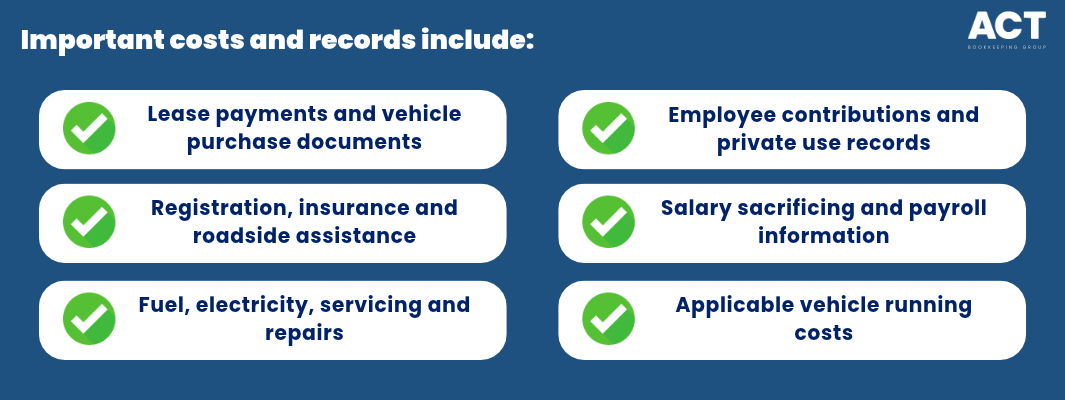
Accurate bookkeeping helps businesses distinguish between exempt electric vehicles and those requiring FBT calculations. Clear records also support Goods and Services Tax (GST) reporting, Business Activity Statement (BAS) preparation and accurate payroll information.
Business owners should establish a consistent process for recording vehicle expenses and reviewing changes to employment arrangements.
Confirm eligibility: Identify the vehicle type and applicable exemption conditions.
Review lease agreements: Check commencement dates and binding commitments.
Separate expenses: Record fuel, charging, maintenance and insurance accurately.
Track employee benefits: Maintain payroll and salary packaging information.
Review GST treatment: Check purchase and operating expenses against applicable rules.
Prepare reporting records: Organise information for your accountant’s FBT assessment.
Example 4: Managing Business Vehicle Expenses
An electrical contractor operates several company cars, including a battery electric vehicle and a plug-in hybrid. Separate bookkeeping records help the business identify relevant expenses and provide accurate information when preparing FBT calculations.
How ACT Bookkeeping Can Help With Electric Vehicle FBT Records
At ACT Bookkeeping, we understand that managing vehicle expenses, payroll and changing compliance requirements can take valuable time away from running your business. Our team helps Australian businesses maintain organised financial records, manage vehicle costs, support GST and BAS preparation, and keep payroll information accurate.
We can also help prepare the financial information your accountant needs to assess FBT obligations and employee benefits. Book a consultation with ACT Bookkeeping to review your vehicle bookkeeping processes and maintain reliable business records.
