

Published on 24 Jul 2026
How Income Tax Thresholds Affect Sole Trader Cash Flow and Bookkeeping Reviews matters because changes in taxable income can increase the income tax a sole trader needs to pay. Without accurate bookkeeping, money that appears available in a business account may already be needed for tax, the Medicare levy, Goods and Services Tax (GST), suppliers or other expenses.
As a sole trader, you include your assessable business income and eligible business deductions in your individual tax return rather than lodging a separate income tax return for the business. Regular bookkeeping reviews help you estimate taxable income, understand likely tax payable and protect the cash needed to keep your business operating throughout the financial year.
Income Tax Thresholds Shape Sole Trader Tax Payments
Income tax thresholds divide taxable income into tax brackets, with different income tax rates applying to each range. For most Australian residents who are residents for the full 2025–26 financial year ending 30 June 2026, the resident tax rates begin with the tax-free threshold of $0 to $18,200. Income between $18,201 and $45,000 is generally taxed at 16 cents for each $1 over $18,200. The following rates increase for taxable income from $45,001 to $135,000, from $135,001 to $190,000, and for income above $190,000.
Moving into a higher tax bracket does not mean all taxable income becomes subject to the higher rate. Only the taxable income above the relevant threshold is taxed at the next rate, and taxpayers with the same taxable income and residency status generally have the same basic income tax before the Medicare levy, tax offsets and other individual circumstances are considered.
Unsure how much tax to set aside each quarter?
Schedule a complimentary consultation with us today to estimate tax using current figures.
Business Profit and Available Cash Are Different
Taxable income is not the same as the balance in your bank account. Your account may include GST collected from customers, money required for unpaid bills, loan funds or amounts that should be reserved for income tax. For tax purposes, a sole trader’s assessable income may include business sales, interest, dividends, capital gains and certain income from investments or foreign sources. Eligible tax deductions are then considered when calculating the amount that is taxable.
A bookkeeping review helps separate business income, deductible expenses, private spending and outstanding liabilities. This gives you a clearer view of the money that is genuinely available for drawings, purchases and everyday operating costs.

Higher Taxable Income Can Reduce Usable Cash
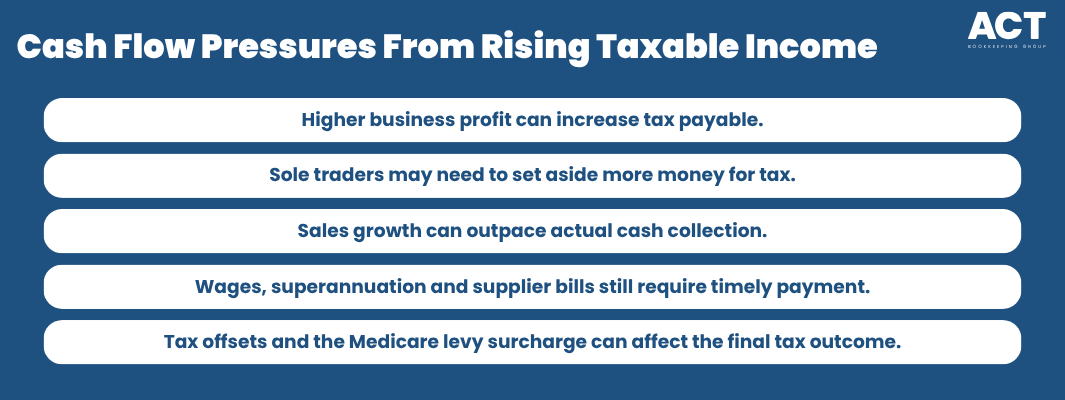
When business profit increases, the amount of tax payable may also increase. A sole trader who earns more during the year may need to place more money aside, even when the increase in income has already been used to pay employees, suppliers or equipment costs. This can create pressure when sales rise faster than cash collection. An invoice may be included in business records before the customer pays it, depending on the accounting method used, while wages, superannuation contributions and supplier bills may still need to be paid on time.
Low-income earners may pay little or no income tax after the tax-free threshold and any available tax offsets are considered. Some high-income resident taxpayers may also pay the Medicare levy surcharge if their income for Medicare levy surcharge purposes exceeds the relevant threshold and they, their spouse or their dependants do not have an appropriate level of private patient hospital cover.
Bookkeeping Reviews Support Better Tax Estimates
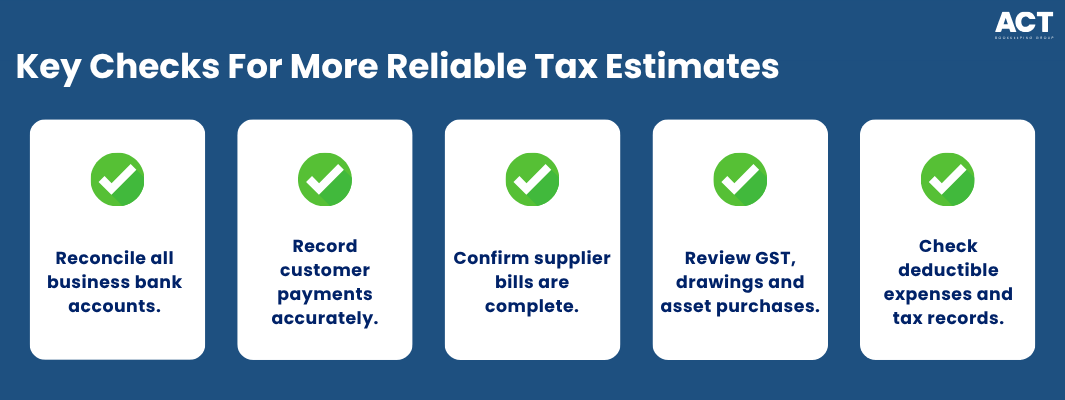
Regular bookkeeping reviews make it easier to estimate income tax before the end of the financial year. Current records show whether profit is rising, whether expenses have been entered correctly and whether personal transactions have been separated from business costs. A monthly or quarterly review should confirm that bank accounts are reconciled, customer payments are recorded and supplier bills are complete. It should also check that GST, drawings, asset purchases and deductible expenses have been placed in the correct accounts.
These checks reduce the risk of relying on an overstated bank balance or an incomplete profit report. They also make it easier for your registered tax agent to review tax deductions, apply any eligible tax offsets and prepare your tax return using reliable information.
Tax Reserves Should Reflect Current Results
There is no single percentage that every sole trader should place aside for tax. The appropriate amount depends on taxable income, tax rates, the Medicare levy, other personal income, eligible deductions, tax offsets and amounts already paid during the year. A fixed percentage may provide a starting point, but it can become inaccurate when profit changes. Reviews based on current figures allow your tax reserve to increase or decrease as the business moves through different income tax thresholds.
Keeping tax money in a separate business account can also improve visibility. It reduces the risk of using funds needed for income tax, GST or other obligations to pay for personal spending or unplanned business purchases and makes it easier to manage ATO payment plans for overdue BAS if cash flow becomes tight.
Pay As You Go Instalments Affect Day-To-Day Cash Flow
The Pay As You Go (PAYG) instalment system allows taxpayers to make payments towards expected income tax during the year. Most resident taxpayers who enter the system pay instalments based on an amount or rate advised by the Australian Taxation Office (ATO). The instalment may be based on information from an earlier tax return, so it may not reflect major changes in current business performance. When income falls or rises significantly, accurate bookkeeping gives your tax adviser the information needed to review the position.
Any variation should be considered carefully because underestimating your Pay As You Go instalments may leave you with a larger tax bill when you lodge your tax return and expose you to penalties for missed PAYG instalment payments. If your varied instalments are less than 85% of the total tax payable on your instalment income, the Australian Taxation Office may also apply a general interest charge, so seek professional advice and use current income and expense records when considering a variation.
We’re more than bookkeeping experts
As part of ACT Tax Group, we offer complete accounting and business advisory services tailored to your needs.
How ACT Bookkeeping Can Help with Sole Trader Cash Flow Reviews
We help sole traders maintain organised records, complete bank reconciliations and review income and expenses throughout the year. Our bookkeeping support can also improve invoicing, accounts payable, GST accuracy, BAS preparation, software processes and cash flow visibility. Book a meeting with ACT Bookkeeping to arrange a review schedule that suits your business. We can work with you and your tax adviser to keep your records ATO-ready, monitor changes in business profit and reduce the risk of unexpected tax affecting your day-to-day cash flow.
Conclusion
Income tax thresholds affect the amount a sole trader may need to pay as taxable income increases. The final position can also be influenced by the Medicare levy, the Medicare levy surcharge, tax deductions, tax offsets, capital gains and other sources of personal income. Reviewing your books monthly or quarterly gives you a clearer estimate of profit, available cash and likely tax payable. With current records and a suitable tax reserve, you can make informed spending decisions while preparing for your Australian income tax obligations.
