
Published on 03 Sep 2026
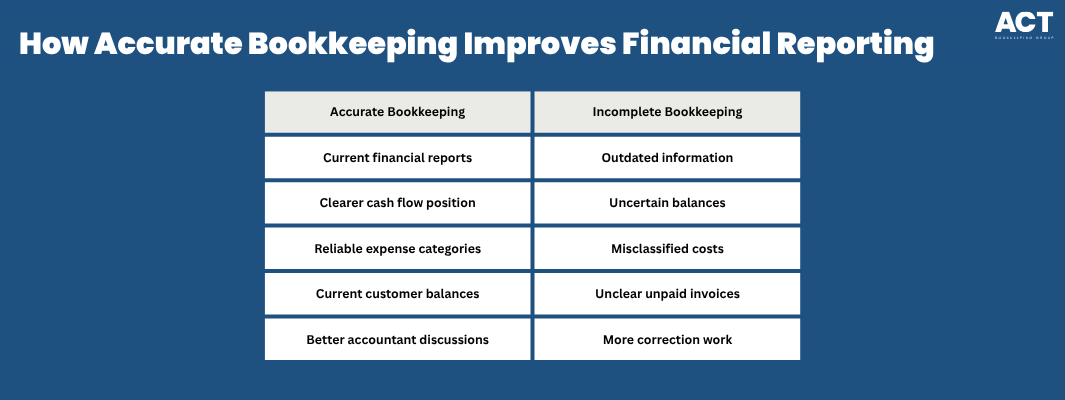
Business accountant reports are only as useful as the bookkeeping behind them, because accurate records give your accountant reliable information to review and explain. For small business owners, incomplete or outdated bookkeeping can make it harder to understand cash flow, profit, expenses, tax liabilities and the overall financial health of the business.
Accurate Bookkeeping Gives Business Accountants Better Information
A business accountant relies on information recorded throughout the financial year when preparing reports and reviewing business performance. When sales, expenses, wages, invoices and bank transactions are recorded correctly, the resulting reports are more likely to reflect what is actually happening in the business. Poor bookkeeping can create gaps that affect small business accounting services, tax returns and other accounting services. Missing expenses, duplicate income, incorrect Goods and Services Tax (GST) treatment or unreconciled transactions may require correction before an accountant can provide useful professional advice.
Are Your Books Holding Back Useful Business Advice?
Schedule a complimentary consultation with us today to keep records current and reliable.
Accurate Records Create Better Business Information
Reliable bookkeeping turns financial reports into practical information for business owners. Instead of spending an accountant meeting trying to identify missing transactions, you can focus on cash flow, costs, margins, business growth and the financial goals that matter to your business. According to the Australian Bureau of Statistics 2026 business counts, Australia had more than 2.8 million actively trading businesses, including close to one million employing businesses. The same release recorded more than 460,000 business entries during 2025–26, showing how many Australian businesses need reliable systems as they start, operate and grow.
Good Records Help Accountants Identify Business Trends
A business accountant can use accurate reports to identify changes in income, costs, customer payments and profit. This makes business advisory discussions more useful because the accountant can concentrate on what the figures show rather than questioning whether the bookkeeping information is complete. For example, a small business may be making more sales while still experiencing cash pressure. Current bookkeeping may show that customers are paying later, supplier costs have increased or payroll expenses have grown, giving the accountant and business owner clearer information for practical business advice.
Good Bookkeeping Improves Cash Flow Visibility
Cash flow is an important part of financial management for any small business. Accurate records help show what money is available, what customers still owe, which supplier bills are due and which regular expenses need to be covered. This information can support financial planning and give a business accountant a better foundation for discussing short-term cash requirements. Current records can also help small business owners identify pressure earlier instead of discovering a problem when an important payment is already due.
Example: A business may record $90,000 in sales for a month but still have $35,000 unpaid by customers. Accurate accounts receivable records show the difference between recorded sales and the cash actually available.
Accurate Records Support BAS And GST Compliance
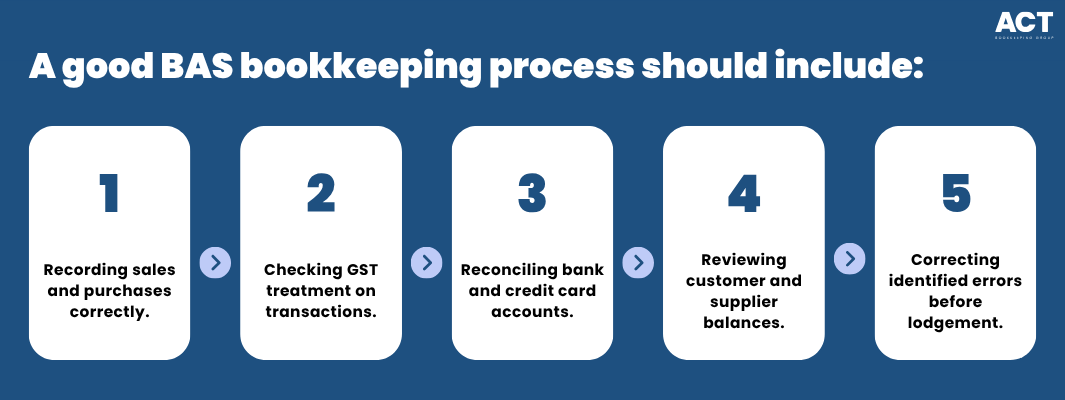
Businesses registered for GST need records that support the amounts included in their Business Activity Statement (BAS), including relevant sales, purchases, invoices and expenses. Most business and GST records generally need to be kept for at least five years, although some records may need to be retained for longer. Accurate records can make BAS preparation more efficient and reduce avoidable errors. They also give your bookkeeping team clearer information for maintaining records and give a registered BAS agent or registered tax agent reliable information when providing BAS services and helping the business meet relevant compliance obligations.
Payroll Accuracy Strengthens Business Reports
Payroll records are another important part of small business accounting. Wages, withholding amounts, leave and super contributions can represent a significant operating cost, so incorrect payroll information may affect both compliance obligations and the financial reports used by business owners. Current payroll records also make it easier to understand labour costs and manage employer obligations. From 1 July 2026, employers generally need to pay superannuation guarantee contributions on payday, with contributions generally required to reach the employees super fund within seven business days, and report required information through Single Touch Payroll (STP).
Regular Reconciliation Makes Reports More Reliable
Reconciliation means checking the information in your accounting software against bank statements, credit cards and supporting records. This helps identify missing transactions, duplicates, incorrect amounts and payments recorded in the wrong place. Regular reconciliation keeps the whole process manageable. The Australian Taxation Office (ATO) continues to emphasise accurate record keeping, with Assistant Commissioner Angela Allen noting in 2026 that many small business mistakes relate to “not keeping good or accurate records.”
Example: A customer may pay several invoices in one deposit. If that payment is entered as new income instead of being matched to the invoices, sales may appear higher until the records are corrected.
Accounting Software Works Best with Good Processes
Accounting software can make bookkeeping easier by organising invoices, expenses, bank transactions and payroll information. However, technology still depends on accurate information and consistent processes, so software does not replace careful bookkeeping. The right setup should suit the business type, size and everyday business needs. A sole trader may need a simpler system than a business with employees, several bank accounts and a larger volume of customer and supplier transactions.
Better Books Help Accountants Provide Better Advice
When bookkeeping is current and accurate, accountants can spend more time discussing decisions that affect the business. Depending on the circumstances, those conversations may include tax planning, business structure, cash flow, financial strategy, tax deductions or whether existing systems still support the way the business operates. Accurate records do not automatically minimise tax liabilities or guarantee financial success. They do give tax accountants, business advisors and other professional advisers clearer information when they provide advice about tax requirements, financial planning or the right business structure.
Example: A growing business reviewing its current business structure will usually benefit from having current profit, payroll, asset and cash flow information before seeking tax advice.
We’re more than bookkeeping experts
As part of ACT Tax Group, we offer complete accounting and business advisory services tailored to your needs.
How ACT Bookkeeping Can Help with Better Business Accountant Reports
At ACT Bookkeeping, we help small business owners maintain accurate, organised and timely records so their business accountant can work with clearer information. We understand that bookkeeping can become time consuming when you are also managing customers, staff and everyday business operations. You can book a consultation with our team to discuss how we can support your bookkeeping, keep your records organised and prepare reliable information for your accountant.
Accurate Bookkeeping Supports More Useful Business Advice
Accurate bookkeeping gives business accountant reports a stronger foundation. When records are current, reconciled and complete, your accountant can spend more time interpreting the figures and discussing financial health, cash flow, business plans and future priorities instead of correcting avoidable bookkeeping problems. Start by checking whether bank accounts are reconciled, invoices are current, payroll records are accurate and supporting documents are organised. Consistent bookkeeping can make the entire process of working with your accountant easier and provide clearer information for decisions throughout the financial year.
Frequently Asked Questions
How Does a Small Business Accountant Use Bookkeeping Records?
A small business accountant uses bookkeeping records to understand income, expenses, cash flow, assets, liabilities and other areas of business performance. Clear records also make it easier for an accounting firm to provide accountant services without spending unnecessary time correcting incomplete information, while helping small business owners compare the right accountant based on communication, relevant industry experience, services offered and client feedback such as Google reviews.
Do I Need a Chartered Accountant or a Knowledgeable Tax Accountant?
Different businesses need different levels of support, and chartered accountants, registered tax agents and other accounting professionals can have different qualifications and service areas. If you need small business tax support, tax returns, a tax strategy, capital gains guidance or advice about how Australian tax laws apply to your circumstances, check that the person providing the relevant tax agent services is appropriately registered with the Tax Practitioners Board.
Can Good Bookkeeping Help a Business Grow?
Good bookkeeping can help a business grow by giving owners clearer information about sales, costs, cash flow and customer payments. It does not guarantee that a business will thrive, but it can help business owners make better-informed decisions, give accountants and advisers clearer information to work with, and support tailored solutions that reflect the actual needs of the business.
Does Every Business Need the Same Accountant Services?
No, because a sole trader with straightforward records may need different accountant services from a growing business with employees, payroll and more complex reporting needs. Some business owners may also need separate professional support for Self-Managed Super Funds (SMSFs). Different SMSF matters can require different professionals, including a registered tax agent for tax services, an approved SMSF auditor for the required audit or an appropriately registered financial adviser for financial advice, so it can be reasonable to compare other accounting firms and advisers before choosing the right accountant rather than trying to avoid accountants altogether.
