Published on 13 Aug 2026
Preparing for Your Business Tax Return starts with making sure your bookkeeping records are accurate, complete and ready before your accountant or registered tax agent begins the tax return process. For a sole trader or small business, organised bookkeeping also makes it easier to provide the information needed to lodge your tax return. Instead of searching through paper receipts, old emails and prior year records, you can give your qualified accountant clear data showing what happened in the business during the past year.
Bookkeeping Checks Before Tax Preparation
The Australian Taxation Office (ATO), sometimes searched for as the Australian Tax Office, requires businesses to keep records relevant to their tax and super affairs. Good records can help your tax agent review deductions, identify expenses that may be tax deductible and determine whether more information is needed before the return is ready to lodge. A practical review should cover your bank accounts, income, expenses, customer invoices, supplier bills, payroll, superannuation, Goods and Services Tax (GST), loans and business assets.
Are Your Bank Reconciliations Ready for Tax Time?
Schedule a complimentary consultation with us today to correct missing or unmatched transactions.
Complete Your Bank Reconciliations
Start by checking that the transactions in your bookkeeping system match the money moving through each business bank and credit card account. Differences may come from missing payments, duplicate entries, an incorrect date or transactions that have not been matched to the right invoice or bill. Complete these reconciliations through to the end of the financial year.
Check That Business Income Is Complete
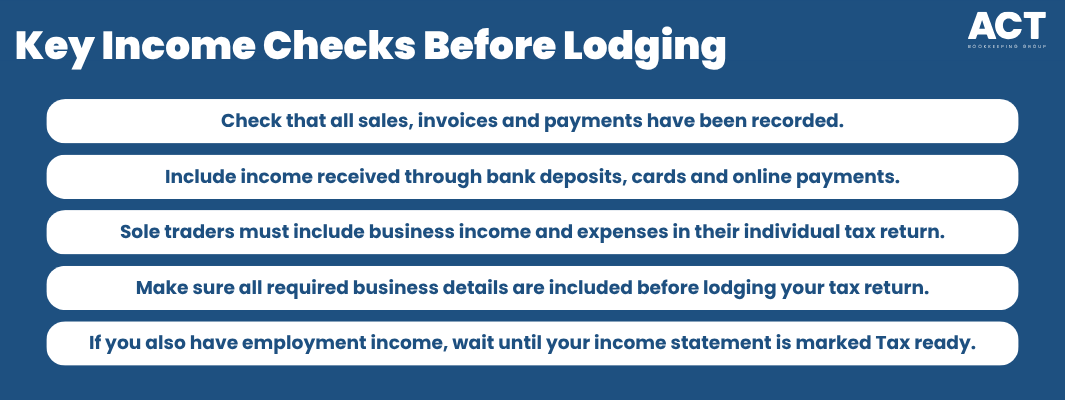
Review your income records and make sure sales, invoices and payments from all relevant sources have been included. This can include direct deposits, card payments, online payments, dividends connected with business investments where relevant, and other money received during the year. If you are a sole trader, you report your business income and expenses in your individual tax return because you do not lodge a separate tax return for the business. If you prepare your own tax return or own return, make sure the required business details are included before you lodge a tax return.
If you also worked for an employer during the year, you could access your income statement through ATO online services linked to myGov. Wait until it is marked Tax ready before using it to complete your individual tax return. This employment information is separate from your business bookkeeping.
Review Expenses and Deductions
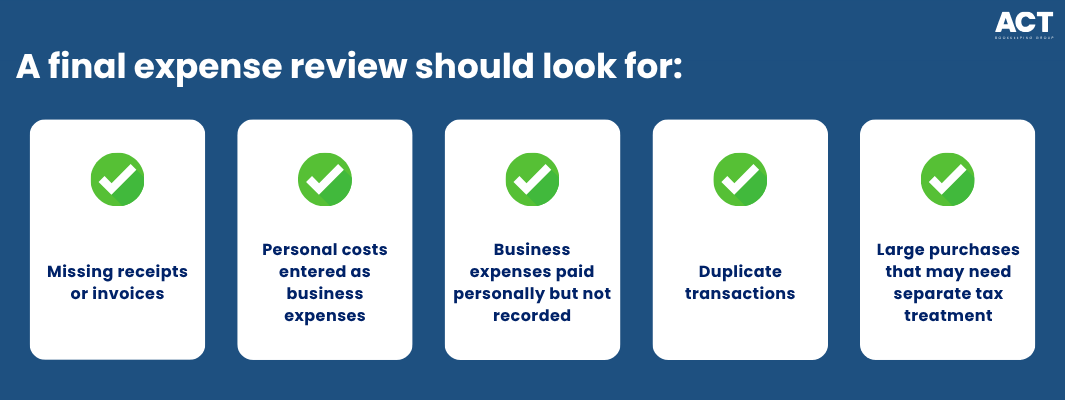
Check your expense accounts to make sure business costs are recorded correctly, and personal spending has not been treated as a business expense. A payment is not automatically tax deductible simply because it came from a business bank account, and work-related expenses connected with employment may be treated differently from expenses incurred in running a business. Keep receipts, invoices and other records that support each claim. For expenses with both business and private use, keep records showing how you worked out the business portion.
Review Unpaid Invoices and Business Debt
Check accounts receivable to confirm which clients still owe your business money and review accounts payable for amounts your business still needs to pay. Old balances may remain because a payment was not matched correctly, a bill was entered twice or information was never updated.
Check Payroll, GST and Other Balances
If you are an employer, compare payroll reports with bookkeeping records and payments from the bank. Review wages, tax withheld and superannuation amounts and resolve any differences before the accountant receives the final data. Businesses registered for GST should also check GST balances against lodged Business Activity Statements. Loans, finance accounts, business assets and money introduced to or withdrawn from the business should also be reviewed before tax preparation is complete.
Understand The Tax Return Process
Different tax return options apply depending on your circumstances. You can lodge online with myTax after linking the ATO to your myGov account, use a registered tax agent or complete a paper tax return. If you choose to return online, you can access myTax through ATO online services linked to myGov. If you need to lodge an individual tax return, information such as your tax file number, income statement, deductions, private health cover and information supplied by health funds may be relevant. The tax-free threshold can also affect individual tax calculations, but these matters are separate from the bookkeeping checks required for business records.
Most Australians dealing with personal tax may see information about how to return online, lodge online, access myTax, check a refund or tax refund, or modify a return. A lodgment receipt or confirmation relates to lodging the return, while the ATO issues a notice of assessment after it processes the return. Your circumstances determine whether you need to lodge and what due date applies. If you determine that you do not need to lodge, you may need to submit a non-lodgment advice, sometimes searched as non-lodgment advice. If you are unsure, check the Australian Taxation Office (ATO) website or speak with a tax agent rather than relying on a general step process.
We’re more than bookkeeping experts
As part of ACT Tax Group, we offer complete accounting and business advisory services tailored to your needs.
Keep Related Tax Information Organised
Before you lodge your tax return, keep relevant business and personal tax information in one accessible place. This can make it easier to complete your tax return, check a prior year issue, answer a question from your accountant or respond if the ATO requests more details. You may come across search terms such as apply for tax return, online tax, government agencies, tax return online, form, assessment, fund, service, notice, refund, owed and pay when looking for tax information. The ATO generally refers to lodging a tax return rather than apply for tax return. Free information and online support, including live help or chat services where available, may also be accessible through government websites.
Other search terms, such as late July, may relate to ATO pre-fill information. For most people, much of the information used to pre-fill individual tax returns is ready by the end of July, but you still need to check that the details are correct and add anything missing. A registered tax agent can help confirm the correct process and due date. You may also encounter specialised website labels such as ATO Indigenous badge when accessing particular ATO information or services. These terms do not change the basic bookkeeping requirement to keep complete and accurate business records.
How ACT Bookkeeping Can Help with Tax Return Ready Records
If your books need attention before you lodge your tax return, book a consultation with ACT Bookkeeping. We can help organise your records, correct bookkeeping issues and create practical processes that support timely bookkeeping, clearer information for your accountant or registered tax agent, and relevant ATO requirements in Australia. If you search for ATO regulations or online tax returns, use current ATO guidance to check the rules that apply. For most returns involving business income, complete and consistent records help support the amounts reported and reduce the risk of missing deductions. Keeping your books current throughout the year can give you better access to business information, reduce the work required when it is time to lodge, and provide a clear link between your records and the information used in your return.
