

Published on 03 Sep 2026
How HECS or HELP Debt Can Change PAYG Withholding in Small Business Payroll depends largely on an employee’s income, their declaration to their employer and the current Australian Taxation Office (ATO) withholding rules. When an employee has a Higher Education Loan Program (HELP) debt and has told their employer about it, the employer may need to withhold additional amounts from their wage using the current study and training support loans withholding rules.
How Does HELP Debt Change PAYG Withholding?
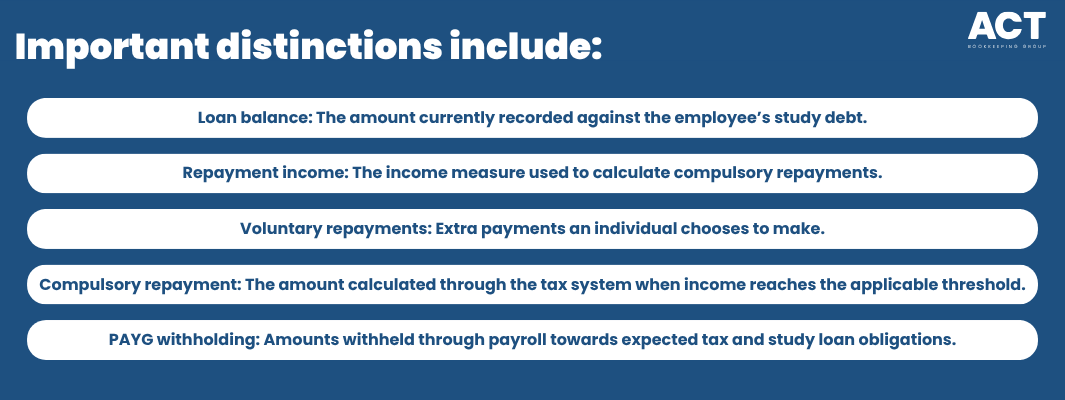
An employee with a HECS or HELP debt may have additional Pay as You Go (PAYG) withholding taken from their pay. The amount is calculated through the payroll system using the relevant income level and ATO withholding schedule rather than the employee’s total loan balance. The employee’s final compulsory repayment is worked out through the Australian tax system after their tax return is assessed. Their repayment income can include more than taxable income alone, so the final amount they need to repay may differ from what was withheld by one employer during the year.
Are HECS or HELP declarations recorded correctly in your payroll?
Schedule a complimentary consultation with us today to keep PAYG withholding settings accurate.
Employee Declarations Keep Payroll Settings Accurate
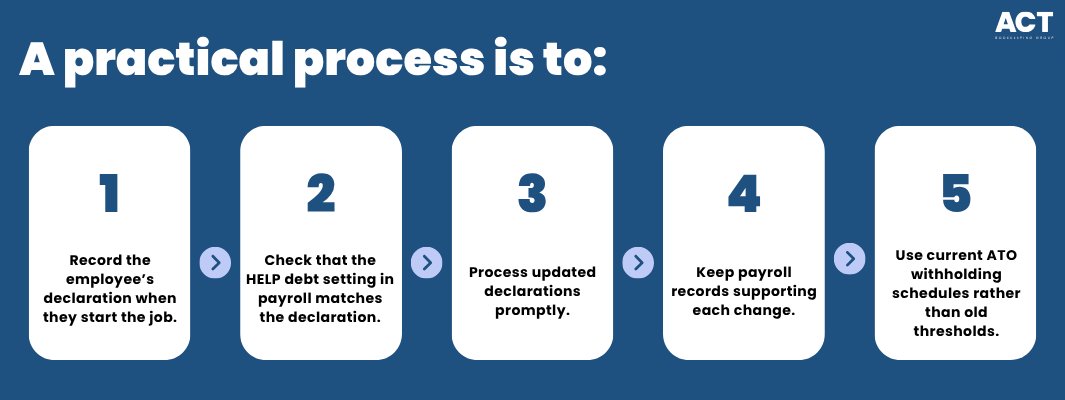
The employee’s Tax File Number (TFN) declaration and later withholding declarations help determine how their employer should process PAYG withholding. If an employee has a HECS-HELP loan, Australian Apprenticeship Support Loan (AASL) or another applicable study and training support loan, the information they provide should be recorded correctly in the payroll system. An employee may also update their declaration if their circumstances change. For example, if their loan account has been fully repaid, the employer should not simply assume that withholding can stop based on the loan balance shown in the employee’s ATO online services account.
Current Repayment Rules Affect What Employees Take Home
The minimum repayment income and compulsory repayment rules for study and training loans can change between financial years. This means small businesses should keep payroll software current rather than relying on a previously used minimum repayment threshold or a fixed percentage remembered from an earlier year. For 2026-27, the minimum repayment income is $69,528, up from $67,000 in 2025-26. Under the current marginal system, a compulsory repayment is calculated once repayment income exceeds $69,528, using the indexed 2026-27 repayment rates. The compulsory repayment is worked out as 15 cents for each dollar of repayment income above $69,528, plus 17 cents for each dollar above $129,717, or 10 per cent of total repayment income if that produces the lower amount.
“The average student debt today is about $27,000,” said Jason Clare, Australian Government Minister for Education, in 2025. The Australian Government also reported that more than 3.2 million Australians received a 20 per cent reduction in eligible student debt, reducing outstanding balances by more than $16 billion.

HELP Repayments and Loan Balances Are Different Issues
An employee can make voluntary repayments towards a HELP loan or study and training support loan at any time, but voluntary repayments are separate from compulsory repayments calculated through the tax system. If the employee still has a debt and their repayment income is above the minimum repayment income, they may still have a compulsory repayment. A voluntary repayment reduces the loan balance but does not automatically change what an employer should withhold from future pay. HELP debt does not incur ordinary interest, but eligible debt is indexed each year. Indexation can adjust the outstanding loan balance, while repayments and other government adjustments can also change the study loan account balance.
Employees May Need to Check Their Own HELP Position
Employees can generally review their HELP debt, repayments and loan account through ATO online services or the ATO app. They may also need to check their position if they have multiple jobs, reportable super contributions or other income that could affect total repayment income. Eligibility for loans such as HECS HELP, FEE HELP and other study and training loans depends on factors including the course, education provider, citizenship or residency status and applicable government rules. Questions about eligibility, a Commonwealth supported place, long-term residency requirements or whether a permanent humanitarian visa holder qualifies should be checked against current government guidance rather than handled through payroll.
We’re more than bookkeeping experts
As part of ACT Tax Group, we offer complete accounting and business advisory services tailored to your needs.
How ACT Bookkeeping Can Help with HELP and PAYG Payroll
We can help you keep employee declarations, wages, PAYG withholding and payroll records organised and up to date. Our bookkeeping support can also cover Business Activity Statement (BAS) preparation, payroll processing, Goods and Services Tax (GST) record keeping and practical checks of the software you use to manage employee pay. If you are unsure whether your payroll settings reflect current employee declarations or ATO requirements, you can book or schedule a consultation with our team. We can help you review your processes, correct bookkeeping records where needed and keep your payroll information ready for reporting.

Keeping HELP Withholding Simple and Accurate
A HECS or HELP debt can change the amount withheld from an employee’s wage, but the employer does not need to manage the employee’s loan repayments or calculate their final compulsory liability. Good payroll practice starts with accurate employee declarations, current software and reliable records. Small businesses should review payroll settings when tax tables change and update employee details when a new declaration is submitted. This approach keeps day-to-day payroll manageable while giving employees clearer, more accurate pay information.
