

Published on 24 Jul 2026
How Income Tax Tables Support Payroll Setup for New Employees starts with selecting the correct income tax table and entering accurate employee information. The table helps an employer calculate how much income tax to withhold from salary or wage payments, supporting accurate take-home pay and reliable payroll records. Correct payroll setup matters because each employee’s taxable income, tax status and personal details can affect the amount withheld. When these settings are entered correctly before the first pay run, businesses can reduce errors, avoid unnecessary corrections and maintain organised records for tax purposes.
What Is an Income Tax Table?
An income tax table shows how much tax may need to be withheld from payments made to employees. It applies current income tax rates and relevant thresholds based on the employee’s pay frequency, taxable earnings and information supplied during onboarding. Australian residents for tax purposes are generally subject to resident tax rates and may be entitled to the tax-free threshold. Foreign residents are subject to different tax rates and cannot claim the Australian resident tax-free threshold. Payroll software usually calculates the withholding automatically, but the result depends on the correct table and employee settings being selected.
Struggling to avoid cash shortages?
Schedule a complimentary consultation with us today to update payroll for 1 July 2026 changes.
Taxable Income Affects Payroll Withholding
Taxable income is generally the income used to calculate a person’s final income tax after allowable tax deductions. For payroll purposes, the employer calculates how much tax to withhold from each payment using the employee’s earnings, declaration details and the applicable Pay As You Go Withholding (PAYGW) income tax table.
The employee’s final tax payable may differ from the amount withheld during the year because their tax return can include other income, tax deductions, foreign sources of income or additional liabilities. Payroll withholding is an estimate collected throughout the year rather than a final calculation of the employee’s annual tax.
Income Tax Rates and Tax Brackets
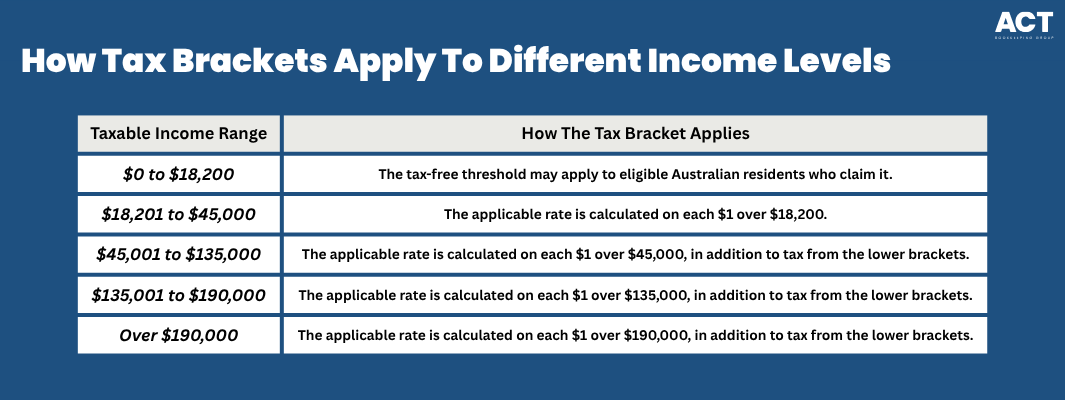
Australian resident tax rates use progressive tax brackets. For 2026–27, the thresholds remain $0 to $18,200, $18,201 to $45,000, $45,001 to $135,000, $135,001 to $190,000 and $190,001 and over. The relevant rate applies only to income within each bracket, such as each $1 over $18,200, each $1 over $45,000, each $1 over $135,000 or each $1 over $190,000. These annual rates help explain potential tax payable, but employers must use the current ATO PAYGW tax table or payroll formula for each pay.
For payments made from 1 July 2026, employers should confirm that their payroll system uses the ATO tax tables and withholding schedules applying to the 2026–27 income year.
The Medicare Levy Can Affect Employee Tax
The Medicare levy is generally calculated as part of an Australian resident’s income tax assessment. Most residents pay a levy of 2% of taxable income, although exemptions, reductions and low-income thresholds may apply. The Medicare levy surcharge is separate and may apply depending on income for surcharge purposes and private hospital cover.

Employee Details Must Be Entered Correctly
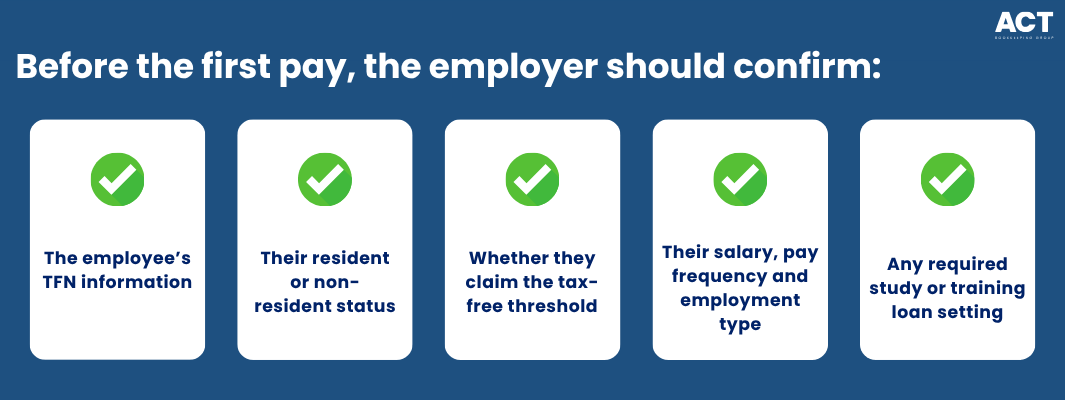
An employee’s Tax File Number (TFN) declaration provides information needed to apply the correct tax treatment. It helps identify whether the employee is an Australian resident for tax purposes, whether they want to claim the tax-free threshold and whether another withholding condition may apply. Missing or incorrect information may result in excess tax being withheld or insufficient tax being deducted. This can affect the employee’s take-home pay and create extra payroll work.
Payroll Software Still Requires Careful Setup
Modern payroll systems calculate withholding using built-in tax tables, but they still rely on accurate employee information. An outdated table, incorrect residency status or missing tax-free threshold selection can affect each pay cycle. Businesses should confirm that their software applies the tables effective from 1 July 2026 and update the employee’s tax treatment when a valid new declaration is received. Checking gross pay, withholding, deductions and net pay can help find errors before payments are finalised.
We’re more than bookkeeping experts
As part of ACT Tax Group, we offer complete accounting and business advisory services tailored to your needs.
How ACT Bookkeeping Can Help with Income Tax Table Payroll Setup
We help Australian businesses set up organised employee records, apply the correct income tax table and maintain accurate payroll processes. Our team can review employee details, payroll categories, withholding settings and pay runs while keeping your records clear and ready for ongoing reporting. Book a meeting with ACT Bookkeeping to review your payroll setup and employee onboarding process. We can help with timely bookkeeping, payroll support, Business Activity Statement (BAS) preparation, Goods and Services Tax (GST) records and practical systems that reduce compliance stress.

Keeping New Employee Payroll Accurate
Income tax tables support accurate payroll by helping employers calculate the amount of tax to withhold from employee payments. The correct outcome depends on current tax rates, accurate employee information and properly configured payroll software. Review each employee’s setup before processing their first pay and check payroll settings after relevant July updates. Careful setup supports accurate take-home pay, dependable records and smoother payroll administration throughout the year.
