Published on 09 Jul 2026
How to claim tax return for a small business starts with accurate bookkeeping records that show your business income, expenses, deductions, and the details needed to work out taxable income for the financial year. Many business owners think tax time is only about finding a tax refund, but the real process begins with checking whether your records are correct before you lodge your tax return. Whether you are a sole trader lodging online through myTax using your myGov account, or you use a registered tax agent to lodge your tax return, your records need to support every claim.
What Bookkeeping Issues Affect a Small Business Tax Return?
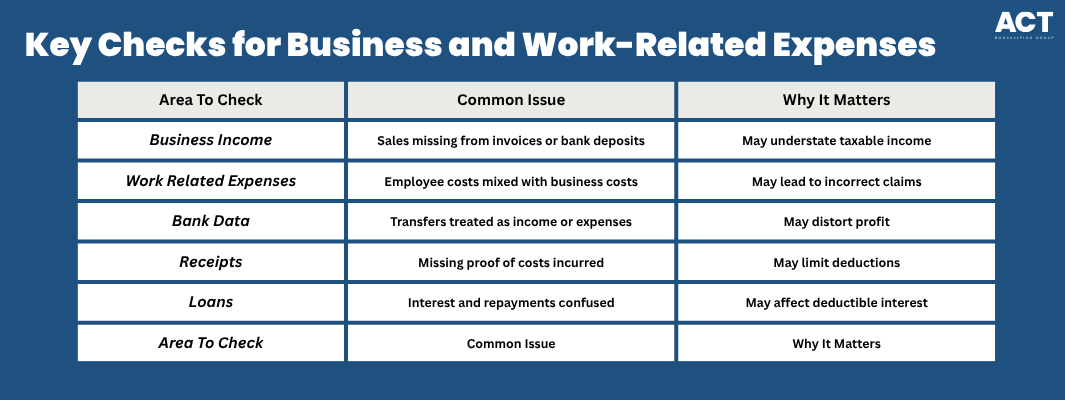
Bookkeeping issues affect a small business tax return because they can change taxable income, tax deductions, Goods and Services Tax (GST), wages, allowances, and the final tax position. If business income, employment income, investment income, government payments, or other income are recorded incorrectly, the tax return may not reflect the full income year. The same applies to expenses. You can generally claim expenses you incurred in carrying on your business if they directly relate to earning assessable income, but private costs, capital expenses, missing receipts, unclear bank statement details, and unsupported deductions should be fixed before lodgement.
Struggling to fix bookkeeping errors before tax lodgement?
Schedule a complimentary consultation with us today to review and correct your records.
Clean Records Make Tax Time Easier
Clean records make tax time easier because your accountant can quickly see what has been paid, what is still owing, and which expenses may be claimed. They also help identify whether your business has made a profit, has money borrowed for business purposes, or has interest charged on loans that may need to be reviewed.
Which Records Should You Review Before Lodgement?
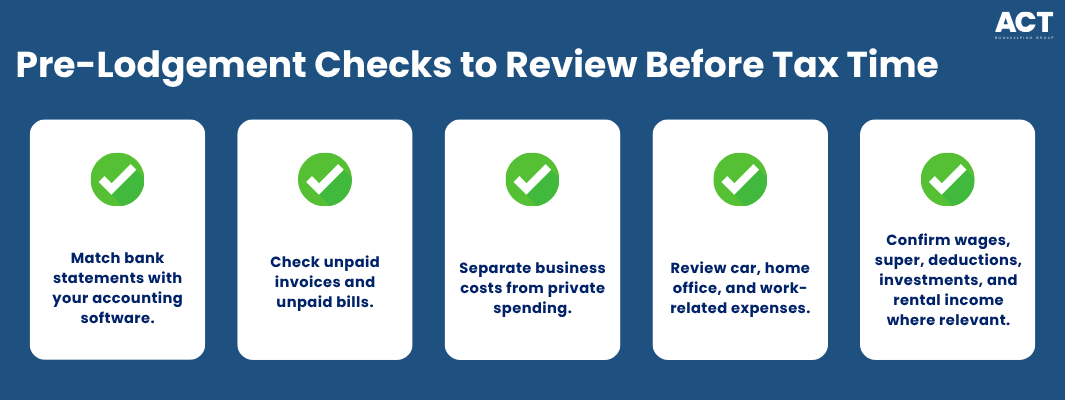
You should review bank accounts, receipts, invoices, payroll records, loan accounts, business income, tax invoices, and expense details before you lodge a tax return, and consider whether any overdue amounts might require setting up and managing an ATO payment plan. This helps confirm that income and expenses are recorded in the correct date range for the financial year.
Tax Return Online Information Still Needs Checking
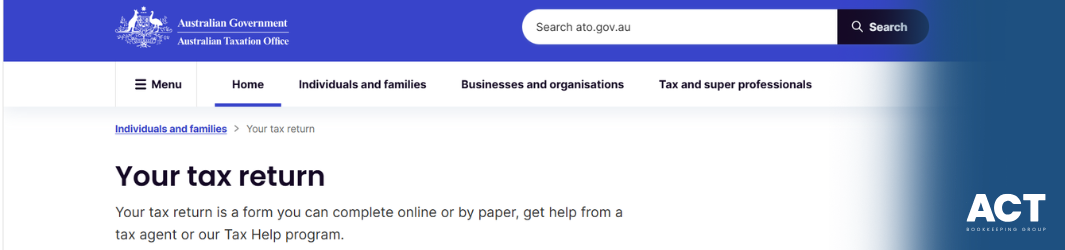
When you lodge online through myTax, the tax return may include pre-filled information from employers, banks, health funds, government agencies, and other sources. However, most information still needs to be checked because pre-filled data is usually available as the ATO receives it, with most information available by late July, and it may not include all business details, especially if your Australian residency for tax purposes status affects which income should be reported. Most people who only have simple wages may rely heavily on pre-filled data, but small business owners usually need more detailed records. You are responsible for declaring all income and supporting your claims, so if you lodge online without reviewing business income, claim expenses, or deductible costs, you may miss important information or include amounts that are not correct.
Work Related and Business Expenses Must Be Separated
Work related expenses and small business expenses must be separated because they apply in different ways. An employee may be able to claim occupation-specific clothing, protective clothing, union fees, investment advice, or non-compulsory work uniforms only where the uniform is registered on the Register of Approved Occupational Clothing, but a business owner must also consider whether the cost belongs to the business, the owner, or an employee.
Payroll and Employee Records Need Careful Review
Payroll and employee records need careful review because wages, allowances, superannuation, Pay As You Go (PAYG) withholding, and Single Touch Payroll (STP) reporting affect both the employee and employer side of compliance. If payroll data does not match the accounting records, the issue should be fixed before you lodge. Small business owners should check employee details, pay categories, allowances, PAYG withholding obligations, and superannuation payments, including whether contributions for employee earnings up to 30 June 2026 were received by the employee’s fund by the quarterly due dates, and whether current Payday Super obligations apply to earnings from 1 July 2026. If an employer has paid staff during the year, payroll records should be complete enough to support the tax return and help reduce the risk of later corrections.
What Deductions Should Small Businesses Check?
Small businesses should check deductions for operating costs, insurance, software, interest on money borrowed for business purposes, professional fees, car expenses, home expenses, tools, equipment, and business-related subscriptions. Some costs need extra care, particularly if overdue obligations such as BAS liabilities are being managed under ATO payment plans for overdue BAS. Money borrowed for the business may include interest that needs to be separated from repayments, while investment advice, donations, rental property costs, and capital gains may need to be reviewed outside the ordinary business accounts.
We’re more than bookkeeping experts
As part of ACT Tax Group, we offer complete accounting and business advisory services tailored to your needs.
A Tax Calculator Cannot Replace Good Records
A tax calculator can help estimate a possible tax refund or tax payable, but it cannot confirm whether your records are complete or whether your claim is correct. It also cannot decide whether an expense is business, private, investment-related, or work related. Good bookkeeping gives your tax agent the details needed to prepare the return properly.

How ACT Bookkeeping Can Help with Small Business Tax Return Lodgement
At ACT Bookkeeping, we help small to medium-sized businesses prepare tax-ready records, review bookkeeping issues, check income and expenses, and identify deductions that are supported by proper records. Our IPA-certified team provides practical advice so you can approach tax time with less stress and more confidence. You can book a consultation with our team before lodgement to review your bookkeeping, tax return, payroll, business income, bank data, and deductions. We will help you understand what needs fixing, what details are missing, and what steps may improve your record keeping for the next financial year.
Before you lodge your tax return, make sure your bookkeeping records are reconciled, your income is complete, your expenses are supported by receipts, and your deductions are clearly linked to the business, with records generally kept for five years.
