
Published on 28 May 2026
What is PSI is a common question for a sole trader, independent contractor, or consultant who earns income mainly from their personal effort, personal skills, or personal services. Personal Services Income (PSI) is income produced mainly, meaning more than 50%, from your personal efforts or skills, rather than from selling goods, using an income producing asset, or running a larger business system. This matters because PSI rules can affect your tax return, taxable income, tax deductions, and how you claim deductions. The Australian Taxation Office (ATO) provides guidance to help you work out whether income is PSI and whether the PSI rules apply, so clear bookkeeping helps you and your tax professional review the right details.
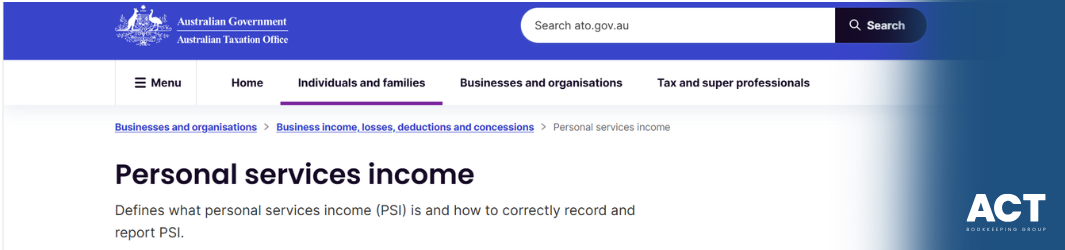
What Is Personal Services Income?
Personal Services Income (PSI) is income that is mainly a reward for your personal efforts or skills. Common examples can include consultancy services, systems analysis services, medical practitioner services, trade labour, design work, engineering work, and other personal services across almost any industry. Income is PSI when more than 50% of the income received under a contract is for your personal efforts or skills. It is different from business income that mainly comes from stock, equipment, employees, systems, or an income producing asset.
Unsure if your income is PSI?
Schedule a complimentary consultation with us today to clarify PSI and your ATO obligations.
Good Bookkeeping Makes PSI Easier to Review
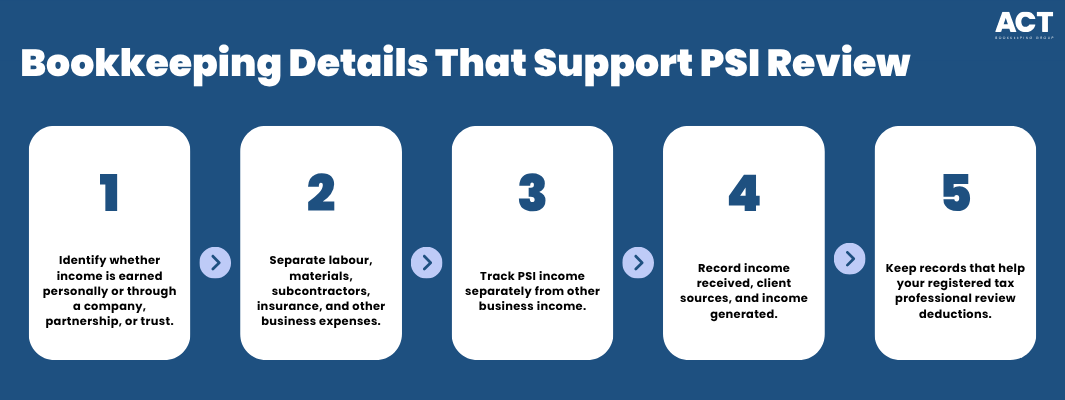
Good bookkeeping helps show whether you earn PSI, receive PSI through a company partnership or trust, or earn other income that may need different tax treatment. Your records should clearly separate labour, materials, subcontractors, insurance costs, software licence costs, public liability insurance, and other business expenses, following a record keeping guide for sole traders.
This matters because PSI income can sit beside other income in the same business. A practical bookkeeping system helps your registered tax professional review income received, income generated, client sources, and deductions you can claim for tax purposes.
When Do the PSI Rules Apply?
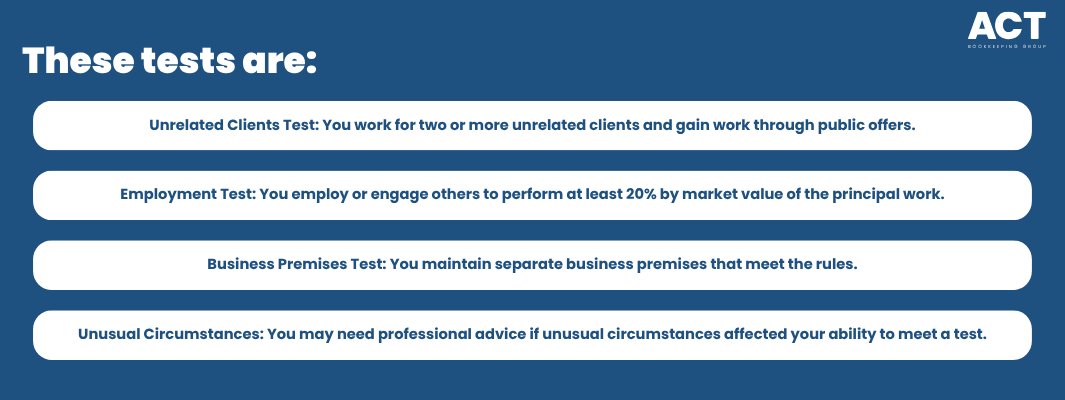
If you receive PSI, the next step is to work out whether you are conducting a Personal Services Business (PSB) for that income year. If you cannot self-assess as a PSB and do not have a PSB determination, the PSI rules may apply. A PSB is generally a business that passes the results test, unrelated clients test, employment test, or business premises test.
These tests look at how your business actually operates during the income year. They consider whether you work for one client, find unrelated clients through public offers, use your own equipment, pay others to do principal work, or operate from separate business premises.
The PSI Rules Do Not Mean You Are an Employee
The PSI rules do not automatically make you an employee. You may still be a sole trader, independent contractor, or personal services entity with your own Australian Business Number (ABN) and business structure. However, special rules can still apply for income tax, deductions, and how you report PSI. This is why you should seek professional advice before assuming the PSI rules don’t apply.
The Main Personal Services Business Tests
The results test is often the first test to review because it looks at whether you are paid to produce a result. It also considers whether you supply your own equipment or tools, and whether you must fix defects at your own cost. The unrelated clients test, employment test, and business premises test can only be used for self-assessment if less than 80% of your PSI comes from one client and that client’s associates.
Why The One Client Issue Matters
If 80% or more of your PSI comes from one client and that client’s associates, you generally cannot self-assess using the unrelated clients test, employment test, or business premises test. This does not always mean a poor tax outcome, but it does mean your tax professional needs accurate records before deciding whether you meet the results test, need a PSB determination, or must apply the PSI rules.
What Bookkeepers Should Track For PSI
A bookkeeper should not decide complex tax treatment, but they can keep the records clean enough for proper review. Choosing the right types of bookkeeping systems helps ensure your information is captured accurately and consistently. Organised records reduce stress when your tax professional checks whether income is PSI, whether PSI rules apply, and which deductions you can claim.
Helpful PSI records include: and, where relevant, documents that help confirm whether you are an Australian resident for tax purposes.
Invoices showing personal services, labour, materials, and reimbursed costs
Contracts and scope documents showing the principal work
Income reports by client and income year
Notes on one client, unrelated clients, and public offers
Evidence of own equipment and business systems
Records for insurance costs, software licence costs, and public liability
Super contributions and payments to workers or contractors
Details of family members or associates paid by the business, including whether the payments relate to principal work or support work
We’re more than bookkeeping experts
As part of ACT Tax Group, we offer complete accounting and business advisory services tailored to your needs.
Deductions Need Careful Handling Under PSI
When PSI rules apply, deductions are generally limited to those an employee could claim, and some deductions cannot be claimed against PSI. You may need advice before claiming payments to associates, super contributions for associates, or residential rent, mortgage interest, rates, and land tax, as these may be restricted or unavailable where they relate to PSI. That does not mean you cannot claim any deductions at all. It means deductions you can claim should be supported by records, connected to earning PSI, and reviewed before you lodge your tax return, especially where assets might later be subject to small business CGT concessions.

How ACT Bookkeeping Can Help with PSI Records and Contractor Bookkeeping
ACT Bookkeeping helps sole traders, contractors, and small businesses keep organised records that make PSI easier to review. We can support bookkeeping systems, income tracking, Goods and Services Tax (GST) records, and Business Activity Statement (BAS) preparation, payroll records, expense coding, and practical reports for your accountant or registered tax professional.
Start by reviewing your invoices, client mix, contracts, and expense records for the income year. If unpaid tax from earlier years is creating pressure, you may also need to discuss setting up and managing an ATO payment plan. Then speak with a registered tax professional about whether PSI rules apply, whether you can self-assess as a Personal Services Business (PSB), whether you need a PSB determination, and how to report PSI correctly.
