

Published on 10 Dec 2025
Pty Ltd explained: what it means for bookkeeping, tax, and compliance in Australia starts with understanding that a Pty Ltd company is a proprietary limited business structure that is a separate legal entity from its owners. When your business becomes a private company rather than a sole trader, it brings limited liability protection but also stricter reporting requirements. Getting this right helps protect your personal assets and keeps you on top of your tax and compliance obligations.
Why The Pty Ltd Structure Matters for Growing Businesses
This structure matters because a company can enter contracts, borrow money, and owe business debts in its own name, while owners are generally not personally liable beyond their share capital. As Australian businesses grow, many shift to a Pty Ltd structure when they start signing higher value contracts, employing staff, or working with bigger clients. Understanding the meaning of Pty Ltd gives you clarity on your legal responsibility, bookkeeping needs, and long‑term plans.
Across Australia, a Pty Ltd company is the most common type of incorporated company used by small businesses and growing firms. It offers limited liability protection and clearer legal status than trading as an individual, which can support better access to finance and enhanced credibility with customers and suppliers. With the right systems, you can use this structure to protect your personal wealth while growing a more robust business.
Are your bookkeeping systems ready for Pty Ltd compliance requirements?
Schedule a complimentary consultation with us today to set up separate legal entity accounting that keeps company and personal finances distinct.
What Does Pty Ltd Actually Mean
“Pty Ltd” stands for proprietary limited and describes a proprietary company that is privately owned and legally separate from its owners. It is a limited company, so shareholders are generally protected from the company’s debts beyond what they have agreed to contribute. A Pty Ltd company sits under the Corporations Act 2001 and must follow specific rules about company forms, records, and reporting.
This type of business structure cannot list on the Australian Stock Exchange or other stock exchange, which is reserved for a public company or other company types such as a listed Ltd company. Instead, proprietary limited companies are designed for Australian businesses that want control kept within a smaller group of owners. They are a flexible option for small proprietary companies, large proprietary companies, and even growing groups looking to raise funds from new investors without going public.
How Is a Pty Ltd Company Set Up as a Separate Legal Entity
A Pty Ltd company becomes a separate legal entity when it is registered with ASIC and issued an Australian Company Number (ACN). It must then apply separately for an Australian Business Number (ABN) to operate. From that point, the company can own assets, open bank accounts, hire staff, and sign contracts in its own name. It also needs a registered office address and must keep certain company documents available.
Because the company is legally separate, it is treated as a body corporate with its own rights and obligations. It can sue or be sued, and it is responsible for its own financial responsibility, tax, and legal obligations. Owners can sell shares, bring in new investors, or adjust the share structure without changing the company’s identity.

What Are the Key Differences Between a Pty Ltd and Other Business Structures
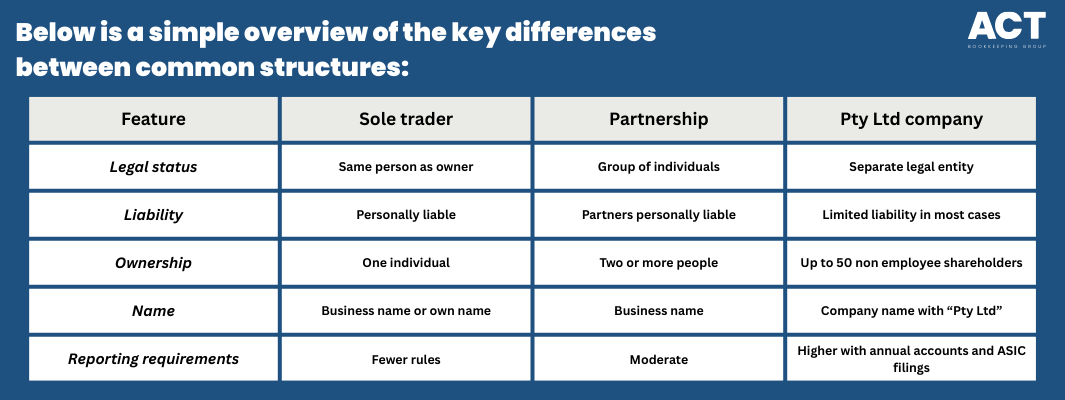
A Pty Ltd structure differs from other business structures such as a sole trader, partnership, or unlimited company in how risk and responsibility are shared. As a sole trader, you and the business are the same legal entity, so you are personally responsible for business debts. In a Pty Ltd company, the business and owner are distinct, and liabilities usually sit with the company.
Compared with a sole trader, a Pty Ltd structure usually improves asset protection and succession options. Compared with a partnership or unlimited company, it offers clearer rules and limited liability but more detailed record‑keeping and formal annual reports.
How Does a Pty Ltd Change Bookkeeping and Day to Day Records
Once you operate as a Pty Ltd company, your bookkeeping must reflect that the company is a separate legal person from you. All income, expenses, assets, and liabilities need to be recorded at company level, not mixed with personal spending. This includes tracking share capital, loans, and any unpaid capital or partly paid shares properly.
You also need clear separation of bank accounts so company funds and personal money are not blended. Regular reconciliations, coded transactions, and consistent processes help you produce accurate annual accounts and meet reporting requirements. Good systems and digital platforms make it easier to keep audit trails and support decisions.
How Does a Pty Ltd Structure Affect Tax
A Pty Ltd company pays company tax on its profits through its own tax return with the Australian Taxation Office. The company pays tax for each financial year, separate from the owners’ personal returns. Shareholders then pay personal tax on dividends or other income received from the company.
Because the company is a separate legal entity, it can often plan tax more flexibly than a sole trader, especially once profits grow. At the same time, there are more legal obligations around annual reports, record keeping, and timing of tax payments. Keeping accurate books throughout the year helps avoid surprises and supports better tax planning.
How Are Owners Paid in a Proprietary Company
In a proprietary company, owners generally receive money as wages, director fees, or dividends rather than casual transfers. Wages and director fees go through payroll, with tax withheld and superannuation calculated in line with Australian laws. Dividends are paid from after‑tax profits based on each person’s share structure.
If owners take money out of the company without proper records, it may be treated as a loan rather than income. This can create extra financial responsibility and may need to be repaid. Clear bookkeeping reduces confusion and helps you choose the best way to pay yourself while staying compliant.
What Are the Director and Legal Responsibilities in a Pty Ltd Company
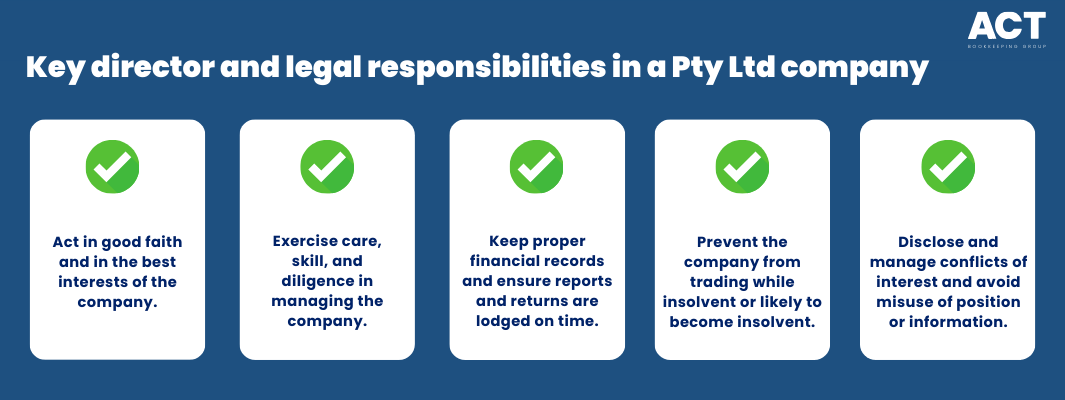
Every Pty Ltd must have at least one director who is responsible for overseeing the business. Under current laws, you must apply for a Director Identification Number (Director ID) before you can be appointed. The company director must ensure the company can pay its bills when they are due and does not trade while insolvent. Directors also need to make sure company documents, registers, and financial records are up to date.
While limited liability protects owners in many situations, directors can still be personally responsible in some cases. This can include serious breaches of duty or ignoring key requirements such as tax, superannuation, or creditor rights. Understanding these duties and working with experienced advisers helps manage risk and protect both the business and your personal assets.
How Does a Pty Ltd Company Interact with ASIC And Other Regulators
A proprietary limited company must follow the rules set by corporate regulators, principally the Australian Securities and Investments Commission (ASIC). It needs to keep its company name, registered office address, and details of directors and shareholders’ current. Changes in share structure, directors, or major details must be lodged within set timeframes.
The company also has to pay ongoing fees and may need to prepare and lodge annual reports or annual accounts, depending on size. Small proprietary companies usually face simpler requirements than large proprietary companies or a foreign company operating in Australia. Staying organised with dates and documents helps you avoid late fees and extra attention.
How Does a Pty Ltd Company Raise Capital and Grow
Because a Pty Ltd is a limited company, it can raise capital by issuing shares to new or existing owners. It can also sell shares to bring in new investors while keeping control within a limited group. This flexibility in ownership can support growth without needing to list on the Australian Stock Exchange.
Compared with a sole trader, a company may find it easier to work with traditional banks and lenders due to clearer accounts and enhanced credibility. Having formal company documents and a strong track record can also help when you apply for finance, negotiate terms, or seek larger projects. This is useful in industries such as services, construction, or even the mining industry where contracts can be substantial.
How Does a Pty Ltd Structure Support Asset Protection and Personal Wealth
Because a Pty Ltd company is legally separate, your personal wealth is usually shielded from most business debts, as long as you meet your duties as a director. If the company runs into trouble, creditors typically claim against the company, not the owners personally. This is very different from trading as a sole trader, where you are personally liable for most obligations.
This protection is one of the main reasons business owners move to a Pty Ltd once risk increases. While it does not remove all exposure, it can reduce the impact of disputes, failed contracts, or unexpected downturns. Combining this structure with smart planning and insurance gives you a more secure base for long‑term growth.
We’re more than bookkeeping experts
As part of ACT Tax Group, we offer complete accounting and business advisory services tailored to your needs.
How Does a Pty Ltd Compare with Public Companies and Other Company Types
A proprietary limited company is designed for privately owned businesses that do not wish to list on a stock exchange. A public company or listed Ltd company can offer shares widely and must meet stricter rules on annual reports, disclosure, and governance. A foreign company that operates here or special types such as an unlimited company follow different rules again.
For most Australian businesses, a Pty Ltd is the practical step up from simpler forms like a sole trader. It offers more structure and protection without the intense regulation placed on large listed bodies. Understanding these options lets you choose the structure that best matches your goals and capacity.
What Should Small Businesses Consider Before Choosing a Pty Ltd Structure
Before moving to a Pty Ltd structure, small businesses should weigh costs, admin load, and benefits. Incorporation changes how you manage books, tax, and decisions, and it comes with new paperwork and fees. It is worth considering how comfortable you are with more formal systems and whether you have support to manage them.

Conclusion
Choosing a Pty Ltd company is not just about adding letters to your company name; it reshapes your business structure, risk profile, and daily processes. It creates a separate legal entity that can support growth, protect personal wealth, and unlock new opportunities. At the same time, it introduces new legal obligations, reporting requirements, and the need for reliable bookkeeping.
If you are considering a Pty Ltd or already running one, now is a good time to review your systems, records, and advice. With clear processes and a supportive team around you, your proprietary limited company can give you both peace of mind and a solid platform for long‑term success.
