
Published on 15 Oct 2026
The electric vehicle FBT exemption allows Australian employers to provide certain electric cars for employee private use without paying Fringe Benefits Tax (FBT), provided specific eligibility conditions are met. Employers should first check vehicle purchase records, the luxury car tax threshold, lease agreements and employee benefit arrangements to avoid incorrect reporting.
For businesses considering electric vehicles, the exemption can offer tax benefits and potential savings. However, keeping accurate records is essential, particularly when managing novated leases, charging expenses and payroll obligations.
Essential Records for Electric Vehicle FBT Exemption Eligibility
Employers should confirm that each vehicle meets Australian Taxation Office (ATO) eligibility requirements before treating a car benefit as FBT exempt. A qualifying electric vehicle must satisfy rules covering vehicle type, first use and luxury car tax history.
Unsure about your electric vehicle’s FBT eligibility?
Schedule a complimentary consultation with us today to check your vehicle eligibility records.
Purchase Invoices and Registration Documents
Purchase invoices establish the vehicle’s model, price and transaction date, while registration documents help confirm its identity and ownership history. Both records provide essential evidence when assessing whether an electric car qualifies.
First-Use Dates and Luxury Car Tax Records
Employers should retain delivery documents and evidence showing when the vehicle was first held and used. Earlier purchase records are also important for checking whether Luxury Car Tax (LCT) was ever payable on its supply or importation.
Employment Agreements and Lease Documents
Employment agreements identify the employee receiving the vehicle benefit, while lease contracts explain the financial arrangement. Employers should retain signed novated lease agreements, commencement dates and subsequent amendments to support eligibility reviews.
Vehicle Eligibility Depends on Specific Criteria
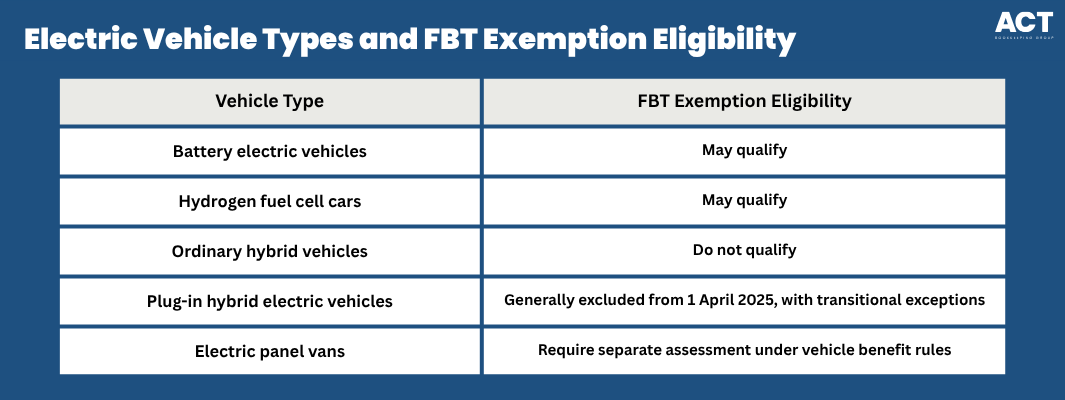
Not all electric cars and hybrid vehicles qualify for the exemption. The federal government’s electric car discount policy generally covers eligible battery electric vehicles and hydrogen fuel cell cars, subject to other requirements. Employers must also confirm that the vehicle satisfies the legal definition of a car and is used or available for private use by a current employee or their associates, including family members.
Example: A Canberra electrical contractor purchases a battery electric car for an employee’s private use. The business should verify the vehicle classification, purchase details and first-use date before treating the arrangement as exempt.
Luxury Car Tax Threshold Requirements for Eligible Electric Cars
The exemption requires that LCT has never been payable on the vehicle’s supply or importation. Employers should check the luxury car tax threshold for fuel efficient vehicles applicable at the vehicle’s first retail sale and review its transaction history. A used vehicle may qualify, but purchasing below the current LCT threshold does not automatically establish eligibility. Employers should retain original sale records where available.
Example: A business purchases a second-hand electric car below the current threshold. Its bookkeeper should request earlier purchase documentation to help determine whether LCT was previously payable.
Purchase Dates and Lease Agreements Affect FBT Eligibility
Eligible electric cars must have first been both held and used on or after 1 July 2022. This requirement applies when employers purchase vehicles directly or provide them through leasing arrangements. For novated leases, employers should retain the novated lease agreement, commencement date, employee details and any contract modifications. A replacement vehicle or revised agreement may require a fresh eligibility assessment.
Plug-In Hybrid Electric Vehicle Exemption Changes from April 2025
From 1 April 2025, plug-in hybrid electric vehicles generally no longer qualify for new electric vehicle FBT exemptions. An existing arrangement may remain FBT exempt if the vehicle was used or available for private use under an exempt arrangement before that date and a financially binding commitment continues. Employers should retain evidence of the original agreement and any later changes. Renewals or extensions may affect eligibility, making contract reviews particularly important.
Example: An employee received an eligible plug-in hybrid through a novated lease before April 2025. The employer should check the original commitment before assuming the exemption continues after a lease change.
Electric Vehicle Running Costs and Supporting Records
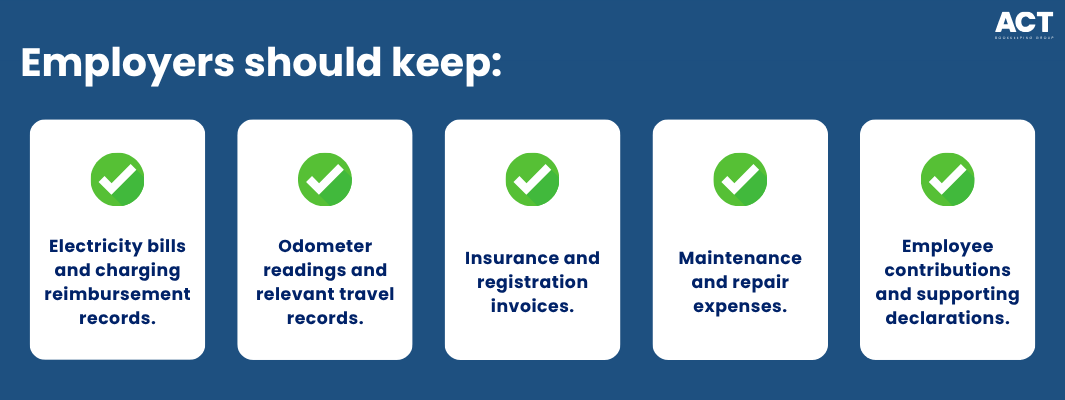
Eligible associated car expenses, including electricity, registration, insurance and maintenance, may also be exempt from FBT. However, home charging equipment and some other benefits require separate consideration. Under ATO Practical Compliance Guideline PCG 2024/2, eligible employers may use the 4.20 cents per kilometre home charging rate with supporting records. Commercial charging costs generally cannot be added unless the vehicle can accurately report the proportion charged at home.
Example: An employee charges a company electric car at home. The employer records supporting electricity costs and kilometre information rather than relying on unsupported estimates.
Payroll Reporting Requirements for FBT-Exempt Electric Cars
An exempt electric car may still create a reportable fringe benefit. Employers must calculate the notional taxable value of the car benefit for reporting purposes, even where the FBT liability is nil. Eligible associated car expense benefits are excluded from this calculation. Generally, when an employee’s total taxable value of reportable fringe benefits exceeds $2,000 during the FBT year, employers must report the grossed-up reportable fringe benefits amount on the employee’s income statement. Accurate payroll records help employers meet these obligations.
We’re more than bookkeeping experts
As part of ACT Tax Group, we offer complete accounting and business advisory services tailored to your needs.
Electric Car Discount Policy Changes Require Ongoing Attention
According to Australian Treasury’s May 2026 announcement, electric and plug-in hybrid vehicles represented 22.9% of new vehicle sales in March 2026, compared with 1.8% in May 2022. Growing adoption makes consistent vehicle record keeping increasingly important. The federal government announced proposed changes to the electric car discount from 1 April 2027, including different treatment based on vehicle cost. Employers should check enacted legislation and transitional provisions before relying on future FBT exemption arrangements.
How ACT Bookkeeping Can Help with Electric Vehicle FBT Records
At ACT Bookkeeping, we help Australian businesses maintain organised records for vehicle purchases, novated leases, employee benefits and running costs. Our bookkeeping and payroll support helps keep financial information accurate and ready for professional tax review. We can assist with expense tracking, charging records and bookkeeping software processes. Book a consultation with ACT Bookkeeping to discuss practical record keeping for your electric vehicle arrangements.

Keeping Electric Vehicle FBT Records Accurate
The electric vehicle FBT exemption offers potential benefits, but eligibility depends on vehicle classification, relevant dates, luxury car tax history and employment arrangements. Complete records help employers substantiate their treatment and manage reporting obligations. Start by checking existing vehicle documents and identifying missing information. Reliable bookkeeping, alongside professional tax advice where needed, supports accurate reporting and informed business decisions.
