

Published on 18 Sep 2026
CA, CPA and Bookkeeper are different roles and designations that can support the accounting and finance needs of an Australian business. A Chartered Accountant (CA), Certified Practising Accountant (CPA) and bookkeeper may all work with financial records, but their qualifications, responsibilities, professional focus and expertise can vary.
The Difference Between a CA, CPA and Bookkeeper
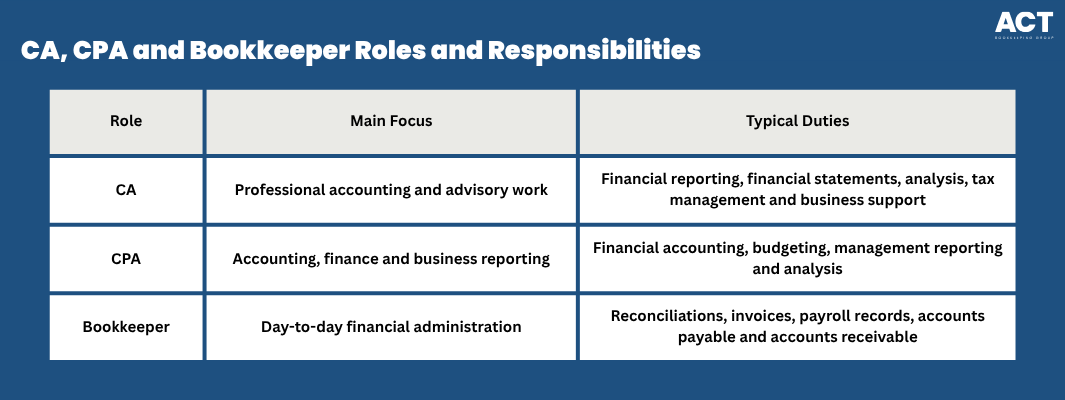
If you are looking for the CA meaning in work, CA stands for Chartered Accountant, a professional designation associated with chartered accountancy. CPA stands for Certified Practising Accountant, another recognised professional accounting designation, while a bookkeeper generally focuses on keeping day-to-day financial records accurate and organised.
The roles can overlap, but they are not interchangeable. Chartered accountants and CPAs often work across accounting, finance, financial statements, management accounting, taxation, auditing, reporting and business advice, while bookkeepers typically focus on transactions, reconciliations, payroll records, invoicing and bookkeeping systems.
Unsure who can handle your BAS services?
Schedule a complimentary consultation with us today to clarify registration requirements and responsibilities.
Professional Designations Reflect Different Training and Career Paths
Chartered accountants and CPAs usually follow a structured career path involving formal education, professional training and ongoing development. People interested in becoming a chartered accountant or CPA generally need to meet education and competency requirements before using the relevant designation, and the complete pathway can vary depending on prior study, experience and the professional program.
Terms such as CA foundation course, certification, final exam, eligible candidates and training may appear when researching an accounting career. For a business owner, the more important question is whether the accountant has the qualifications, knowledge and practical expertise needed for the work rather than where they are in their professional journey.
Chartered Accountants and CPAs Work Across Many Areas of Finance
Chartered accountants and CPAs can build careers across accounting, taxation, auditing, financial planning, management accounting, financial reporting and corporate finance. These qualifications can create diverse career opportunities in accounting firms, companies, governments, industry and other parts of the economy.
Their responsibilities may include preparing financial statements, analysing financial data, supporting business decisions, improving reporting systems and advising clients within their scope. Some professionals also focus on mergers, commercial transactions or management information, so their duties can vary depending on the organisation, career path and professional focus.
Bookkeepers Keep Financial Records Current and Useful
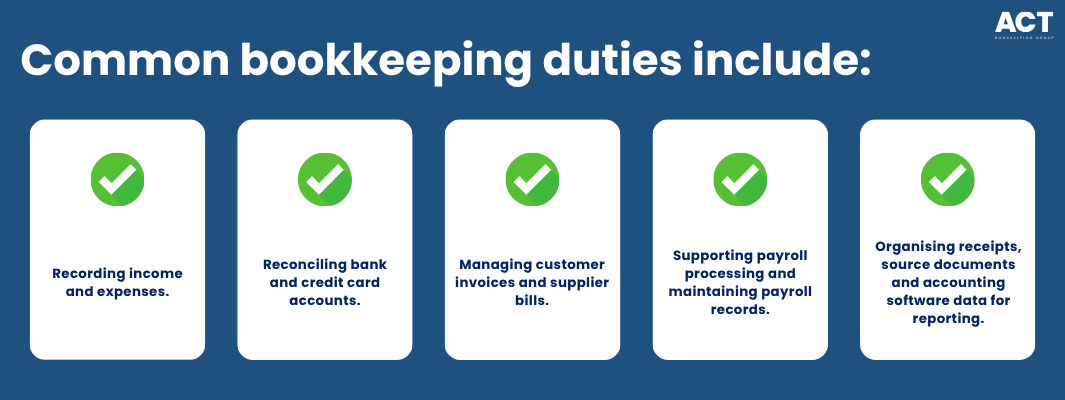
A bookkeeper usually manages the financial records that support the daily life of a business. This can include processing transactions, reconciling accounts, preparing invoices, monitoring accounts payable and accounts receivable, maintaining payroll information and keeping supporting documents organised.
Important skills for bookkeeping include accuracy, attention to detail, communication skills, time management, software knowledge and discipline. These soft skills matter because complete and reliable data gives accountants and business owners better information for reporting, cash flow reviews and everyday decisions.
BAS and Tax Services Require the Right Registration
Bookkeeping can move into regulated work when a service requires interpreting or applying taxation law. Goods and Services Tax (GST), Pay as You Go (PAYG) withholding, PAYG instalments and some payroll work can be Business Activity Statement (BAS) services. If BAS services are provided for a fee or other reward, the provider must generally be registered with the Tax Practitioners Board (TPB), although paid employees providing BAS services to or on behalf of their employer do not need BAS agent registration.
This is why business owners should look beyond a job title or professional designation. A CA, CPA or bookkeeper may have strong accounting knowledge, but whether they can provide a particular tax or BAS service depends on the work, their registration and their competency in that area.
Skills and Experience Matter Alongside Qualifications
Qualifications are important, but they are only one part of choosing a finance professional. Strong communication skills, practical industry knowledge, time management, attention to detail and the ability to explain accounting clearly are also important skills when someone is supporting your business.
For example, a technically strong accountant who cannot explain financial reporting may be less useful than a professional who combines technical expertise with clear communication. Likewise, an experienced bookkeeper who understands your industry, systems and reporting routine can provide valuable support even though their career path is different from that of a chartered accountant or CPA.

Clear Responsibilities Strengthen the Finance Team
A strong finance team does not need every person to complete the same duties. It works best when responsibilities are divided according to skills, qualifications, certification, registration and the level of advice required. A practical structure may look like this:
The bookkeeper keeps financial records, invoices, reconciliations and payroll information up to date.
The accountant reviews reporting, financial statements, budgets and business performance.
A registered BAS agent handles BAS services where registration is required.
A registered tax agent handles tax agent services, including tax advice about liabilities, obligations or entitlements under taxation law where the client can reasonably be expected to rely on that advice for tax purposes.
The business and its finance professionals share information so reporting and advice are based on complete data.
For example, a growing trade business may use a bookkeeper for weekly transaction processing and debtor follow-up, then work with an accountant for management reporting and business insights. A larger company may employ finance professionals internally, while smaller businesses may use external partners for bookkeeping, accounting and tax support.
We’re more than bookkeeping experts
As part of ACT Tax Group, we offer complete accounting and business advisory services tailored to your needs.
Finance Skills Change with Business Needs
There is strong demand for professionals who can turn accurate financial data into useful business information, but the support required can change as a business grows. A small business may begin with bookkeeping, then add management reporting, budgeting, financial planning or specialist tax support as its operations become more complex.
Salary, jobs and career opportunities for accounting professionals vary depending on experience, location, qualifications, industry and responsibilities. For business owners, however, the focus should remain on finding people with the right skills, knowledge and expertise for the work rather than choosing a professional based only on their title or career status.

How ACT Bookkeeping Can Help with an Organised Finance Team
At ACT Bookkeeping, we help small to medium-sized Australian businesses keep their accounting records organised, current and useful. Our support can include bookkeeping, payroll processes, invoicing, accounts payable, accounts receivable, software processes, GST record keeping, BAS support where appropriate and practical reporting support.
We also help make the handover between your bookkeeper, accountant and tax professional clearer so everyone can work from consistent records. If you want better visibility over your finances and less time spent managing paperwork, arrange a meeting with our team to discuss the bookkeeping support that suits your business.
Frequently Asked Questions
Is a CA or CPA the Same as a Certified Professional?
A CA or CPA is a professional accounting designation, but the exact meaning of certified professional can vary depending on the profession and organisation using the term. The best answer is to check the person’s qualifications, professional membership and registration for the specific accounting, BAS or tax services your business needs.
Is There a Step-by-Step Guide for Choosing Between a CA, CPA and Bookkeeper?
A practical step by step guide is to first list the work you need completed, then separate day-to-day bookkeeping from broader accounting, reporting and regulated tax or BAS services. These roles can be viewed as two groups for simplicity: regular financial administration and broader professional accounting support, although the boundaries can overlap.
Some career resources may discuss training periods such as an eight-month course or program, but this is not a standard timeframe that applies across the accounting profession. Use current professional resources to check the education, experience and registration requirements relevant to the person or service you are considering.
