Published on 11 Sep 2026
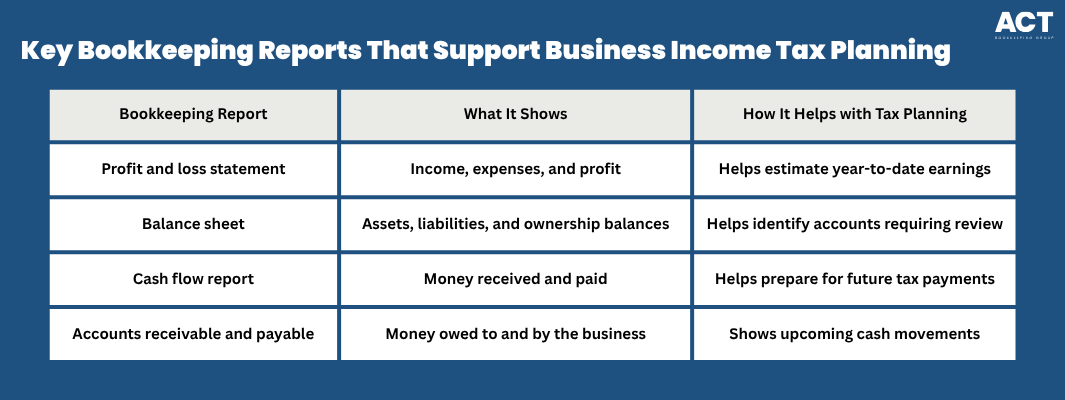
Which Bookkeeping Reports Can Help You Plan for Business Income Tax? The most useful reports include your profit and loss statement, balance sheet, cash flow report, accounts receivable and payable reports, general ledger, and payroll reports. For many small business owners, the challenge is not simply working out how much tax may be payable. It is having accurate records that allow your accountant or registered tax agent to review your specific circumstances, apply relevant Australian Taxation Office requirements, and estimate the correct amount of tax for the income year.
Bookkeeping Reports Provide the Foundation for Business Income Tax Planning
Your profit and loss statement is usually the starting point because it shows income, expenses, and profit for the financial year or another selected period. However, tax planning should also consider other bookkeeping reports because business tax is not calculated based on one figure alone. Your business structure can also affect the tax rate that applies. A sole trader, company, or another structure may have different tax obligations, reporting requirements, and treatment of business income.
Are your bookkeeping reports ready for income tax planning?
Schedule a complimentary consultation with us today to organise clear, tax-ready financial reports.
Your Profit and Loss Statement Shows Business Income and Expenses
A profit and loss statement shows your total income and the expenses recorded against that income. Reviewing it regularly gives you a clearer picture of business performance and helps your accountant begin assessing income, deductions, and profit for tax purposes. The final bookkeeping profit is not necessarily the same as total assessable income or taxable income. The correct tax treatment can depend on the type of income, timing of expenses, business structure, and other specific circumstances that your registered tax agent may need to review.
Example: A plumbing business may have strong annual turnover but also face higher wage, fuel, and material costs. Its profit and loss statement may show that increased turnover has not produced the same increase in profit, which can affect estimates of the eventual tax bill.
Your Balance Sheet Shows Assets, Liabilities, and Ownership
The balance sheet shows what the business owns, what it owes, and the ownership position at a particular date. It can affect tax planning because assets, loans, director balances, and other accounts may require separate review before the tax return is prepared. A company structure is also a separate legal entity from its owners, so company transactions should remain separate from personal tax records. Accurate balance sheet information gives your accountant a clearer basis for reviewing company accounts and helps avoid costly mistakes at year end.
Important accounts may include:
bank and credit card balances
business loans
equipment and other assets
amounts owed to or by owners
tax and payroll-related balances.
Cash Flow Reports Support Better Planning for Tax Payments
A cash flow report shows how money moves into and out of your business. This is important because a business can report a profit while still having limited cash available after paying wages, suppliers, equipment costs, loans, and other expenses. Cash flow planning can help you prepare for income tax, Business Activity Statement obligations, and Pay as You Go (PAYG) instalments without assuming every dollar of profit is available to spend. It also helps you plan tax payments alongside the normal costs of running the business.
Example: An electrical contractor may earn a healthy accounting profit while waiting for several customers to pay large invoices. Reviewing cash flow alongside the profit and loss statement can show whether there is enough money available to cover tax obligations and day-to-day expenses.
Accounts Receivable Highlights Income That Has Not Yet Been Collected
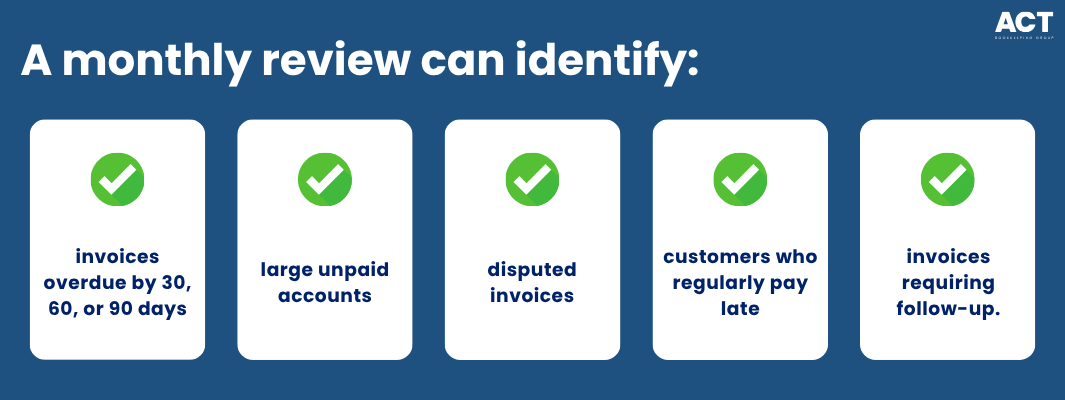
Your accounts receivable report shows customer invoices that remain unpaid. This helps you understand the difference between recorded business income and the money that has actually reached your bank account. Regularly reviewing outstanding invoices supports both cash flow and tax planning. If customers often pay late, your business may need to allow more time before treating expected income as available money for tax, wages, or supplier payments.
Accounts Payable Shows What Your Business Still Needs to Pay
Your accounts payable report lists supplier invoices and other bills that have not yet been paid. This gives you a more realistic understanding of upcoming commitments before deciding how much money can be reserved for your tax bill. For example, a construction company may have a strong bank balance at the end of the month while also carrying large material and subcontractor bills. Reviewing accounts payable alongside cash flow helps the business plan payments without overlooking costs that are already due.
The General Ledger Helps Identify Errors Before Tax Time
The general ledger contains the detailed transactions behind your financial reports. Reviewing it can help identify duplicated expenses, transactions placed in the wrong account, personal costs recorded as business expenses, or items that need further explanation. Accurate records make it easier for your accountant or registered tax agent to review assessable income, expenses, assets, and payments when preparing the tax return. Regular reviews also reduce the risk that small bookkeeping errors become costly mistakes at the end of the financial year.
Example: If a significant equipment purchase has been recorded as an ordinary expense, your accountant may need to review how it should be treated for tax purposes. Finding that issue before year end can make the tax planning process more straightforward.
Payroll Reports Help Employers Review Employment Costs
If you employ individuals, payroll reports help you review wages and related payments made throughout the financial year. These reports also allow your bookkeeper to check that payroll information agrees with the amounts recorded in your accounting system. Payroll records should be accurate before tax planning begins because mistakes can affect your financial reports and create extra work later. Clear payroll records also make it easier to review withholding amounts, employee costs, and other tax obligations connected with employment.
Your Business Structure Can Affect Business Tax Rates
The tax rate applying to business earnings depends partly on the business structure. A sole trader generally reports business income in their individual tax return, while a company pays company tax on its taxable income and operates as a separate legal entity. For a company, the company tax rate can depend on whether the company qualifies as a base rate entity. A company generally qualifies if its aggregated turnover is less than $50 million and no more than 80% of its assessable income is base rate entity passive income.
The lower tax rate should not be the only factor considered when choosing a structure. Cash flow, ownership, administration, assets, personal tax, and long-term plans can all affect whether a sole trader or company structure is suitable, so professional advice is important.
Dividends and Franking Credits Depend on Accurate Company Records
When a company pays dividends, bookkeeping records help your accountant review company earnings, company tax already paid, and the amount distributed to shareholders. Franking credits, also known as imputation credits, may be relevant where company tax has already been paid on profits. Australia’s imputation system can help prevent double taxation by recognising company tax already paid on profits distributed as franked dividends. Eligible shareholders generally include the franking credits in assessable income and may receive a corresponding franking tax offset, subject to the applicable ATO rules. Accurate records help your registered tax agent review dividends, franking credits and imputation credits correctly.
Personal Tax and Company Tax Need to Stay Separate
A sole trader and a company are treated differently for tax purposes. Sole trader business income is generally connected with the owner’s personal tax position, while company tax is calculated separately because a company is a separate legal entity. For an Australian resident individual, sole trader business income forms part of their taxable income, so the tax-free threshold and marginal rate may apply to their total income. A company does not receive the individual tax-free threshold and instead pays company tax at the applicable company rate. Good bookkeeping keeps personal and business transactions separate so your accountant can apply the correct treatment.
We’re more than bookkeeping experts
As part of ACT Tax Group, we offer complete accounting and business advisory services tailored to your needs.
Regular Reporting Makes Tax Planning More Reliable
Tax planning works best when your bookkeeping is current. If bank transactions, payroll, invoices, or supplier bills are several months behind, estimates of income tax, total income, turnover, or profit may not reflect the current position of the business. A consistent monthly reporting process gives small business owners better visibility and allows an accountant to review issues before the financial year ends. This can be particularly useful when considering PAYG instalments, business tax rates, small business concessions, or changes in earnings. A practical monthly routine includes:
Reconcile bank and credit card accounts.
Review the profit and loss statement and balance sheet.
Check outstanding customer and supplier amounts.
Reconcile payroll and tax-related accounts.
Review cash flow and provide current reports for tax planning.
Turnover Figures Need to Be Understood in Context
Turnover is useful when assessing business performance, but different tax rules can use different turnover measures. Annual turnover, aggregated turnover, and Goods and Services Tax (GST) turnover may not always be used for the same purpose. This is why a business should not assume it qualifies for a reduced rate, concession, or particular tax treatment simply because one turnover number appears below a threshold. Your accountant or registered tax agent can review whether the company qualifies and whether the relevant ATO rules apply to your circumstances.

Bookkeeping Reports Support Tax Planning Rather Than Replacing Tax Advice
Bookkeeping reports provide the information needed for tax planning, but they do not determine your final income tax on their own. The amount payable can be affected by assessable income, tax rates, business structure, deductions, tax offsets, company status, and other factors. For this reason, bookkeeping should support professional tax advice rather than replace it. Clean records give your accountant the information needed to calculate the correct amount and help you understand how different transactions may affect your tax return.
How ACT Bookkeeping Can Help with Tax-Ready Bookkeeping Reports
We can help you maintain organised records, complete timely reconciliations, and prepare clear bookkeeping reports throughout the financial year. Our support can include payroll, GST record keeping, Business Activity Statement support, accounts payable, accounts receivable, invoicing processes, cash flow visibility, and cloud bookkeeping systems. If your records are behind or you are unsure whether your reports are ready for tax planning, book a meeting with our team. We can help organise your bookkeeping and provide your accountant or registered tax agent with clearer information to review your tax obligations and reduce the risk of costly mistakes.
