

Published on 25 Jun 2026
How much tax will I get back is a common question when your Australian Taxation Office (ATO) notice of assessment does not match the refund you expected from your bookkeeping records. Your tax refund or tax payable depends on taxable income, tax withheld, Pay as You Go (PAYG) instalments, deductions, tax offsets, the Medicare levy, any Medicare levy surcharge, and any credits or existing account balances that apply to your individual circumstances.
For small business owners, sole traders, and working Australians, the answer is rarely as simple as entering wages or salary into an income tax calculator. A tax calculator, tax return calculator, or simple tax calculator can provide an estimate for illustrative purposes, but an accurate assessment should be based on your lodged tax return, annual income, other income, residency status, private health insurance details, and complete bookkeeping records.
Understanding Your ATO Notice of Assessment
Your notice of assessment shows how the ATO has calculated your tax assessment after your tax return has been processed. It confirms whether you will receive a refund, need to pay income tax, or have no further amount of tax to pay for the financial year. The notice may include your taxable income, total tax, Medicare levy, Medicare levy surcharge, tax offsets, credits, interest, and any amount applied to an existing account balance. It is an important document for tax purposes because it helps taxpayers compare their bookkeeping details with the final Australian income tax outcome.
Confused by PAYG, BAS, and tax offsets?
Schedule a complimentary consultation with us today to clarify payments and correct allocations.
Your Refund Is Not Just Based on Your Book Profit
Your tax refund is not based only on the profit shown in your bookkeeping file. It is based on total income, eligible deductions, tax rates, tax offsets, tax withheld by your employer, PAYG instalments paid during the year, and any other income reported for the financial year. For tax purposes, bookkeeping profit may need to be adjusted before it becomes taxable income. Private-use expenses, fringe benefits, timing differences, tax agent fees, and other factors can affect how much tax is payable or how much money is refunded.
Reconciling Your Notice of Assessment to Your Records
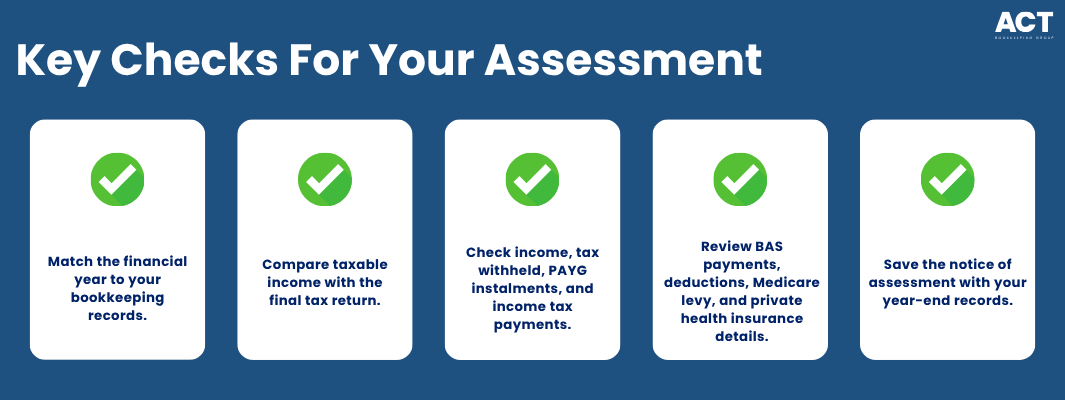
To reconcile your notice of assessment, start with the lodged tax return and compare it to your bookkeeping reports. The aim is to check whether income, deductions, tax paid, tax withheld, Goods and Services Tax (GST), Business Activity Statement (BAS) payments, and PAYG instalments have been recorded in the right place, following a clear ATO notice of assessment reconciliation guide.
A simple process is to match the financial year, compare taxable income, check tax withheld and PAYG instalments, then review deductions, Medicare levy, Medicare levy surcharge, and whether the private health insurance information reflects the appropriate private patient hospital cover for the year. You should also save the notice of assessment with your year-end records so your accountant, bookkeeper, or registered tax agent can review the details later if needed.
Common Reasons Your Refund Is Lower Than Expected
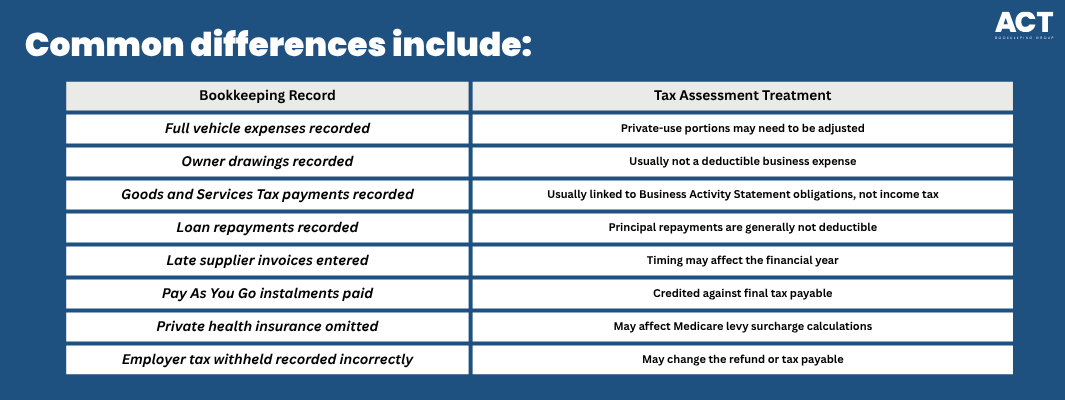
A lower refund can happen when total income is higher than expected, tax withheld is too low, deductions are adjusted, or an existing Australian Taxation Office account balance reduces the money paid back to you. It can also happen when calculator results do not include all details needed for a proper income tax calculation. Common differences include private-use adjustments on vehicle expenses, owner drawings incorrectly treated as deductions, GST payments confused with income tax, and late invoices recorded in the wrong financial year. Employer tax withheld, interest, fees, other income, and prior account balances can also change the refund or tax payable.
Clean Bookkeeping Makes Tax Time Easier
Clean bookkeeping makes it easier to calculate how much tax may be payable before the notice of assessment arrives. It also helps your tax agent or registered tax agent prepare your tax return with fewer corrections, clearer calculations, and better supporting details. Good records help separate business expenses from private costs, confirm income received, and show whether tax obligations have been met during the year. This gives you a clearer view of your annual income, total income, deductions, tax paid, and any amounts still subject to assessment, and highlights the value of engaging professional bookkeeping consultant services in Canberra.

Using a Tax Calculator for Planning
A tax calculator or income tax calculator can help you estimate tax, compare calculator results, and understand how annual income may affect your tax payable. It can be useful for planning, but it should not replace personalised advice from a tax agent because Australian tax outcomes depend on individual circumstances. Calculator results may not fully account for deductions, tax offsets, fringe benefits, private health insurance, Medicare levy surcharge, other income, Australian tax residency status, or changes to tax rates. Use a calculator for illustrative purposes only, then check the ATO website or speak with a registered tax agent for further information in relation to your situation.
Records To Keep for Tax Purposes
You should keep records that show your income, expenses, deductions, tax paid, and the details behind any claim made in your tax return. Generally, the ATO requires records to be kept for 5 years from the date you lodge your tax return, and a bank or credit card statement on its own may not be enough to support a claim. Useful records include bank statements, income statements, sales invoices, supplier bills, payroll reports, PAYG instalment notices, Business Activity Statement records, private health insurance statements, and receipts for eligible deductions. Keeping these details organised helps confirm whether each dollar claimed or paid has been recorded correctly.
We’re more than bookkeeping experts
As part of ACT Tax Group, we offer complete accounting and business advisory services tailored to your needs.
How ACT Bookkeeping Can Help with ATO Notice of Assessment Reconciliation
ACT Bookkeeping helps small to medium-sized Australian businesses keep organised records that support clearer tax return preparation and easier notice of assessment reconciliation. We can review bookkeeping entries, match tax paid and PAYG instalments, check BAS allocations, assist with ATO payment plans for overdue BAS, and prepare reports for your accountant or registered tax agent. If your refund, tax payable, or final tax payable does not look right, you can arrange a consultation with our team to review your bookkeeping records. We focus on practical bookkeeping support, timely records, Goods and Services Tax accuracy, payroll processes, and organised information that helps you stay on top of your tax obligations.

Final Thoughts on Reconciling Your ATO Notice of Assessment
Your notice of assessment shows the Australian Taxation Office’s final tax calculation, while your bookkeeping records explain the income, deductions, payments, and adjustments behind that result. By comparing both carefully, you can understand whether your refund, tax payable, or total tax position makes sense. Before relying on a refund or using an online calculator to calculate your likely outcome, check your records and make sure the details are complete. For personalised advice, speak with a registered tax agent who can consider your individual circumstances and confirm the correct Australian tax treatment.
