

Published on 28 May 2026
What Is Professional Indemnity Insurance and How Should It Be Recorded in Your Books? Professional indemnity insurance is insurance cover that helps protect a business if a client claims they suffered financial loss because of a mistake, negligence, omission, breach, or advice provided through a professional service. For many businesses in Australia, the challenge is not only finding the right cover, but also recording the cost, Goods and Services Tax (GST), duty, fees, and renewals correctly.
What Is Professional Indemnity Insurance?
Professional indemnity insurance, sometimes called PI insurance, is designed for professionals and businesses that provide advice, services, designs, reports, or recommendations to clients. It may help provide cover for legal fees, legal action, compensation, and other expenses if a client claims your professional service or advice caused them financial loss.
This type of liability insurance is common across many industries, including consultants, engineers, accountants, travel agents, designers, and other service providers, and it’s also an important requirement for many certified bookkeepers and registered BAS agents.
Struggling to record PI insurance correctly in your books?
Schedule a complimentary consultation with us today to ensure correct GST and expense treatment.
Professional Indemnity Is Different from Public Liability Insurance
Professional indemnity and public liability insurance do not work in the same way. Professional indemnity cover generally relates to financial loss from professional service or advice, while public liability insurance generally relates to personal injury, bodily injury, or property damage connected with your business activities. Public liability may apply if a customer is injured at your business premises, or if your employees accidentally damage property while working at a client site. Professional indemnity may apply if a client claims your advice, design, report, or omission made them lose money.
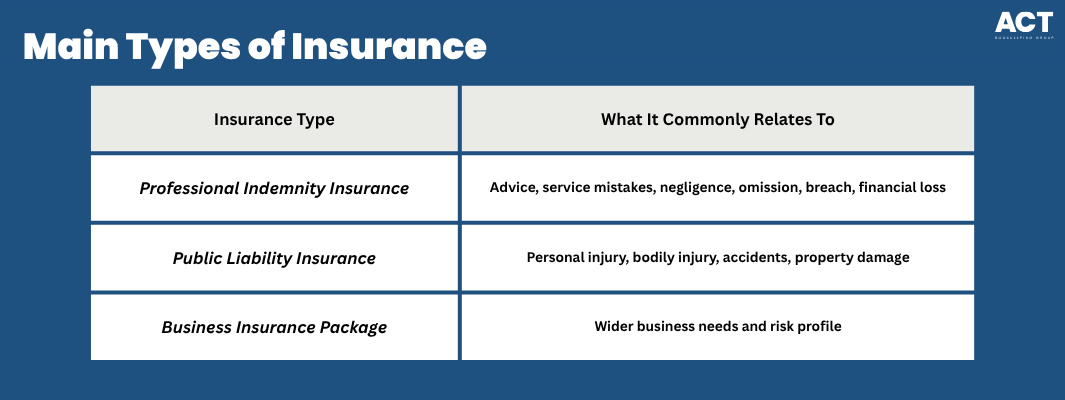
Why Professional Indemnity Cover Matters for Business Protection
Professional indemnity cover can provide financial protection when a business is accused of being liable for poor advice, a mistake, or a breach of professional responsibility. Even when a claim is not successful, the legal cost to defend the company can still be stressful and expensive. According to the Australian Small Business and Family Enterprise Ombudsman, small businesses make up more than 97% of all Australian businesses, many of which rely on different types of bookkeeping services and systems to stay compliant and organised. This matters because many small business owners do not have large cash reserves to manage unexpected legal fees, claims, or compensation costs.
How Should Professional Indemnity Insurance Be Recorded in Your Books?
Professional indemnity insurance should usually be recorded as a business insurance expense to the extent it relates to business activities, with GST and non-GST amounts entered separately where the invoice shows them. Your bookkeeping should follow the invoice rather than treating the full payment as one simple cost. If the invoice includes a premium, GST, stamp duty, broker fee, or instalment fee, each part may need a different treatment in your accounting software. This helps keep BAS records clearer and gives your accountant the detail they need, especially when it comes to accurate BAS preparation and lodgement processes.

What About GST, Duty, and Fees?
If your business is registered for GST, you may be able to claim GST credits on the taxable part of the professional indemnity insurance premium where the policy relates to your business activities and you hold a valid tax invoice when required. You should not assume that the whole payment includes GST because stamp duty and some charges may be shown separately, and GST credits can only be claimed for GST actually included in the price of a creditable business purchase. This is one reason accurate bookkeeping matters. A small GST error repeated across insurance, public liability, equipment cover, vehicle cover, and other business expenses can create messy BAS records.
What Records Should You Keep for Your Professional Indemnity Policy?
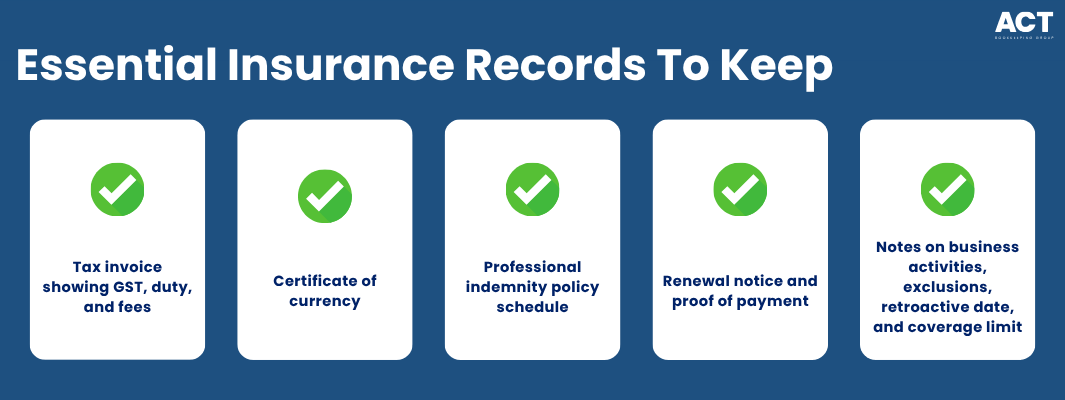
Your business should keep the tax invoice, professional indemnity policy, certificate of currency, renewal notice, payment receipt, and any notes about the advice or services covered, and business tax records generally need to be kept for five years, similar to the broader record keeping requirements for sole traders. These records help your bookkeeper, accountant, insurer, and business owner understand what was paid and what the cover relates to. Many policies also include details such as a retroactive date, policy exclusions, coverage limits, parties covered, and the type of claims that may be included. These details are important because insurance cover does not apply to every event, person, mistake, or claim.
How Do Claims Affect Your Bookkeeping?
Insurance claims should be recorded carefully because the tax treatment depends on what the payment relates to. An insurance payout may be assessable income if it replaces business income, reimburses a deductible expense, or relates to business assets. It may relate to legal fees, compensation, property damage, a settlement, or a reimbursement of expenses, so the payment should be reviewed before it is treated as income, a recovery, a reduction of an expense, or another accounting entry.
If an insurer pays part of a legal cost or compensation amount, your bookkeeper should keep the correspondence and payment records together, including details of any GST credit entitlement disclosed to the insurer before the claim was made. Your accountant can then review whether the amount affects GST, assessable income, deductible expenses, or balance sheet accounts, including whether any GST adjustment is required for the insurance settlement.
We’re more than bookkeeping experts
As part of ACT Tax Group, we offer complete accounting and business advisory services tailored to your needs.
Choosing The Right Cover for Your Business Needs
The right cover depends on your business activities, clients, contracts, industries served, employees, premises, risk profile, and professional responsibility. A consultant working from home will not have the same insurance needs as a company with staff, customers visiting a business premises, or work performed in a shopping centre. Business owners should review both professional indemnity and public liability as part of wider risk management.
How ACT Bookkeeping Can Help with Professional Indemnity Insurance Records
ACT Bookkeeping helps Australian small to medium-sized businesses keep insurance records clear, organised, and BAS-ready. We can record professional indemnity insurance, public liability insurance, GST, duty, fees, and claim payments in a practical way that supports your accountant and reduces bookkeeping stress, as part of our monthly Xero-based cloud bookkeeping packages. We can also help you schedule regular reviews of recurring insurance costs, attach supporting documents, and keep your records tidy throughout the year.
To make your insurance bookkeeping easier, you can arrange a meeting with ACT Bookkeeping and talk through the records your business needs to keep.

Keeping Your Insurance Records Clear and ATO-Ready
Professional indemnity insurance can help protect your business when a client claims financial loss from professional service or advice. Public liability insurance can help with different risks, such as personal injury, bodily injury, or property damage, so both types of cover should be understood clearly. Your next step is to check your latest professional indemnity policy, invoice, GST amount, duty, payment record, and whether the policy relates fully or partly to business activities and make sure you are working with a qualified and registered BAS agent bookkeeper who understands how to record these correctly. Clear bookkeeping gives you better information, cleaner BAS records, and more confidence when your accountant reviews your business expenses.
