

Published on 21 May 2026
What is liquidation is a common question for a business owner who is worried the company may no longer pay its debts on time. Liquidation is the process of winding up a company, reviewing the company’s financial affairs, selling the company’s assets where possible, and using available money to pay creditors.
For many Australian businesses, the warning signs appear in the bookkeeping before the company goes into liquidation. Late Business Activity Statement (BAS) lodgements, unpaid wages, overdue supplier accounts, unpaid debts, poor cash flow records, and missed superannuation payments can all show that the business needs urgent attention, and improving your BAS preparation processes is often a practical first step.
What Is Liquidation in Australia?
Liquidation is a formal process where an appointed liquidator or registered liquidator takes control of the company’s affairs. The liquidator reviews assets, debts, creditor claims, employee entitlements, and whether the company directors allowed the business to incur debts when it could no longer pay. Liquidation usually means the business closes and the company is wound up. It can involve secured creditors, unsecured creditors, preferential creditors, shareholders, employees, suppliers, and other creditors, depending on what the company owns and owes.
Behind on BAS lodgements or GST tracking?
Schedule a complimentary consultation with us today to get your BAS and GST back on track.
Clean Books Help You See Trouble Earlier
Clean bookkeeping helps you see whether the company has sufficient funds to meet financial obligations as they fall due. Without accurate records, a business can look busy on the surface while unpaid debts, tax liabilities, and supplier pressure continue to grow. Bookkeeping does not replace professional advice from a licensed insolvency practitioner, accountant, lawyer, or insolvency practitioners. However, up-to-date records help you ask better questions before legal action, statutory demand notices, winding up proceedings, or a court order create more pressure.
The Main Types of Liquidation
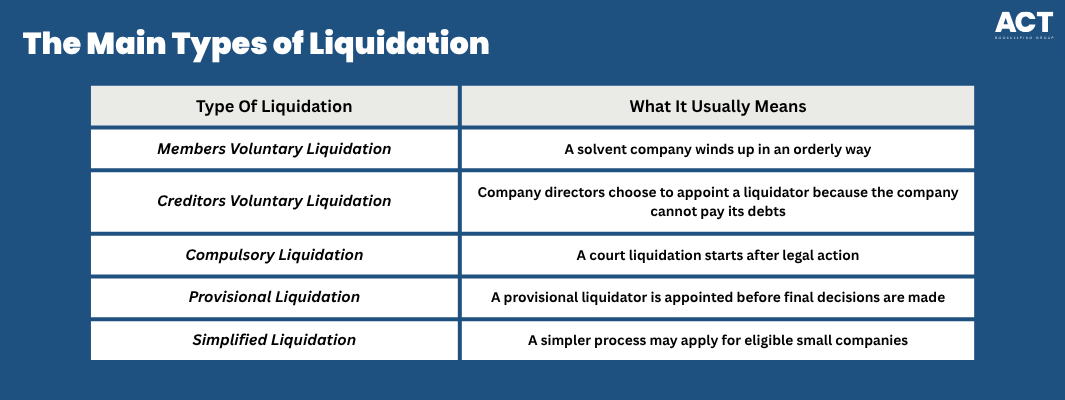
There are different types of liquidation, and each one depends on the company’s financial position. A solvent company may use members voluntary liquidation, while an insolvent company may enter creditors voluntary liquidation or compulsory liquidation.
Voluntary Liquidation and Voluntary Administration Are Different
Voluntary liquidation usually means the company is moving toward winding up. Voluntary administration is different because an external administrator reviews whether the business can be saved, sold, or placed into a company arrangement. A company arrangement may allow creditors to agree on how debts are handled, but it depends on the facts. If the company cannot continue trading safely, insolvent liquidation may become the next step.
Early Bookkeeping Warning Signs Your Business May Be in Trouble
The early warning signs often show in unpaid bills, slow customer payments, and records that are no longer kept up to date. If the business cannot clearly show what it owes, what it owns, and what is due soon, the risk of poor decisions increases.
Common warning signs include:
BAS lodgements are late or rushed
Goods and Services Tax (GST) collected from customers has already been spent
Pay As You Go Withholding (PAYGW) amounts are unclear or unpaid
Superannuation payments are delayed
Unpaid wages or leave balances are building up
Supplier accounts are overdue
Bank reconciliations are more than one month behind
The company is relying on new customer deposits to pay old debts
Company directors are using personal funds to cover regular business costs
The company can no longer pay debts when they fall due
ATO And Super Debts Can Become Serious Quickly
Australian Taxation Office (ATO) debt, Goods and Services Tax (GST), Pay As You Go Withholding (PAYGW), and unpaid superannuation obligations can become serious pressure points if they are not tracked clearly, and in some cases an ATO payment plan for tax debts may be part of a short‑term solution. If superannuation is not paid in full, on time, and to the right fund, the business may need to lodge a Superannuation Guarantee Charge (SGC) statement and pay the SGC to the ATO, and good SGC record‑keeping and reporting becomes essential to manage this properly.
This is where bookkeeping discipline matters. Separate tracking for tax, wages, superannuation, supplier payments, and other creditors helps the business understand whether it has enough cash to keep operating responsibly and whether any ATO lodgements or payment obligations need urgent attention.
Payroll Records Can Reveal Deeper Financial Stress
Payroll records can show whether a business is meeting employee entitlements on time. Unpaid wages, missed superannuation, leave balances, redundancy pay, and other employee entitlements can become major issues when a company enters liquidation. Employees may be treated as preferential creditors for certain unpaid employee entitlements, which means their claims can receive priority over some other creditors. The Fair Entitlements Guarantee (FEG) may help eligible employees with certain unpaid entitlements, such as wages, annual leave, long service leave, payment in lieu of notice, and redundancy pay, but it does not cover unpaid superannuation.

Supplier And Customer Records Matter More Than You Think
Accounts payable and accounts receivable reports often show whether cash flow pressure is temporary or becoming structural. If customers are paying slowly and suppliers are overdue, the company may have less room to move than the bank balance suggests. A clear aged payables report shows who must be paid soon, while an aged receivables report shows which customers need follow-up. These reports help company directors understand creditor pressure, overdue invoices, and whether the company can continue trading without creating more risk.
Company Assets May Not Cover Company Debts
A company’s assets may include cash, vehicles, equipment, stock, intellectual property, customer lists, tools, and any other asset owned by the company. During the liquidation process, the liquidator reviews these assets and considers what can be sold to help pay creditors. It is important not to assume that assets will cover all debts. Secured creditors may have rights over specific assets, liquidation costs must usually be dealt with, and unsecured creditors may receive only part payment or no payment if there are not enough funds.
Directors Need to Be Careful About Personal Risk
Company directors should be careful if the company is struggling to pay debts. In some cases, directors may become personally liable, including through insolvent trading rules, personal guarantees, or the ATO director penalty regime for certain unpaid company amounts such as PAYGW, GST, and Superannuation Guarantee Charge. Personal guarantees can also create risk outside the company. If a director has signed a personal guarantee for a lease, loan, trade account, or supplier arrangement, the creditor may pursue the director personally even though the company is in liquidation, and directors should seek professional advice before making further commitments.
When Legal Action or a Statutory Demand Appears
A statutory demand, legal proceedings, or a threat of winding up should never be ignored. These steps can lead to court liquidation, a winding up order, compulsory liquidation, or the appointment of a provisional liquidator in some situations. At this stage, good bookkeeping becomes urgent. The company needs clear records of debts, assets, creditor claims, unpaid wages, employee entitlements, GST, PAYGW, superannuation, ATO lodgements, bank accounts, loans, and supplier balances so advisers can understand the full position quickly.
Practical Bookkeeping Reports to Prepare Early
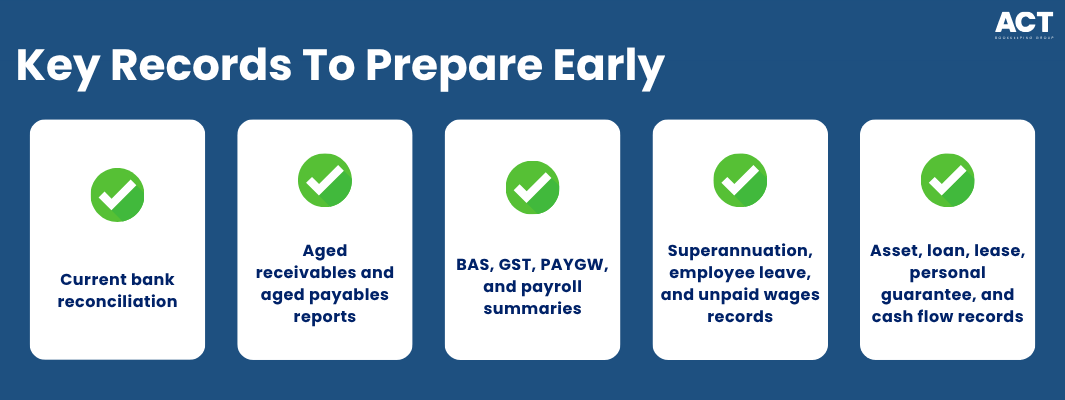
If your business may be in trouble, start by preparing reports that show the true position. These reports can help your accountant, lawyer, registered liquidator, or licensed insolvency practitioner give more practical guidance, especially if you are already negotiating ATO payment plans for overdue BAS and other tax debts.
What Happens During the Liquidation Process?
During the liquidation process, the liquidator collects company records, reviews the company’s affairs, identifies assets and debts, contacts creditors, and prepares progress reports. The liquidator may also review whether the company directors kept proper records and whether any transactions need further investigation. The liquidator’s role is not the same as a bookkeeper’s role. Bookkeepers help keep records organised before and during the process, while the appointed liquidator manages the formal winding up and reports to creditors and regulators.
We’re more than bookkeeping experts
As part of ACT Tax Group, we offer complete accounting and business advisory services tailored to your needs.
Bankruptcy Is Not the Same as Company Liquidation
Bankruptcy usually relates to an individual, while liquidation relates to a company. The Australian Financial Security Authority deals with personal insolvency matters such as bankruptcy, while company liquidation involves company law and a registered liquidator. This difference matters because a company’s debts are not always the same as a director’s personal debts. However, personal guarantees, director penalty notices, unpaid PAYGW, GST, Superannuation Guarantee Charge, or other director obligations may still affect the business owner personally, so professional advice is important.
How ACT Bookkeeping Can Help With ATO-Ready Business Records
At ACT Bookkeeping, we help small to medium-sized businesses in ACT keep organised, accurate, and timely records so they can see financial pressure earlier. We can support BAS preparation, GST tracking, payroll records, invoicing, accounts payable, accounts receivable, cloud bookkeeping systems, and practical cash flow visibility.
If your books are behind or you are worried about unpaid debts, supplier pressure, payroll, or tax obligations, you can arrange a consultation with our team. We do not replace a licensed insolvency practitioner, lawyer, or specialist adviser, but we can help prepare clear financial records so you can make informed decisions with the right support.

Final Thoughts on Liquidation and Bookkeeping Warning Signs
Liquidation is a serious process, but the signs of trouble often appear in the bookkeeping well before formal winding up begins. Late BAS lodgements, unpaid wages, overdue suppliers, missed superannuation, unclear GST, growing ATO debt, and poor cash flow visibility can all show that the company needs attention.
The best next step is to bring the books up to date and review the position honestly. Clear records help you understand whether the business can keep trading, whether it needs restructuring support, or whether you need professional advice about insolvency, voluntary administration, creditors voluntary winding, or liquidation.
