
Published on 26 Feb 2026
From DIY bookkeeping to hiring a professional: when should your growing business make the switch is a question many small business owners face once their business finances start to feel harder to manage. At the beginning, it can feel natural to handle your own small business accounting, especially when you only have a handful of transactions and a simple accounting system. As your customers, income, and business expenses grow, the way you manage money has a direct impact on your business’s financial health, stress levels, and long‑term business success.
What Problems Arise If You Stay with DIY Bookkeeping Too Long?
If you stay with DIY bookkeeping for too long, the gaps usually show up first in your financial records and then in your bank account. You might be juggling data entry, chasing invoices, paying suppliers, and responding to customers while still trying to keep your books up to date at night or on weekends. As the number of financial transactions grows, it becomes harder to keep track of every payment, refund, and bill.
There is also a real risk in mixing personal and business finances for too long, especially since companies are legally required to have separate business accounts. When your statements combine personal and business transactions, it’s much harder to track expenses, prepare tax returns, and work out what your business owns and what your business owes. Over time, this makes it harder to see your true profit and can lead to missed tax deductions, late lodgements, or stressful conversations at tax time.
Unsure if your DIY bookkeeping can keep up with ATO rules?
Schedule a complimentary consultation with us today to review your BAS, PAYG and record‑keeping before issues arise.
When Does A Growing Business Usually Outgrow DIY Bookkeeping?
Most businesses outgrow DIY bookkeeping when the simple systems that worked early on can no longer keep up with day‑to‑day activity. When you are sending more invoices, receiving more customer payments, and dealing with more suppliers, a basic spreadsheet or paper-based approach is no longer enough. At this stage, cloud-based accounting and automation tools (now used by over 80% of small businesses) become essential to manage the growing volume of transactions.
You may also reach this tipping point when you hire staff or contractors and need to manage payroll, super and Single Touch Payroll reporting (now under Phase 2 as a mandatory reporting requirement) on top of everything else. As your business grows, your accounting methods and record keeping need to keep pace with more complex cash flow patterns and larger commitments. If you find you are always behind on reconciling your bank statements, or you avoid looking at your financial reports because they feel confusing, that is a strong sign you have outgrown DIY.
What Are the Hidden Costs of DIY Bookkeeping for Small Businesses?
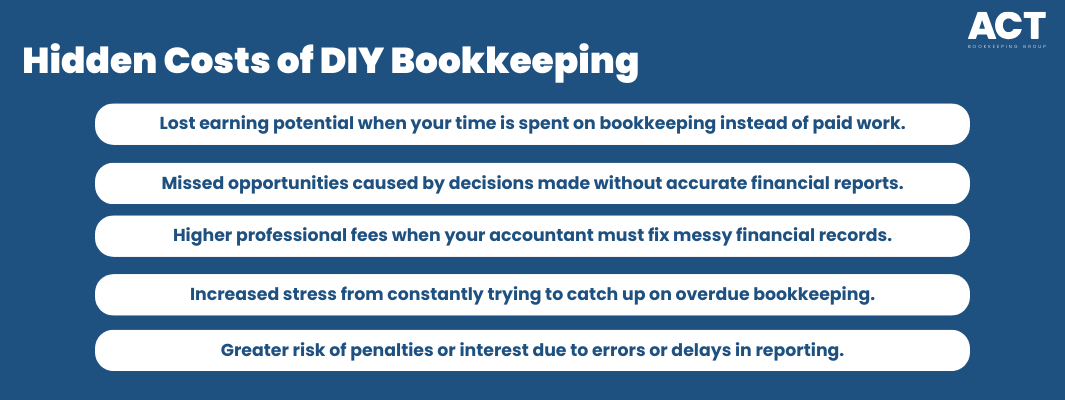
One of the biggest hidden costs of DIY bookkeeping is the time you spend on repetitive tasks instead of income‑producing work. Every hour you spend fixing data entry errors, chasing unpaid invoices, or trying to generate reports in your accounting software is an hour you are not serving customers or growing the business. Over a year, these hours add up to a real cost, even if you are not paying someone else to do the work.
Another hidden cost is the impact on decision making. Without current profit and loss statements, a balance sheet, and a clear cash flow statement, it is hard to make informed decisions about hiring, price changes, or new investments. You might feel like there is money coming in, but without clear financial reports you cannot tell whether your working capital is strengthening or whether you are at risk if a large bill arrives.
How Can You Tell It’s Time to Move from DIY Bookkeeping to a Professional?
A simple test is to ask yourself whether bookkeeping is something you can comfortably manage during business hours, or if it always spills into nights and weekends. If your books are constantly a few months behind, or you feel nervous every time you think about tax time, it may be time for support. When bookkeeping feels like its own part‑time job, that’s a clear sign your growing business is ready for a change.
Another strong indicator is confusion around your numbers. If you are not confident reading your financial reports, or you are unsure whether you should be using cash or accrual accounting, there is a real risk of making choices based on guesswork, much like deciding between a DIY versus tax agent‑prepared tax return without understanding the trade‑offs. Professional guidance can help you understand what your business owns, what your business owes, and how your business’s financial health is tracking, so you can plan with more confidence.
What Does a Professional Bookkeeper Do Differently from DIY?
A professional bookkeeper brings structure, consistency, and experience to your small business accounting. They set up and manage systems so that income, expenses, and other transactions are recorded accurately in your accounting system or cloud accounting platform. This includes regular reconciliation of your business bank account, so your financial records line up with your bank statements.
They also help you choose and manage cloud-based accounting software and, where needed, payroll software that fits the way your business works. This means you can send invoices, track expenses, and review key reports like profit and loss statements and balance sheets without having to build everything from scratch. With a bookkeeper handling the detail, you have more time and headspace to focus on customer relationships and business success.

How Does Outsourcing Compare with Keeping Bookkeeping In‑House?
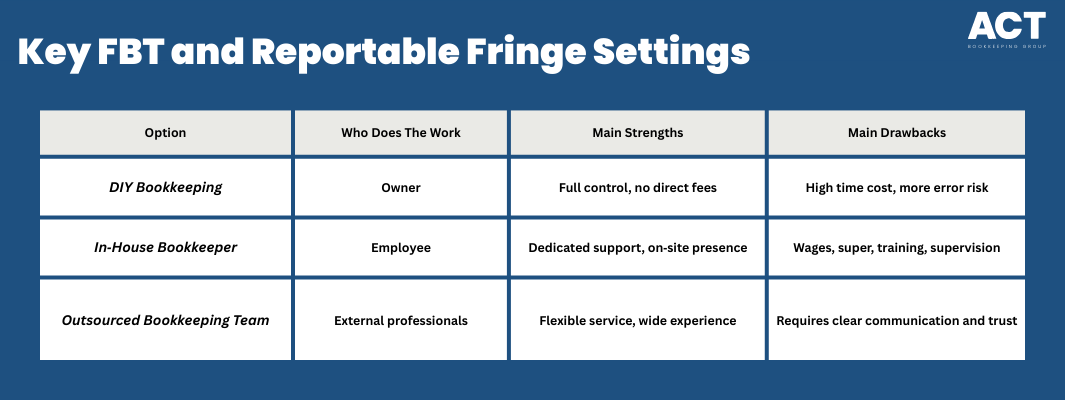
Keeping bookkeeping in‑house usually means either doing it yourself or hiring an employee. Doing it yourself gives you direct control, but it ties a lot of your time to repetitive tasks and puts pressure on you to stay across tax laws and changing rules. Hiring an in‑house bookkeeper can work well for larger businesses, but it comes with salary, leave, and training costs that may be hard to justify for a small business compared with the options outlined in this in‑house versus outsourced bookkeeping comparison.
Outsourcing to a professional bookkeeping team offers a middle path. You keep oversight of your business finances, but someone else manages the day‑to‑day detail with the help of cloud accounting tools and secure systems. This can be more flexible and cost‑effective, because you pay for the level of support you need, and you can increase or reduce services as your business changes.
How Does Professional Bookkeeping Support Compliance and Tax Time?
Professional bookkeeping is one of the most effective ways to stay on top of tax compliance without extra stress. With accurate record keeping throughout the year, your financial accounts and financial records are ready when your accountant needs them. You will have organised income and expense data, clear lists of business transactions, and supporting documents to help prepare accurate tax returns.
A bookkeeper also helps you prepare the information needed to stay compliant with PAYG, super, and Single Touch Payroll requirements, including Superannuation Guarantee Charge record‑keeping and reporting obligations, if you employ staff. By keeping your business and personal finances separate, using a dedicated business bank account, and maintaining good record keeping habits as a sole trader, you reduce the chance of mistakes. This makes it easier to stay compliant, avoid penalties, and feel more relaxed when it is time to lodge.
What Should You Look for in a Bookkeeper for Your Small Business?
When choosing a bookkeeper, it helps to look for someone who understands different business structures and the realities of small business life. You want a person or team who can work confidently with the cloud based accounting software you already use, or who can help you move onto a cloud accounting system that suits your needs. Looking for the key qualities of a great bookkeeper and experience working with sole traders and growing small businesses is also valuable.
Just as importantly, you need a bookkeeper who can explain things in simple terms. Good small business accounting is about more than processing numbers; it is also about giving you clear financial reports you can understand and use. Look for someone who will take the time to talk through your profit and loss statements, balance sheet, and other key reports with you, so you can use them for better decision making.
We’re more than bookkeeping experts
As part of ACT Tax Group, we offer complete accounting and business advisory services tailored to your needs.
How Can You Make the Switch from DIY to Professional Support Smoothly?
Making the switch from DIY bookkeeping to professional support does not have to be disruptive or stressful. A good bookkeeper will start by reviewing your existing accounting system, including any cloud based accounting software, spreadsheets, or paper records you have used. They will work through your bank statements, invoices, and receipts to bring your financial records up to date.
Once your records are current, you can work together to set up a simple rhythm for your ongoing bookkeeping. This might include weekly or monthly updates, regular reconciliation of your bank account, and scheduled times to review key reports on profit, cash flow, and overall financial health. Over time, you will find it easier to see whether your business is moving towards your goals and to make adjustments based on real information rather than gut feel.

What Is the Best Next Step for Your Growing Business?
From DIY bookkeeping to hiring a professional: when should your growing business make the switch is about finding the point where your time, stress levels, and business needs cross over. If you feel that bookkeeping is holding you back from serving customers or planning with confidence, now may be the right moment to explore your options. Moving to a more structured approach to business accounting can support clearer business goals, more reliable cash flow, and a stronger sense of control over your finances.
A simple next step is to have a conversation with a bookkeeping or accounting professional about where your business is now and where you would like it to be in the next few years. Together, you can design a straightforward approach to small business accounting that respects your budget while giving you the information you need for informed decisions. With the right support, your accounting system becomes a tool that helps you grow, instead of a task you have to fight with at the end of a long day.
